dotlah! dotlah!
  • Cities
  • Technology
  • Business
  • Politics
  • Society
  • Science
  • About
Social Links
  • zedreviews.com
  • citi.io
  • aster.cloud
  • liwaiwai.com
  • guzz.co.uk
  • atinatin.com
0 Likes
0 Followers
0 Subscribers
dotlah!
  • Cities
  • Technology
  • Business
  • Politics
  • Society
  • Science
  • About
  • Cities
  • Society

COVID-19: This Is How Asia-Pacific Is Emerging From Lockdown

  • May 8, 2020
Total
0
Shares
0
0
0

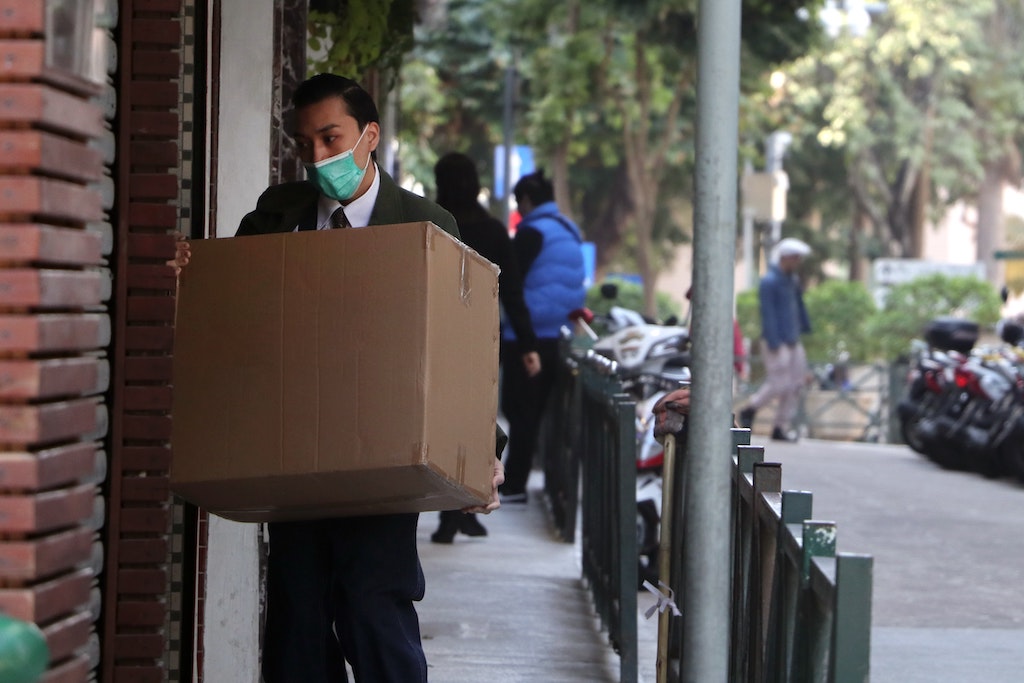
Countries all over the world are announcing their plans to emerge from COVID-19-inflicted lockdown, and the Asia-Pacific region is no different.

Even countries like Thailand and Viet Nam, that have not suffered a heavy infection rate or death toll, must now reckon with the economic damage caused by the pandemic, and are eager to cautiously reopen their schools and get people back to work.

Here is a roundup of measures announced from countries and economies in the Asia-Pacific area:

South Korea, one of the countries earliest-hit by the coronavirus, announced on Wednesday an easing of social-distance regulations implemented two and a half months ago. The country, which did not enforce home confinement, will now ask citizens to adhere to four new basic regulations, including self-isolation for three or four days if they fall ill.

Schools in the country will reopen on 13 May, with senior pupils preparing for university entrance exams to return first and younger pupils from 20 May. Museums, libraries and nightclubs will also progressively reopen.

The country has now gone three days without a case of locally transmitted infection – and with 10,800 confirmed cases and 255 deaths overall, has been praised for its strategy to control the outbreak. But the fight against COVID-19 is not over, warned Jeong Eun-kyeong, Director-General of the Korea Centre for Infectious Disease Control and Prevention. “South Korea can return to the intensive social distancing system at any time if the situation worsens,” he said.

Hong Kong SAR’s Chief Executive Carrie Lam announced a partial easing of lockdown conditions on Tuesday. Beginning on 8 May, cinemas, bars, gyms and mahjong parlours, among other things, will be allowed to reopen, and secondary school classes are set to resume on 27 May. The limit on public gatherings will double to eight people.

The government also announced plans to distribute reusable face masks to all 7.5 million citizens.

The Hong Kong region has so far seen only 1,040 confirmed cases of COVID-19 and four deaths. But its economy was already under severe strain following months of disruption from pro-democracy protests: its GDP shrank by 8.9% in the first quarter against 2019, the largest reduction since records began.

Singapore – one of the hardest-hit Asia-Pacific countries with 21,000 confirmed cases as of writing – has initiated a de-escalation of its lockdown, beginning with a reopening of traditional Chinese medicine outlets this Wednesday, with further phases to come on 12 and 19 May.

12 May will see food-retail outlets, barbers and hairdressers and laundry services reopen, to be joined by schools – subject to mask-wearing and other controls – on 19 May.

Around 85% of the country’s cases have occurred among migrant community workers living in dormitories, and wider community transmission remains low.

Thailand, with just under 3,000 confirmed cases and 54 deaths, gave the green light to restaurants, hair salons, golf course and open-air markets to resume activities on Monday. But alcohol sales will continue to be banned for a further month.

The government, currently seeing single-digit daily increases in cases, will continue to monitor the infection rate as part of a four-phase plan to easing its restrictions. “Slow and steady. We are moving on cautiously and healthily,” said Natapanu Nopakun, deputy spokesperson at the Ministry of Foreign Affairs.

Nearby Viet Nam was the first South-East Asian country to lift its lockdown, on 22 April. Its stringent quarantining policy has made it an exemplar on COVID-19 containment, with only 237 confirmed cases and no deaths.

But many businesses remain closed and the inevitable economic damage brought about by continuing curfew – extended until 31 May – means a fragile, tourism-dependent economy will be put to the test.

At the southern end of the Asia-Pacific region, the Australian government was due to meet with state leaders on 8 May to discuss creating health protocols for a “COVID-safe environment” that might allow widespread reopening of businesses by early July.

New Zealand has already begun to loosen its lockdown restrictions, last week moving from level four to three, allowing schools and certain businesses to reopen.

Both countries have been broadly successful in their containment efforts, with under 7,000 confirmed cases and 96 deaths in Australia and under 1,500 confirmed cases and 21 deaths in New Zealand. With both contemplating exit strategies, it is suggested the border between them may soon reopen, to create what has been referred to as a “trans-Tasman travel bubble”.


Jordi Sales

Republished from the World Economic Forum.

Total
0
Shares
Share
Tweet
Share
Share
Related Topics
  • APAC
  • Coronavirus
  • COVID-19
  • Lockdown
majulah

Previous Article
  • Cities

U.S. States Offering The Most Coronavirus Support

  • May 6, 2020
View Post
Next Article
  • People

Coronavirus Shopping Survey: 58 Million Americans Are Spending More Money While Social Distancing

  • May 8, 2020
View Post
You May Also Like
View Post
  • Cities
  • Economy
  • Politics

The global price tag of war in the Middle East

  • dotlah.com
  • March 24, 2026
View Post
  • Cities
  • Food

How the Iran war could create a ‘fertiliser shock’ – an often ignored global risk to food prices and farming

  • dotlah.com
  • March 6, 2026
View Post
  • Cities
  • Climate Change
  • Science

New research may help scientists predict when a humid heat wave will break

  • dotlah.com
  • January 6, 2026
View Post
  • Cities

How bus stops and bike lanes can make or break your festive city trip

  • dotlah.com
  • December 29, 2025
View Post
  • Cities
  • People

We must empower local leaders to meet global goals – here’s why

  • dotlah.com
  • November 4, 2025
View Post
  • Cities

Politicians love comparing NZ’s economy to Singapore or Ireland – but it’s simplistic and misleading

  • dotlah.com
  • September 21, 2025
View Post
  • Cities
  • Technology

Meralco PowerGen’s PacificLight starts up 100 MW fast-response plant in Singapore

  • dotlah.com
  • June 20, 2025
View Post
  • Cities

Renewable energy, carbon credits are priority areas of cooperation for Singapore, Philippines: Lawrence Wong

  • dotlah.com
  • June 4, 2025


Trending
  • 1
    • People
    • Technology
    This is what the new frontier of AI-powered financial inclusion looks like
    • January 2, 2026
  • london-ming-jun-tan-o6ICDlt5_2k-unsplash 2
    • Cities
    • Economy
    These are the world’s top cities. Which one ranked highest for the 10th year running?
    • March 3, 2022
  • 3
    • Cities
    The State Of Global Gender Equity
    • October 30, 2023
  • 4
    • Lah!
    Digital Time Capsule To Kick Off 30th Anniversary Celebrations At Convocation
    • September 19, 2021
  • 5
    • Cities
    • Food
    How the Iran war could create a ‘fertiliser shock’ – an often ignored global risk to food prices and farming
    • March 6, 2026
  • 6
    • Lah!
    SkillsFuture Month X Smart Nation 2021
    • August 1, 2021
  • 7
    • Society
    Do Face Masks Really Prevent You From Catching Coronavirus?
    • March 13, 2020
  • 8
    • Lah!
    UOB Asset Management Launches First Sustainable Bond Fund Focused On Impact Investing And Stable Income For Retail Investors
    • March 29, 2020
  • 9
    • Featured
    Maximise Your Festival Fun. A Complete Guide To Perfect Preparation.
    • May 17, 2024
  • 10
    • Technology
    The Singapore Students Using Cloud For Smarter Recycling
    • October 25, 2019
  • 11
    • People
    US Law Has Long Seen People Of African Descent As Fugitives
    • June 4, 2020
  • beach-photo-1515350681417-300dee45d0e9 12
    • Cities
    What Are The Most Expensive Australian Cities To Buy A House In? Find Out Here
    • July 15, 2021
Trending
  • Red Hat OpenShift 1
    Red Hat Further Drives Digital Sovereignty for the AI Era with Red Hat OpenShift on Google Cloud Dedicated
    • April 21, 2026
  • Illustration of data storage 2
    The Splinternet Comes for European Supply Chains Why Fragmentation Is Now a Boardroom Problem
    • April 21, 2026
  • 3
    Here’s how to get the $7 trillion AI hardware buildout right
    • April 18, 2026
  • totus-technologies-cover 4
    The Transatlantic Tech Rift and Why Data Sovereignty Is the New Industrial Imperative
    • April 16, 2026
  • 5
    What will it take to get ships going through the Strait of Hormuz again?
    • April 13, 2026
  • 6
    Hon Hai Technology Group (Foxconn) Recognized As Top 100 Global Innovators 2026
    • April 9, 2026
  • 7
    3 lessons on the energy transition in an age of crisis
    • April 7, 2026
  • 8
    Samsung Unveils Galaxy A57 5G and Galaxy A37 5G, Packing Pro-Level Features at Awesome Price
    • March 25, 2026
  • 9
    The global price tag of war in the Middle East
    • March 24, 2026
  • 10
    Kioxia Announces New SSD Model Optimized for AI GPU-Initiated Workloads
    • March 17, 2026
Social Links
dotlah! dotlah!
  • Cities
  • Technology
  • Business
  • Politics
  • Society
  • Science
  • About
Connecting Dots Across Asia's Tech and Urban Landscape

Input your search keywords and press Enter.