Adrian Saville, University of Pretoria
Up until now South Africans have been allowed to withdraw their entire pension or provident fund when leaving a job. This has left many with no savings at all when they get to retirement age.
But a new system, due to come into effect on 1 September 2024, will introduce a form of enforced saving. The new regime will ensure that a significant portion of retirement savings will be retained and only accessible on retirement.
This change will have profound implications for individuals – as well as the country’s economic future. That’s because savings have an enormous impact on a country’s economy. Higher rates of saving drive economic growth and well-being across countries, and through time.
Investment spending is the single greatest driver of economic growth across nations and over time. To fund investment, an economy requires savings.
Recognising the importance of savings for investment, several countries have implemented policies to encourage or mandate saving. There are three primary domestic sources of saving: firms, governments, and households. But some of the greatest success cases come from countries that have focused on the household sector. And within the group of countries, there is a subset that has driven this success through compulsory pension schemes.
Every country that has successfully transitioned from poor to prosperous has done this through elevated savings and investment. There is no reason to believe South Africa can defy this economic reality. Learning from others, a compulsory pension scheme could be a powerful driver of South Africa’s transition.
South Africa – and other emerging markets – can draw from the experiences of three inspirational examples: Australia, Chile and Singapore.
Australia
Australia’s compulsory Superannuation Guarantee is a mandatory system. Employers must contribute to a fund a minimum percentage – currently 10.5% – of ordinary time earnings for all employees over 18.
Employers bear the responsibility for the Superannuation Guarantee contributions and reporting. They face penalties if they fail to meet their obligations.
Only once a person has reached preservation age (from 55 to 60 years old) and has retired can they access their “super”. If they have reached 65, they can access their super even if they are still working.
There are certain circumstances, including financial hardship and specific compassionate grounds, under which an employee may access their super early.
The country’s superannuation fund system has total assets of Aus$ 3.5 trillion, twice the size of the economy. This positions Australia as the fourth-largest holder of pension fund assets globally.
Chile
Chile’s pension system was established in 1981, spearheaded by José Piñera during the military regime of Augusto Pinochet. The system is widely regarded as a pioneering model of privatised, fully funded pension schemes.
The system, managed by private pension fund administrators known as Administradoras de Fondos de Pensiones, transformed the country’s previous pay-as-you-go system into one where individuals accumulate savings based on mandatory contributions of 10% of gross wages.
Pension fund assets grew to over 80% of gross domestic profit product (GDP) by 2021, making Chile’s pension funds among the largest in Latin America. The system has been credited with providing high returns on investments, fostering the development of local capital markets, and contributing to economic growth.
Despite setbacks during the COVID-19 pandemic, when the equivalent of 20% of GDP was withdrawn from pension accounts, Chile’s pension system remains a model for other countries seeking to increase savings and investment.
Singapore
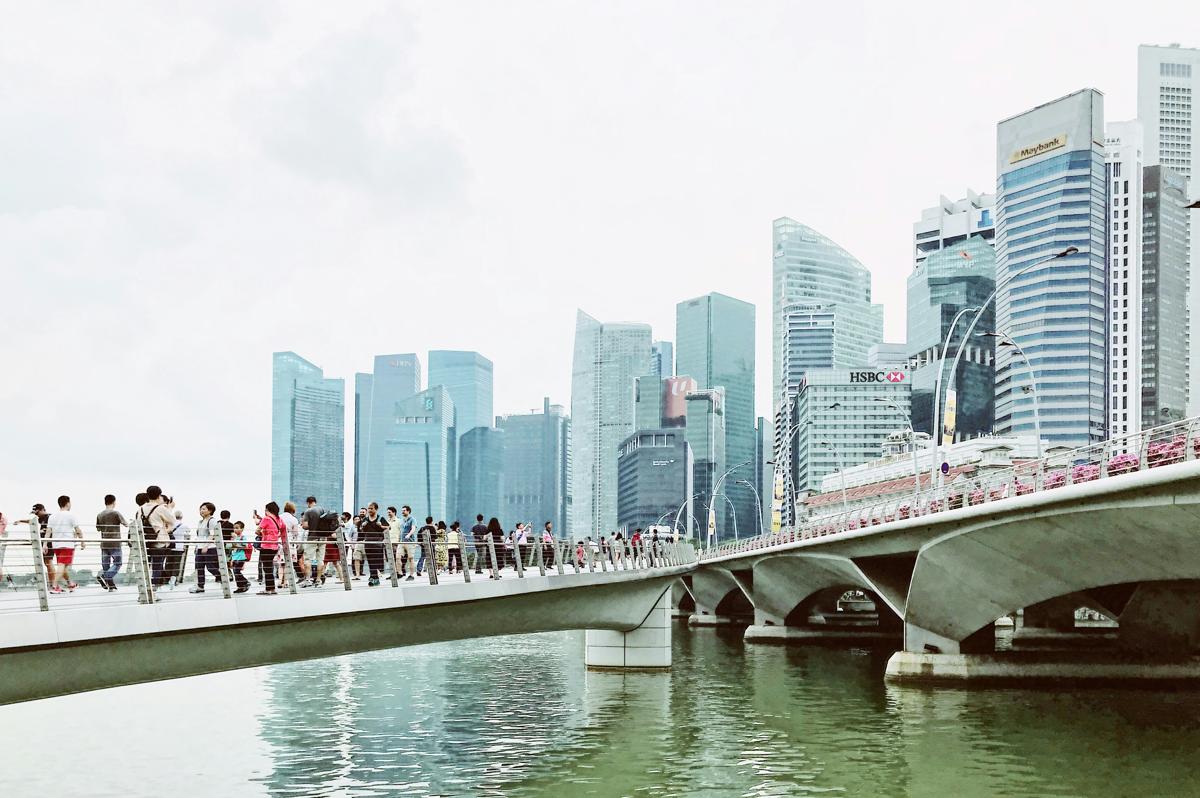
Singapore has a comprehensive system called the Central Provident Fund. This provides for retirement, healthcare and housing needs through mandatory contributions from employers and employees.
Contributions start from an individual’s first pay cheque and the rates vary based on age and wage levels. While subject to periodic changes, the total contribution rate is currently up to 37% for employees under 55. This means that if an employee earns $1,000 per month, then $370 would be deducted from their pay cheque, with the contribution split between the employee and the employer.
The scheme is more than just a retirement fund. It also includes various accounts which can be accessed at different stages to fund different financial needs. These range from housing, insurance, investment, education and medical expenses, in addition to the usual retirement requirements.
Individuals can also top up these savings with voluntary savings which can be accessed before retirement age under specific conditions. In this way, the fund has significantly contributed to Singapore’s housing policy, allowing citizens to use their savings for purchasing government flats. Around 80% of Singaporeans live in these flats, which have appreciated in value, in turn improving the financial security of homeowners.
Proof of the pudding
The economies and individual incomes of Australia, Chile and Singapore have grown impressively. In 1980 Chile was a low-income country; Australia was somewhat richer, but also relied overwhelmingly on commodities for growth; and Singapore was an emerging Asian tiger.
Today, Singapore boasts per capita income of US$65,400 and Australia US$61,300. Chile now ranks as a middle-income country.
South Africa’s per person income stands at just US$6,000 and it has grown by only 0.9% per year over the last 20 years. Individual incomes stand lower today than ten years ago.
Caution, construction ahead
Compulsory pension funds have the potential to transform economies by promoting capital accumulation, supporting financial market development, stabilising consumption patterns, fostering inclusive growth, and reducing fiscal pressures on governments.
While a compulsory pension scheme won’t solve South Africa’s slow growth rate, the experiences of other countries show how this can serve as a valuable component of a broader strategy to achieve economic growth.
South Africa’s policymakers have recognised the importance of preserving and growing pension assets, which could serve as a foundation for future economic development. And while the current reforms take a meaningful step in the right direction, by learning from the experiences of countries like Australia, Chile, and Singapore, it can more fully harness the power of savings to drive long-term growth and prosperity.
This article is the third in a series exploring South Africa’s new retirement system and its broader economic, financial and social implications. In the first, I examined how changes in South Africa’s retirement rules could boost the country’s saving rate, contributing to economic growth and broader societal well-being. The second delved into how individuals could use the new system to strengthen their household finances.
Adrian Saville, Professor of Economics, Finance & Strategy at the Gordon Institute of Business Science, University of Pretoria
This article is republished from The Conversation under a Creative Commons license. Read the original article.