dotlah! dotlah!
  • Cities
  • Technology
  • Business
  • Politics
  • Society
  • Science
  • About
Social Links
  • zedreviews.com
  • citi.io
  • aster.cloud
  • liwaiwai.com
  • guzz.co.uk
  • atinatin.com
0 Likes
0 Followers
0 Subscribers
dotlah!
  • Cities
  • Technology
  • Business
  • Politics
  • Society
  • Science
  • About
  • Science
  • Society

When Will There Be A Coronavirus Vaccine? 5 Questions Answered

  • January 29, 2020
Image: REUTERS
Total
0
Shares
0
0
0

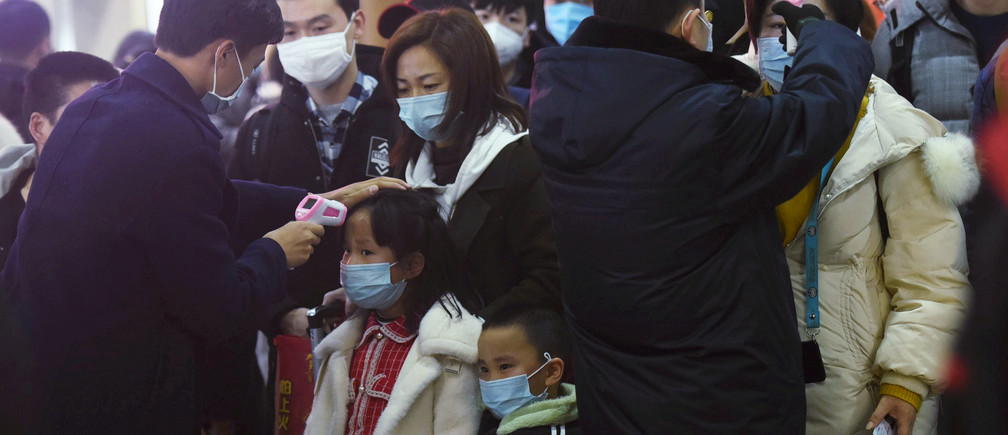
The coronavirus that started in Wuhan has sickened more than 6,000 people and killed at least 132 in China as of Jan. 29, 2020. Thailand and Hong Kong each have reported eight confirmed cases, and five people in the U.S. have been diagnosed with the illness. People are hoping for a vaccine to slow the spread of the disease.
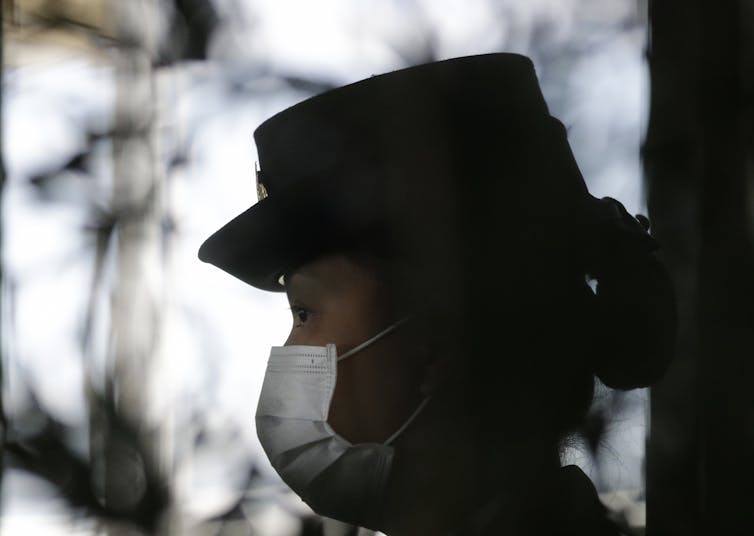
A security guard wears a mask as she keeps watch at arriving passengers at Manila’s international airport in the Philippines on Jan. 23, 2020, as part of efforts to contain the coronavirus. Aaron Favila/AP Photo

Is there a vaccine under development for the coronavirus?

Work has begun at multiple organizations, including the National Institutes of Health, to develop a vaccine for this new strain of coronavirus, known among scientists as 2019-nCoV.

Scientists are just getting started working, but their vaccine development strategy will benefit both from work that has been done on closely related viruses, such as SARS and MERS, as well as advances that have been made in vaccine technologies, such as nucleic acid vaccines, which are DNA- and RNA-based vaccines that produce the vaccine antigen in your own body.

Was work underway on this particular strain?

No, but work was ongoing for other closely related coronaviruses that have caused severe disease in humans, namely MERS and SARS. Scientists had not been concerned about this particular strain, as we did not know that it existed and could cause disease in humans until it started causing this outbreak.

How do scientists know when to work on a vaccine for a coronavirus?

Work on vaccines for severe coronaviruses has historically begun once the viruses start infecting humans.

Given that this is the third major outbreak of a new coronavirus that we have had in the past two decades and also given the severity of disease caused by these viruses, we should consider investing in the development of a vaccine that would be broadly protective against these viruses.

What does this work involve, and when might we actually have a vaccine?

This work involves designing the vaccine constructs – for example, producing the right target antigens, viral proteins that are targeted by the immune system, followed by testing in animal models to show that they are protective and safe.

Once safety and efficacy are established, vaccines can advance into clinical trials in humans. If the vaccines induce the expected immune response and protection and are found safe, they can be mass-produced for vaccination of the population.

Currently, we lack virus isolates – or samples of the virus – to test the vaccines against. We also lack antibodies to make sure the vaccine is in good shape. We need the virus in order to test if the immune response induced by the vaccine works. Also, we need to establish what animals to test the vaccine on. That potentially could include mice and nonhuman primates.

Vaccine development will likely take months.

Can humans ever be safe from these types of outbreaks?

We expect that these types of outbreaks will occur for the foreseeable future in irregular intervals.

To try to prevent large outbreaks and pandemics, we need to improve surveillance in both humans and animals worldwide as well as invest in risk assessment, allowing scientists to evaluate the potential threat to human health from the virus, for detected viruses.

We believe that global action is needed to invest in novel vaccine approaches that can be employed quickly whenever a new virus like the current coronavirus – and also viruses similar to Zika, Ebola or influenza – emerges. Currently, responses to emerging pathogens are mostly reactive, meaning they start after the outbreak happens. We need a more proactive approach supported by continuous funding.The Conversation


Aubree Gordon, Professor of Public Health, University of Michigan and Florian Krammer, Professor of Vaccinology, Icahn School of Medicine at Mount Sinai

This article is republished from The Conversation under a Creative Commons license. Read the original article.


Total
0
Shares
Share
Tweet
Share
Share
Related Topics
  • Coronavirus
  • Vaccine
  • Wuhan Coronavirus
majulah

Previous Article
  • Lah!
  • Technology

Payment Services Act Comes Into Force

  • January 29, 2020
View Post
Next Article
  • Cities

Millennial Millionaires Are Redefining What A Good Location Means In Real Estate

  • January 29, 2020
View Post
You May Also Like
View Post
  • Cities
  • Climate Change
  • Science

New research may help scientists predict when a humid heat wave will break

  • dotlah.com
  • January 6, 2026
Semiconductor
View Post
  • Computing
  • Science

Decoding The Digital. Distinguishing Computer Science And Information Technology In Society And Industry.

  • Dean Marc
  • May 2, 2024
View Post
  • Artificial Intelligence
  • Data
  • Research
  • Science

Generative AI Could Offer A Faster Way To Test Theories Of How The Universe Works

  • dotlah.com
  • March 17, 2024
Mercury
View Post
  • Science
  • Technology

Study: Global Deforestation Leads To More Mercury Pollution

  • dotlah.com
  • February 14, 2024
View Post
  • Science
  • Technology

Higher, Faster: What Influences The Aerodynamics Of A Football?

  • dotlah.com
  • February 11, 2024
View Post
  • Artificial Intelligence
  • Science
  • Technology

A Glimpse Of The Next Generation Of AlphaFold

  • dotlah.com
  • November 6, 2023
View Post
  • Artificial Intelligence
  • Machine Learning
  • Science
  • Technology

AI in the Classroom: Amii’s K-12 Pilot Program

  • dotlah.com
  • October 23, 2023
View Post
  • Science
  • Technology

Learning How To Learn

  • John Francis
  • October 23, 2023


Trending
  • 1
    • Technology
    NUS Researchers Discovered A New Personalised Tool To Detect Cancer Using Big Data Analytics
    • January 14, 2020
  • face-masks-anton-dX5tNZHRSEI-unsplash 2
    • People
    Not All Face Mask Materials Give You The Same Protection
    • April 12, 2021
  • 3
    • Lah!
    All Nippon Airways And Singapore Airlines Deepen Partnership With Joint Venture Agreement
    • February 1, 2020
  • 4
    • Lah!
    New Public Waste Collector For The Clementi-Bukit Merah Sector From 1 January 2021
    • December 3, 2020
  • Greener spaces would allow children to be more connected with nature. Image credit - Fas Khan / Unsplash 5
    • Cities
    Cities that connect people and nature are a post-pandemic priority, conference hears
    • July 7, 2021
  • singapore east coast 6
    • Lah!
    NEA To Provide Beach Short-Term Water Quality Information
    • October 8, 2020
  • taipei taiwan skyline 7
    • Cities
    The Best And Worst Cities For Expats To Live In 2020
    • October 18, 2020
  • 8
    • Lah!
    “SG Clean” Campaign Launched To Rally Public And Businesses To Work Together To Keep Singapore Clean
    • February 17, 2020
  • copenhagen-denmark-febiyan--hwDGRQzAeM-unsplash 9
    • Cities
    The World’s Safest Cities 2021
    • August 30, 2021
  • 10
    • Lah!
    • Society
    • Technology
    Marrying Psychology And Machines
    • September 8, 2021
  • 11
    • Cities
    • Economy
    How Saudi Arabia Is Investing To Transform Its Economy
    • October 13, 2023
  • hp3-harry-potter-wallpaper_desktop_768x1024-v2 12
    • Cities
    Software. The Modern Philosopher’s Stone. Transmuting Imagination Into Capital.
    • June 27, 2023
Trending
  • 1
    Chinese tech giant Huawei unveils Mate 90 series smartphones with flagship Tau chips adopting logic folding technology
    • October 3, 2026
  • 2
    Google Opens Singapore Engineering Center to Build and Export Enterprise Cloud and AI to the World
    • September 15, 2026
  • 3
    Apple Flagship Hardware Launch for September 2026
    • September 10, 2026
  • 4
    MIT researchers tackle the economic realities of fusion power
    • August 10, 2026
  • 5
    ASEAN, treaty parties push stronger cooperation as Treaty of Amity and Cooperation in Southeast Asia marks 50 years
    • July 26, 2026
  • 6
    The Fastest AI Fried Chicken In The World
    • June 29, 2026
  • 7
    Zed Approves | How to Stay Cool in Extreme Heat
    • June 29, 2026
  • 8
    Was Venezuela struck by an earthquake ‘doublet’? Here’s what we know so far
    • June 27, 2026
  • 9
    Zed Approves | It’s Prime Day 2026! Time to Upgrade Your World Cup Viewing Setup and Beat the Heat
    • June 25, 2026
  • 10
    Zed Approves | The Best Prime Day PC Deals: Top Gaming Rigs, Workstations, and Everyday Laptops
    • June 25, 2026
Social Links
dotlah! dotlah!
  • Cities
  • Technology
  • Business
  • Politics
  • Society
  • Science
  • About
Connecting Dots Across Asia's Tech and Urban Landscape

Input your search keywords and press Enter.