The first-of-its-kind centre will integrate social and behavioural science research, digital technologies, data-driven approaches, and policy studies to holistically examine the Internet and its societal impact
The rise of the Internet and the popularity of social media have generated increasing discussion on topics such as the future of privacy, freedom of expression, misinformation and disinformation, as well as maintaining social security and stability. To comprehensively address these pressing issues which will evolve in tandem with Singapore’s journey towards becoming a Smart Nation, the National University of Singapore (NUS) will establish a new Centre for Trusted Internet and Community (CTIC), dedicated to the inter-disciplinary study of the Internet and its implications on the society of the future.

The new Centre, located at NUS’ innovation 4.0 building, will begin operations on 1 April 2020. It will adopt a unique approach integrating three different perspectives – technology, human and policy – in the research and development of technologies and solutions to create an accountable world wide web and ascertain the trustworthiness of information, making it the first of its kind in the world.
“Currently, most Internet research programmes around the world adopt a singular approach, focusing only on technology, the human, or policy aspects. Such an approach may not be optimal, given the inherently multidisciplinary nature of Internet studies,” explained Professor Chen Tsuhan, NUS Deputy President (Research and Technology).
“A lot of good work has already been done at NUS on various aspects of Internet studies. CTIC will grow, integrate, and amplify our knowledge in this area. This multi-pronged approach, which will involve multiple stakeholders, including technology companies, community leaders and volunteers as well as government, will make important contributions towards public security, public discourse and public education,” Prof Chen added.
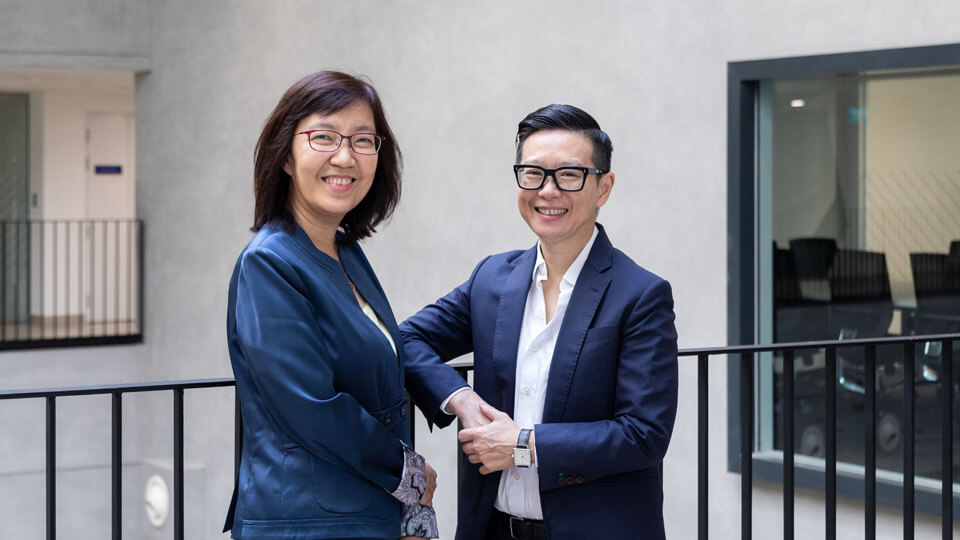
CTIC will be led by computer scientist Professor Lee Mong Li as its Director, and communications and new media expert Professor Audrey Yue as its Deputy Director. A team of more than 20 academics with expertise ranging from computer science and new media to psychology, public policy and law, will lead research teams to study and develop a set of insights, tools, policies and best practices around the responsible use of the Internet, in order to promote responsible public discourse, to protect individuals against online falsehoods, and to establish the trustworthiness of information sources.
Prof Lee said, “CTIC aims to be Singapore’s leading centre and focal point of Internet studies, studying issues such as the implications of emerging technologies, social media development, digital well-being and values, digital culture, as well as international policies, standards and best practices. By harnessing the latest technologies, our researchers will make sense of the wealth of information and patterns of information dissemination, transmission and use over the Internet.”
Multi-pronged approach to internet studies
The research activities of CTIC will be anchored on three pillars:
1. Technology
Researchers will leverage state-of-the-art Artificial Intelligence (AI) and data science technologies for the study of the Internet and its implications. This includes the detection and mitigation of the spread of false information through online media, and the automatic assessment and verification of the trustworthiness of information sources.
2. Human
Researchers will conduct studies to improve the understanding of individual cognitive and socio-psychological factors that motivate the producers and consumers of information, which could in turn influence the consumption and spread of information (including misinformation), the patterns of information use and the dissemination of information.
3. Policy
Researchers will study regulations in areas such as privacy and freedom of expression that shape the design and use of the Internet, as well as emerging institutions and processes of Internet governance that can be used to discourage and mitigate misinformation.
Applying research to improve digital well-being of Singaporeans
The insights gained from the research activities under the above three pillars will be integrated and applied to address the following:
1. Public Security
Generate a deep understanding of the various implications of the use of the Internet, such as how bias and misinformation can be weaponised, and the challenges of the digital divide.
2. Public Discourse
Develop technologies, policies and best practices to detect and mitigate misinformation. CTIC will also collaborate with stakeholders to build an ecosystem to encourage responsible public discourse.
3. Public Education and Resources
Inculcate a culture that prioritises facts over misinformation. The Centre will host an online repository of commentaries written by academics and other subject matter experts, as well as organise talks and public lectures to increase public awareness on the use of the Internet, misinformation and digital well-being.
Even before the Centre’s official inauguration, CTIC researchers have already begun work on its first use case focusing on the Coronavirus Disease 2019 (COVID-19) situation in Singapore, to demonstrate the importance of responsible public discourse.
Researchers will be using AI to analyse and evaluate the credibility of online claims related to COVID-19, and examine tagging and sharing trends on social media in relation to the virus outbreak to study patterns of information dissemination in Singapore. In addition, researchers are analysing the strategies adopted by the government, media, technology platforms and the community around the world in managing the evolving COVID-19 crisis, and assessing the impact of COVID-19 on an individual’s feelings, interactions and thoughts.
This multi-disciplinary research effort is expected to be completed by the end of March 2020 and the findings will be published on the Centre’s website.