dotlah! dotlah!
  • Cities
  • Technology
  • Business
  • Politics
  • Society
  • Science
  • About
Social Links
  • zedreviews.com
  • citi.io
  • aster.cloud
  • liwaiwai.com
  • guzz.co.uk
  • atinatin.com
0 Likes
0 Followers
0 Subscribers
dotlah!
  • Cities
  • Technology
  • Business
  • Politics
  • Society
  • Science
  • About
  • Cities

What We Can Learn From The Stoics In Rethinking Urban Design

  • May 20, 2020
Total
0
Shares
0
0
0

Apart from self-improvement, Stoic wisdom also provides insights on how we can improve urban design.

Stoicism, the ancient Greek school of philosophy founded centuries ago by Zeno of Citium has served as guidance for people of differing backgrounds in dealing with the daily concerns of the world.

While improvement that people desire from the teachings of the Stoics tend to be inward in nature, the wisdom of the ancient philosophers and its practitioners may also help in rethinking city design.

Today, we will focus on Marcus Aurelius’ Meditations, a classic text from the last of the Five Good Emperors of Rome ideal for those who want to be acquainted with Stoic teachings.

State of flux

[4.36a] Constant awareness that everything is born from change. The knowledge that there is nothing nature loves more than to alter what exists and make new things like it. 

Cities are the drivers of innovation and change in the modern world. However, we are resistant to change and this can reflect in our policies and actions. In designing cities, we can adopt the acknowledgement of the Stoics that everything is in a state of flux.

Under this assumption, policies and decisions will be directed towards preparedness and building resilience, focusing on the best that we can do at present for the unknown future ahead.

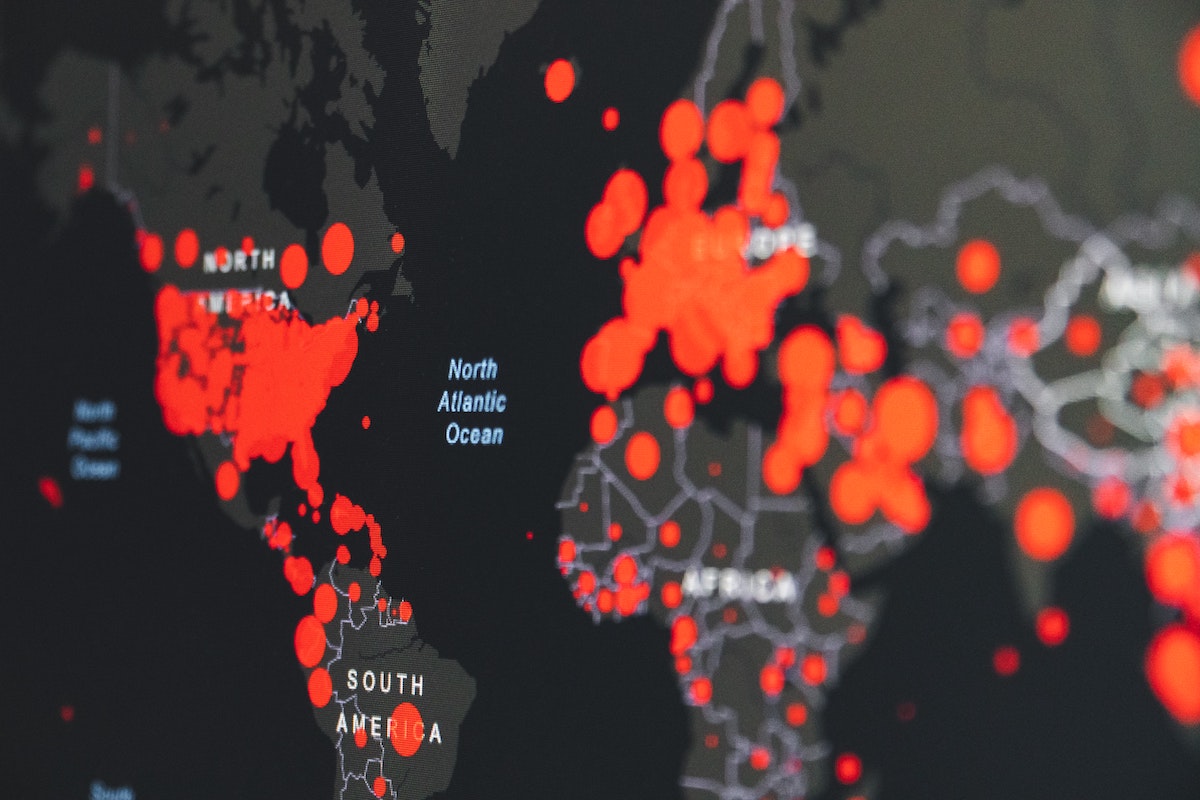
This is relevant in the on-going COVID-19 pandemic in relation to the 2003 SARS epidemic. We can see that cities like Hong Kong which built resilience after the spread of SARS have taken building resilience in full seriousness. With this, they have successfully circumvented what could have been a massive catastrophe due to COVID-19.

Interwoven

[4.40] What follows coheres with what went before. Not like a random

catalogue whose order is imposed upon it arbitrarily, but logically

connected. And just as what exists is ordered and harmonious, what comes

into being betrays an order too. Not a mere sequence, but an astonishing

concordance.

This excerpt teaches us that a vacuum approach in making policies and reshaping cities, on the whole, is doomed to fail, given how the elements of the city are causally connected.

This would suggest that a stakeholder approach in policy is the way to go, since this will allow the consideration of those who are affected by every change made in the city.

Cycle

[10.27]  To bear in mind constantly that all of this has happened before.

And will happen again—the same plot from beginning to end, the identical

staging. Produce them in your mind, as you know them from experience or

from history: the court of Hadrian, of Antoninus. The courts of Philip,

Alexander, Croesus. All just the same. Only the people different (sic).

This excerpt brings the importance of evidence in making our decisions. In our policies we turn back to history instead of erasing it, observing how things had unfolded in the past. Apart from history, this evidence can also be taken from the experiences of the city dwellers today.

Deconstruction

[8.11] What is this, fundamentally? What is its nature and substance, its

reason for being? What is it doing in the world? How long is it here for?

This set of questions from Marcus Aurelius is a good starting point in considering how the current design of a city can be further improved. This concept is well-encapsulated in the following excerpt:

[12.10] To see things as they are. Substance, cause and purpose.

Caught up in biases and tradition, it might be easy to miss out what is really needed.

[9.35a] To decompose is to be recomposed.

Faced with this situation, the Stoics suggest a deconstruction of the problem into its essential blocks to get to the root of it.

A sobering reminder

The ideas of the Stoics are not groundbreaking — they were never intended to be.

As you would observe, reading from the Stoics, the teachings eventually will direct you away from the books themselves, bringing your attention to what is before you and what is within your sphere of control.

Stoicism is a reminder for us to remain grounded and act on the only point in time which we can take control of: the present. This is a mindset that designers can benefit from in moulding the cities of today.


Reference

Aurelius, M. (n.d.). Meditations: a new translation, with an introduction, by Gregory Hays. (G. Hays, Trans.). New York: The Modern Library.
Total
0
Shares
Share
Tweet
Share
Share
Related Topics
  • Stoics
  • Urban Design
dotlah.com

Previous Article
  • People
  • Politics
  • World Events

Coronavirus: Governments Knew A Pandemic Was A Threat – Here’s Why They Weren’t Better Prepared

  • May 20, 2020
View Post
Next Article
  • Cities
  • People

How We Took Everything For Granted – And Will We Do It Again?

  • May 21, 2020
View Post
You May Also Like
View Post
  • Cities
  • Economy
  • Politics

The global price tag of war in the Middle East

  • dotlah.com
  • March 24, 2026
View Post
  • Cities
  • Food

How the Iran war could create a ‘fertiliser shock’ – an often ignored global risk to food prices and farming

  • dotlah.com
  • March 6, 2026
View Post
  • Cities
  • Climate Change
  • Science

New research may help scientists predict when a humid heat wave will break

  • dotlah.com
  • January 6, 2026
View Post
  • Cities

How bus stops and bike lanes can make or break your festive city trip

  • dotlah.com
  • December 29, 2025
View Post
  • Cities
  • People

We must empower local leaders to meet global goals – here’s why

  • dotlah.com
  • November 4, 2025
View Post
  • Cities

Politicians love comparing NZ’s economy to Singapore or Ireland – but it’s simplistic and misleading

  • dotlah.com
  • September 21, 2025
View Post
  • Cities
  • Technology

Meralco PowerGen’s PacificLight starts up 100 MW fast-response plant in Singapore

  • dotlah.com
  • June 20, 2025
View Post
  • Cities

Renewable energy, carbon credits are priority areas of cooperation for Singapore, Philippines: Lawrence Wong

  • dotlah.com
  • June 4, 2025


Trending
  • covid19-restricted-access-jonathan-cooper-qGejOjJgC_w-unsplash 1
    • People
    • World Events
    Why It Matters That The Coronavirus Is Changing – And What This Means For Vaccine Effectiveness
    • December 31, 2020
  • 2
    • Technology
    SGInnovate To Create More Jobs & Traineeships In Deep Tech Industry
    • September 10, 2020
  • 3
    • Science
    From Sky Charts To Atomic Clocks, Time Is A Mysterious Story That Humans Keep Inventing
    • December 16, 2019
  • 4
    • Technology
    New NUS Centre For 5G Digital Building Technology To Augment Digital Capability Of Singapore’s Built Environment Industry
    • December 18, 2021
  • london-ming-jun-tan-o6ICDlt5_2k-unsplash 5
    • Cities
    • Economy
    These are the world’s top cities. Which one ranked highest for the 10th year running?
    • March 3, 2022
  • charity-water-cw_Selects_16x9_19 6
    • dotZero
    • Features
    • Op-Ed
    • Outsights
    • People
    Join the Movement: Provide Clean Water and Transform Lives
    • June 13, 2023
  • 7
    • Science
    Compound In Green Tea Plant Shows Potential For Fighting Tuberculosis, Finds Research Team Led By NTU Singapore
    • December 17, 2019
  • 8
    • Lah!
    The History Of Insects Living On The Open Ocean Tracked With The History Of The Currents They Ride
    • September 8, 2021
  • 9
    • People
    • World Events
    How Does The Wuhan Coronavirus Cause Severe Illness?
    • February 4, 2020
  • 10
    • People
    • Technology
    Twitter Is Now X. Here’s What That Means.
    • July 25, 2023
  • 11
    • Environment
    • People
    Plans To Fight Coronavirus Must Pay Attention To The Environment
    • March 1, 2020
  • 12
    • Cities
    The 100 Most Solar Cities In America
    • March 6, 2020
Trending
  • Red Hat OpenShift 1
    Red Hat Further Drives Digital Sovereignty for the AI Era with Red Hat OpenShift on Google Cloud Dedicated
    • April 21, 2026
  • Illustration of data storage 2
    The Splinternet Comes for European Supply Chains Why Fragmentation Is Now a Boardroom Problem
    • April 21, 2026
  • 3
    Here’s how to get the $7 trillion AI hardware buildout right
    • April 18, 2026
  • totus-technologies-cover 4
    The Transatlantic Tech Rift and Why Data Sovereignty Is the New Industrial Imperative
    • April 16, 2026
  • 5
    What will it take to get ships going through the Strait of Hormuz again?
    • April 13, 2026
  • 6
    Hon Hai Technology Group (Foxconn) Recognized As Top 100 Global Innovators 2026
    • April 9, 2026
  • 7
    3 lessons on the energy transition in an age of crisis
    • April 7, 2026
  • 8
    Samsung Unveils Galaxy A57 5G and Galaxy A37 5G, Packing Pro-Level Features at Awesome Price
    • March 25, 2026
  • 9
    The global price tag of war in the Middle East
    • March 24, 2026
  • 10
    Kioxia Announces New SSD Model Optimized for AI GPU-Initiated Workloads
    • March 17, 2026
Social Links
dotlah! dotlah!
  • Cities
  • Technology
  • Business
  • Politics
  • Society
  • Science
  • About
Connecting Dots Across Asia's Tech and Urban Landscape

Input your search keywords and press Enter.