dotlah! dotlah!
  • Cities
  • Technology
  • Business
  • Politics
  • Society
  • Science
  • About
Social Links
  • zedreviews.com
  • citi.io
  • aster.cloud
  • liwaiwai.com
  • guzz.co.uk
  • atinatin.com
0 Likes
0 Followers
0 Subscribers
dotlah!
  • Cities
  • Technology
  • Business
  • Politics
  • Society
  • Science
  • About
  • Lah!

How Can Urban Farming Feed The World?

  • June 16, 2020
Total
0
Shares
0
0
0

The infusion of data, automation, and agriculture may be the solution to global food security.

By the year 2050, the world’s population is projected to exceed 10 billion, around 70% of which will be living in cities.

This population spike has a lot of consequences in the various sectors of our society. One exceptionally pronounced effect would be in the global food supply. With the increase in demand, food production must be capable of keeping up.

Given the rate and the distribution of population growth, there is one attractive approach to agriculture that may help in tackling this problem: urban farming.

What is urban farming?

In simple terms, urban farming pertains to the operation of agriculture in the city setting.

Agriculture being performed in the city context means that it will be immersed in urban policies and technological developments present in the city. The consequence of this immersion is a change not only in the location where farming is being conducted but also a change in the way of farming itself.

Urban farming is characterised by its focus on the mindful use of limited resources and the attempt to make agricultural practices more sustainable than the traditional approaches.

How is urban farming better than the traditional approach?
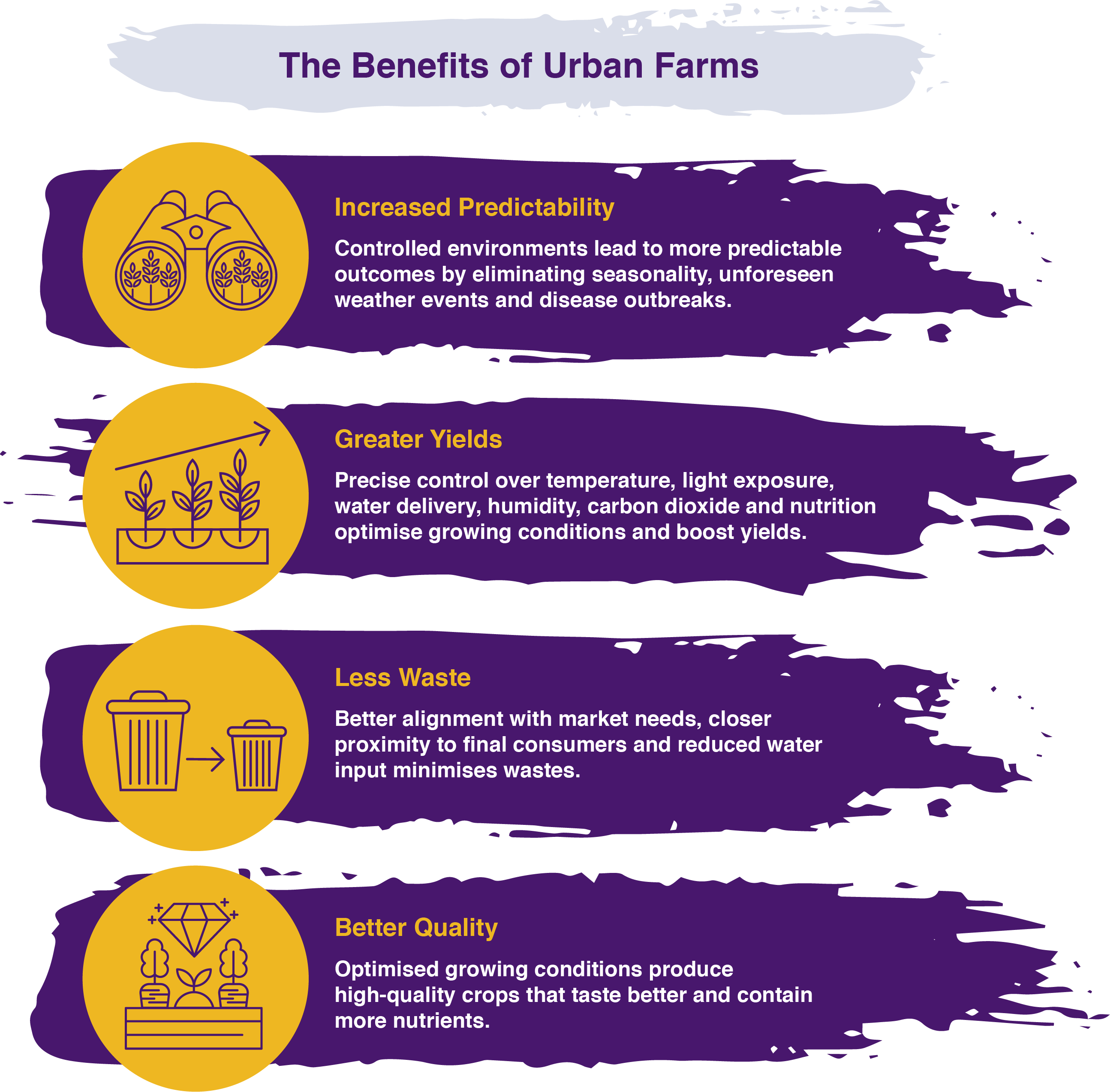
Source: Temasek

In urban farming, there is a higher level of control in the environment where crops are being cultivated. Through the use of sensors, LED lights, and other automated farming tools, urban farmers can emulate ideal conditions for plant growth, lessen the risk of diseases, and eliminate the seasonality of crops.

The ability to precisely control the environment has three key benefits:

  1. It leads to greater yields since the environment can be adjusted exactly to a plant’s needs for maximum growth.
  2. There would be less waste since the excess usage of resources like water and fertiliser can be prevented.
  3. Apart from the quantity of crops, their quality will also be improved due to being cultivated in ideal growing conditions.

Apart from these benefits, being able to grow crops in the city also means that transportation costs will be lowered. At the same time, carbon emissions linked with transportation can also be cut down.

What are some examples of urban farming tech?

A typical execution of urban agriculture comes in the form of vertical farming.
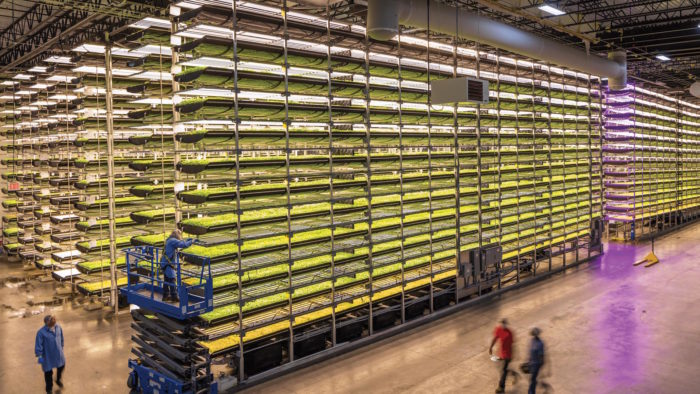
Source: Food + City

In Camden in London, Aerofarms have transformed empty lots into futuristic vertical community farms. Plants — typically leafy greens which don’t need much light — are cultivated in multilevel farms with LED lighting to emulate natural lighting conditions. This layout allows higher food production in cities where available land is scarce as well as the more efficient use of water.

This indoor farming technique is promising, but it is not suitable for all types of crops. For example, staple crops like rice, wheat, and corn are not suitable for a vertical farming configuration.

The dependence of vertical farms on LED lights also inflates energy cost though technological developments are expected to lower this down in the future.
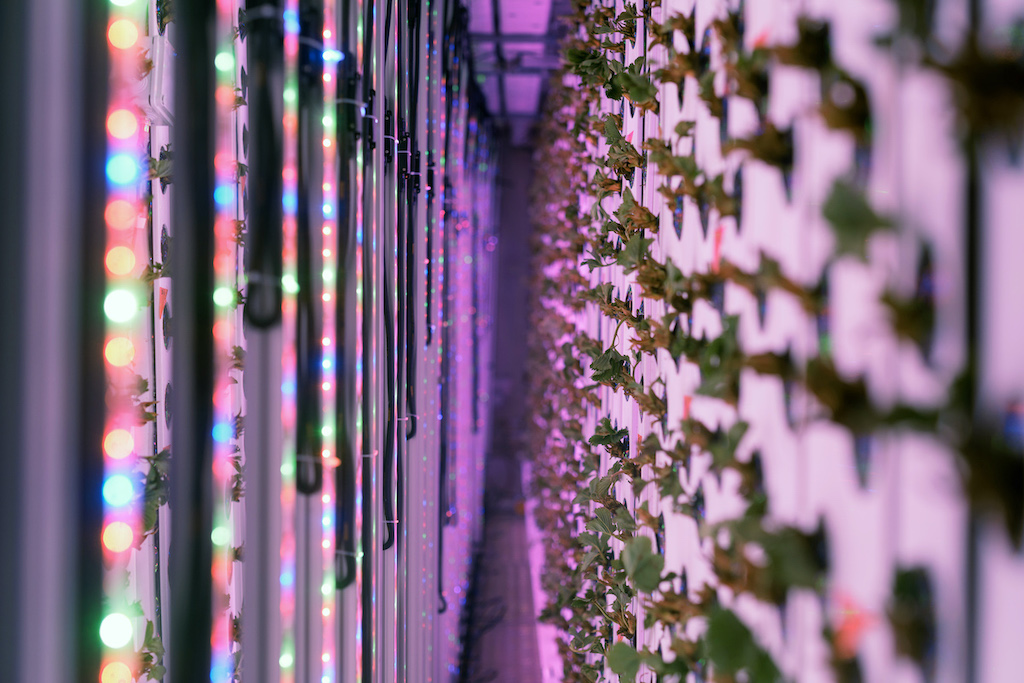
Source: Tech Crunch

Agricool is a French startup which uses containers to grow strawberries all year long. Similar to vertical farms, the indoor configuration of these containers provides urban farmers an unprecedented level of control. However, this means that it also suffers from the inflated energy cost since it depends on LED lights.

The end result?  GMO-free and pesticide-free strawberries produced in the city. Eventually, the company intends to expand Agricool for other fruits and vegetables.
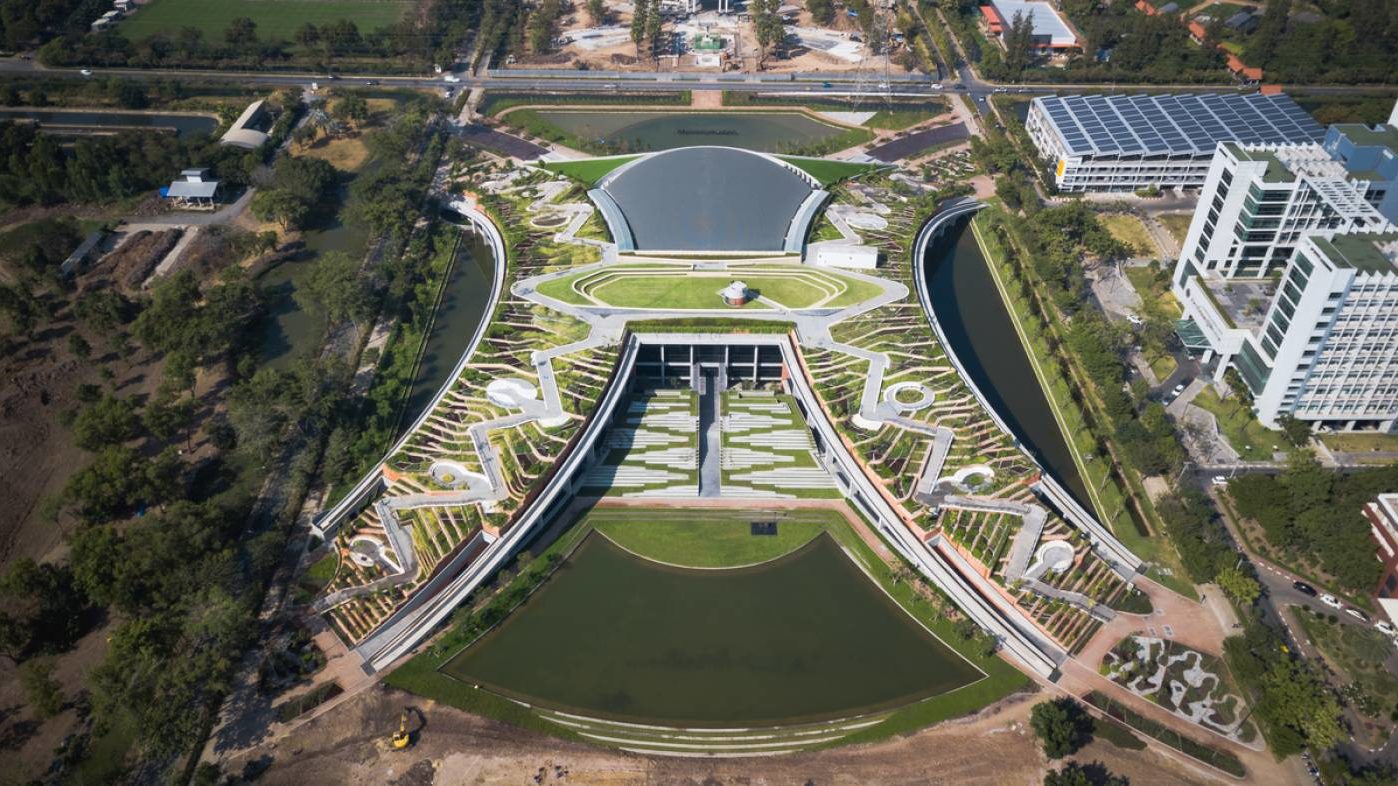
Bangkok’s Thammasat University rooftop farm

In Bangkok’s Thammasat University, the largest urban rooftop farm in Asia can be seen. Unlike vertical farms, rooftop farms can grow rice as well as other vegetables and herbs since they use natural light. This means that they also use less energy since sunlight is free to use unlike LED.

The concept may be simple, but the use of rooftop farms is a clever way to maximise the use of land space and encourage people to participate in farming activities.

Urban farming does not have to involve flashy technology. Even in the comfort of your own home, you can also begin growing your own plants for your own consumption. In this simple way, you are also strengthening food security in your city.


Total
0
Shares
Share
Tweet
Share
Share
Related Topics
  • Agriculture
  • Crops
  • Farming
  • Food
  • Urban Farming
majulah

Previous Article
  • Cities
  • Technology

How The Internet Of Things Is Building Smarter Cities

  • June 15, 2020
View Post
Next Article
  • Cities

Adapting To A New Normal For Real Estate – CapitaLand Boosts Recovery In China With Digitalisation Strategy

  • June 16, 2020
View Post
You May Also Like
View Post
  • Lah!

Tariffs, Trump, and Other Things That Start With T – They’re Not The Problem, It’s How We Use Them

  • John Francis
  • March 25, 2025
View Post
  • Lah!

Canonical announces 12 year Kubernetes LTS

  • John Francis
  • March 4, 2025
dotlah-smartnation-singapore-lawrence-wong
View Post
  • Artificial Intelligence
  • Featured
  • Features
  • Lah!
  • Machine Learning
  • Technology

Growth, community and trust the ‘building blocks’ as Singapore refreshes Smart Nation strategies: PM Wong

  • Dean Marc
  • October 9, 2024
dotlah-singapore-ndp-2024
View Post
  • Lah!

Here’s what to expect for NDP 2024!

  • dotlah.com
  • August 9, 2024
dotlah-singapore-airlines_may_21-1716298816
View Post
  • Lah!

Severe turbulence during Singapore Airlines flight leaves several people badly injured. One man died

  • majulah
  • May 22, 2024
dotlah-pm-lee-lawrence-wong-9656d4cd-1fa4-40ed-905d-e19e639b8476_728802dd
View Post
  • Lah!
  • People
  • Politics

End of Lee Era for Singapore as PM Steps Down

  • dotlah.com
  • May 16, 2024
DPM Lawrence Wong will be Singapore's fourth prime minister on May 15. ST PHOTO: LIM YAOHUI
View Post
  • Lah!
  • People
  • Politics

7 things to know about Singapore’s next prime minister Lawrence Wong

  • dotlah.com
  • May 15, 2024
When asked about his leadership style, DPM Lawrence Wong said he will be open and consultative, but he will not shirk from doing what is necessary for Singapore's future. ST PHOTO: LIM YAOHUI
View Post
  • Features
  • Lah!
  • People
  • Politics

‘We are prepared to relook everything’: Lawrence Wong on a changing society and his hopes for S’pore

  • dotlah.com
  • May 15, 2024


Trending
  • 1
    • Environment
    • People
    • World Events
    The Countries Best And Worst Prepared For A Pandemic
    • February 4, 2020
  • 2
    • Technology
    NTU Singapore Researchers Build Disinfection Robot To Aid Cleaners In COVID-19 Outbreak
    • April 15, 2020
  • 3
    • Lah!
    Google Puts Singapore Hawker Centres On The Map
    • August 7, 2019
  • 4
    • Lah!
    MinLaw And IPOS Seek Feedback On Proposed Licensing Scheme For Collective Management Organisations In Singapore
    • June 6, 2020
  • 5
    • Lah!
    LTA Pilots New Initiative To Help Commuters With Invisible Medical Conditions
    • October 3, 2019
  • PiPiPi 6
    • Gears
    The Unexpected Pi-Fect Deals This March 14
    • March 14, 2025
  • Lawyer meeting his client in prison 7
    • People
    4 Types Of Prisoner Abuse And How To Resolve Them
    • December 14, 2021
  • 8
    • Cities
    • Technology
    A Better Daily Commute Is Possible – Just Ask Residents In These Cities
    • January 23, 2020
  • 9
    • Society
    UOB And Prudential Singapore Launch The UOB Lady’s Savings Account To Help Women Grow Their Wealth And Protect Their Health
    • March 10, 2020
  • 10
    • People
    Putting People At The Centre Of The Green Transition
    • January 20, 2024
  • 11
    • Cities
    How Trees Could Save The Climate
    • July 12, 2019
  • 12
    • Lah!
    Grab Introduces New Hygiene Measures For Ride-hailing With GrabProtect
    • June 3, 2020
Trending
  • 1
    Chinese tech giant Huawei unveils Mate 90 series smartphones with flagship Tau chips adopting logic folding technology
    • October 3, 2026
  • 2
    Google Opens Singapore Engineering Center to Build and Export Enterprise Cloud and AI to the World
    • September 15, 2026
  • 3
    Apple Flagship Hardware Launch for September 2026
    • September 10, 2026
  • 4
    MIT researchers tackle the economic realities of fusion power
    • August 10, 2026
  • 5
    ASEAN, treaty parties push stronger cooperation as Treaty of Amity and Cooperation in Southeast Asia marks 50 years
    • July 26, 2026
  • 6
    The Fastest AI Fried Chicken In The World
    • June 29, 2026
  • 7
    Zed Approves | How to Stay Cool in Extreme Heat
    • June 29, 2026
  • 8
    Was Venezuela struck by an earthquake ‘doublet’? Here’s what we know so far
    • June 27, 2026
  • 9
    Zed Approves | It’s Prime Day 2026! Time to Upgrade Your World Cup Viewing Setup and Beat the Heat
    • June 25, 2026
  • 10
    Zed Approves | The Best Prime Day PC Deals: Top Gaming Rigs, Workstations, and Everyday Laptops
    • June 25, 2026
Social Links
dotlah! dotlah!
  • Cities
  • Technology
  • Business
  • Politics
  • Society
  • Science
  • About
Connecting Dots Across Asia's Tech and Urban Landscape

Input your search keywords and press Enter.