dotlah! dotlah!
  • Cities
  • Technology
  • Business
  • Politics
  • Society
  • Science
  • About
Social Links
  • zedreviews.com
  • citi.io
  • aster.cloud
  • liwaiwai.com
  • guzz.co.uk
  • atinatin.com
0 Likes
0 Followers
0 Subscribers
dotlah!
  • Cities
  • Technology
  • Business
  • Politics
  • Society
  • Science
  • About
  • Lah!
  • Technology

How GovTech Is Reinventing The Smart Glasses

  • July 25, 2019
Total
0
Shares
0
0
0

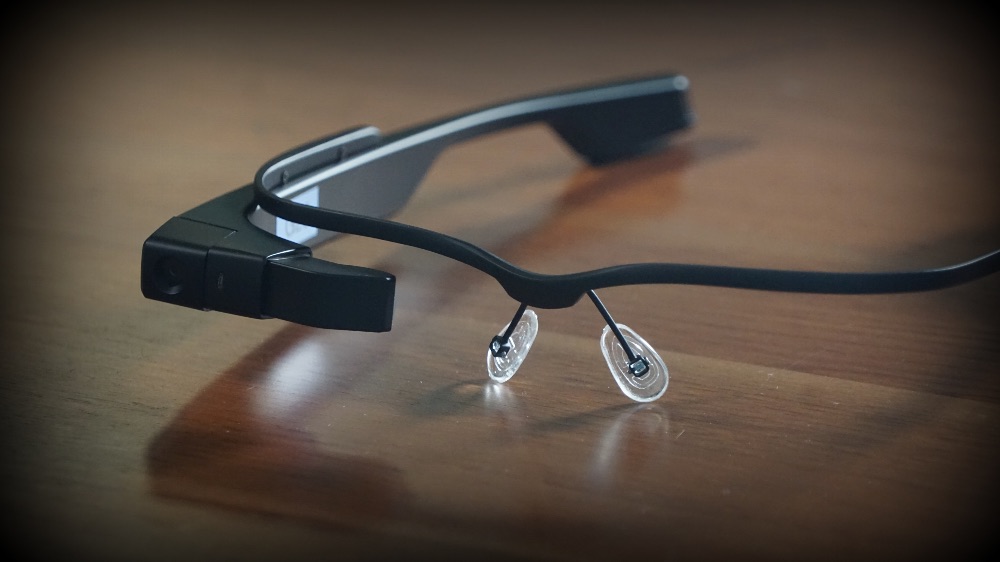
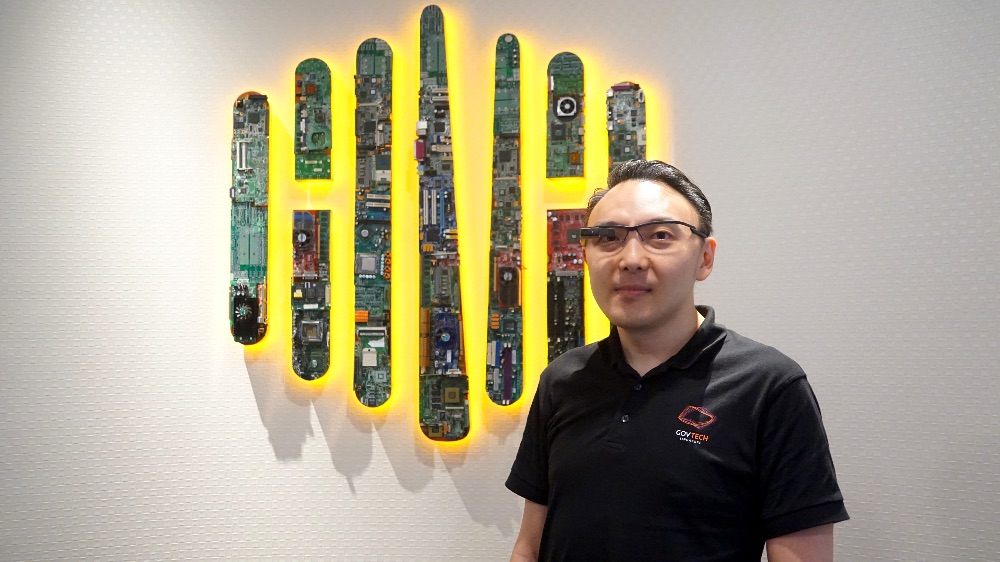
Google’s smart glasses never really took off despite strong initial interest from the public. GovTech’s Mr Ng Yong Kiat shares why he thinks smart glasses technology deserves a second shot.

When Google first announced its head-mounted display—the Google Glass—in 2012, it clearly caught the eye of the mass consumer market. The promotional video for the device, featuring icons and content flitting in and out of a wearer’s field of view, garnered millions of views within days of being released, giving the world a glimpse of a new interface with the digital world.

But fast forward to 2019, and Google Glass is nowhere to be seen. Mr Ng Yong Kiat, Senior Manager at the Government Technology Agency of Singapore (GovTech), puts it down to a failure in finding a proper use case for the gadget.

“[The Google Glass’] intended market segment was the mass consumer, but Google didn’t have an ecosystem or apps for smart glasses. If I buy a Google Glass for US$1,500, I wouldn’t even know what to do with it,” he said.

Does that sound the death knell for smart glasses technology? Far from it. At GovTech, Mr Ng and his team have evaluated numerous ways to use smart glasses, essentially finding specific niches for the futuristic eyewear.

Show, don’t tell

Out of the box, smart glasses have two major functionalities: live conferencing and facial recognition. While both can be done using conventional cameras, smart glasses are more ergonomic, allowing hands-free operation while being connected to the Internet via a smartphone.

Mr Ng cited the example of an engineer performing maintenance work which requires the use of both hands. The engineer may occasionally need to relay visual and audio information back to a control room to validate whether something has come back online, or whether certain repairs have been successful. In this case, smart glasses that live stream video can be immensely useful, he said.

“We’re working with the Land Transport Authority (LTA) to use the video conferencing function of smart glasses during train maintenance,” Mr Ng explained, adding that smart glasses would allow on-site engineers to tap on remote expertise for more difficult problems.

Changi Airport Group is also exploring the use of smart glasses for managing the construction of its new buildings. Rather than have static mounted cameras for worksite monitoring, smart glasses could allow supervisors to have a broader, more dynamic view of the construction area, said Mr Ng.

Finding the right fit

The applications discussed thus far mainly rely on the video conferencing function of smart glasses. Seeking to take things to the next level, Mr Ng’s team has developed custom video analytics software for smart glasses.

For instance, his team and the Sensors and Internet of Things team at GovTech are running a trial with LTA that involves using smart glasses to identify personal mobility devices (PMDs). “What we’re trying to do is pick out PMDs in a crowded scene of joggers, cyclists and so on. You can have sensors that measure the speed of a moving object, but you still need video analytics to find out whether that object is a PMD or something else,” Mr Ng explained.

To do so, his team performs data collection, data cleansing, data annotation and training of deep learning models for PMD detection.

Mr Ng emphasised that when developing software for smart glasses, the important thing is to avoid vendor lock-in, which means that the software must be compatible with a variety of off-the-shelf smart glasses. Hence, the application programming interfaces and software development kits used should be modular and interchangeable.

Noting strong interest from government agencies in adopting smart glasses technology, Mr Ng believes that this is the right approach to thinking about disruptive innovation—start with the problem statements, select the appropriate invention, then customise it to your use.

“We are definitely not early adopters of smart glasses, but we’ve taken the time to think about the appropriate contexts in which to deploy the technology,” he concluded.

Total
0
Shares
Share
Tweet
Share
Share
Related Topics
  • Google
  • Google Glass
  • GovTech
  • Smart Glasses
majulah

Previous Article
  • Technology

5 Moon-Landing Innovations That Changed Life On Earth

  • July 25, 2019
View Post
Next Article
  • Science

You Thought Quantum Mechanics Was Weird: Check Out Entangled Time

  • July 25, 2019
View Post
You May Also Like
View Post
  • Artificial Intelligence
  • Technology

Google Opens Singapore Engineering Center to Build and Export Enterprise Cloud and AI to the World

  • Dean Marc
  • September 15, 2026
View Post
  • Research
  • Technology

MIT researchers tackle the economic realities of fusion power

  • dotlah.com
  • August 10, 2026
zedreviews-valerion
View Post
  • Gears
  • Technology

Father’s Day Outdoors – Build Dad the Ultimate Backyard Watch Party

  • Dean Marc
  • June 21, 2026
zedreviews-fathers-day-50830
View Post
  • Gears
  • Technology

Father’s Day Outdoors, Round Two – Gear for the Action, the Tailgate, and Beating the Heat

  • Dean Marc
  • June 21, 2026
zedreviews-fathers-day-21306
View Post
  • Gears
  • Technology

A Father’s Day Gift Guide for Every Dad – Timepieces and Travel Gear

  • Dean Marc
  • June 21, 2026
View Post
  • Gears
  • Technology

Samsung Art Store Brings Art Basel to Homes Worldwide With New Curated Collection

  • Dean Marc
  • June 15, 2026
View Post
  • Artificial Intelligence
  • Technology

The consequences of relying on AI for accurate news

  • dotlah.com
  • June 10, 2026
pope-leo-xiv-cq5dam-1500.844
View Post
  • Artificial Intelligence
  • Technology

Pope Leo XIV to Publish First Encyclical on Artificial Intelligence and Human Dignity on 25 May

  • dotlah.com
  • May 23, 2026


Trending
  • 1
    • Cities
    • Lah!
    Changi Airport Launches New Initiatives To Better Support Passengers With Invisible Disabilities
    • February 8, 2022
  • reMarkable Paper Pure 2
    • Featured
    • Features
    • Gears
    • Technology
    The Quiet Revolution You Did Not Know You Needed
    • May 9, 2026
  • 3
    • Lah!
    EDDC Discovers Small Molecule Inhibitors For COVID-19 And Other Coronavirus Infections
    • August 11, 2021
  • 4
    • Society
    Combating Medical Misinformation And Disinformation Amid Coronavirus Outbreak In Southeast Asia
    • February 8, 2020
  • 5
    • Science
    • Society
    COVID-19 Treatment Might Already Exist In Old Drugs – We’re Using Pieces Of The Coronavirus Itself To Find Them
    • March 20, 2020
  • 6
    • Lah!
    Reusable, Foldable And Sterilisable ‘Shield’ Developed By NUS-NUH Team Provides Additional Protection For Healthcare Workers Caring For COVID-19 Patients
    • June 27, 2020
  • 7
    • People
    • World Events
    We’re In Danger Of Drowning In A Coronavirus ‘Infodemic’. Here’s How We Can Cut Through The Noise
    • February 13, 2020
  • 8
    • Artificial Intelligence
    • People
    • Technology
    3 Ways Companies Can Mitigate The Risk Of AI In The Workplace
    • January 19, 2024
  • 9
    • Lah!
    Surbana Jurong, First In Singapore To Attain New International Building Standard
    • January 27, 2020
  • 10
    • Cities
    • Lah!
    JTC & Shell To Explore Semakau Solar Farm To Meet Singapore’s Growing Clean Energy Needs
    • June 18, 2021
  • elon-musk-es-052418-elon-musk-is-on-twitter-1527189506 11
    • Cities
    What Elon Musk Can Do With $44 Billion Instead Of Buying Twitter
    • November 15, 2022
  • train-rail-lucas-gallone-C_wAF4c9cfE-unsplash 12
    • Cities
    How Future Trains Could Be Less Noisy
    • September 1, 2021
Trending
  • 1
    Chinese tech giant Huawei unveils Mate 90 series smartphones with flagship Tau chips adopting logic folding technology
    • October 3, 2026
  • 2
    Google Opens Singapore Engineering Center to Build and Export Enterprise Cloud and AI to the World
    • September 15, 2026
  • 3
    Apple Flagship Hardware Launch for September 2026
    • September 10, 2026
  • 4
    MIT researchers tackle the economic realities of fusion power
    • August 10, 2026
  • 5
    ASEAN, treaty parties push stronger cooperation as Treaty of Amity and Cooperation in Southeast Asia marks 50 years
    • July 26, 2026
  • 6
    The Fastest AI Fried Chicken In The World
    • June 29, 2026
  • 7
    Zed Approves | How to Stay Cool in Extreme Heat
    • June 29, 2026
  • 8
    Was Venezuela struck by an earthquake ‘doublet’? Here’s what we know so far
    • June 27, 2026
  • 9
    Zed Approves | It’s Prime Day 2026! Time to Upgrade Your World Cup Viewing Setup and Beat the Heat
    • June 25, 2026
  • 10
    Zed Approves | The Best Prime Day PC Deals: Top Gaming Rigs, Workstations, and Everyday Laptops
    • June 25, 2026
Social Links
dotlah! dotlah!
  • Cities
  • Technology
  • Business
  • Politics
  • Society
  • Science
  • About
Connecting Dots Across Asia's Tech and Urban Landscape

Input your search keywords and press Enter.