dotlah! dotlah!
  • Cities
  • Technology
  • Business
  • Politics
  • Society
  • Science
  • About
Social Links
  • zedreviews.com
  • citi.io
  • aster.cloud
  • liwaiwai.com
  • guzz.co.uk
  • atinatin.com
0 Likes
0 Followers
0 Subscribers
dotlah!
  • Cities
  • Technology
  • Business
  • Politics
  • Society
  • Science
  • About
  • Technology

Quantum – A Double-Edged Sword For Cryptography

  • August 28, 2019
Total
0
Shares
0
0
0

Defence, finance, social networking – communications everywhere rely on cryptographic security. Cryptography involves jumbling up messages according to a code, or key, that has too many combinations for even very powerful computers to try out.
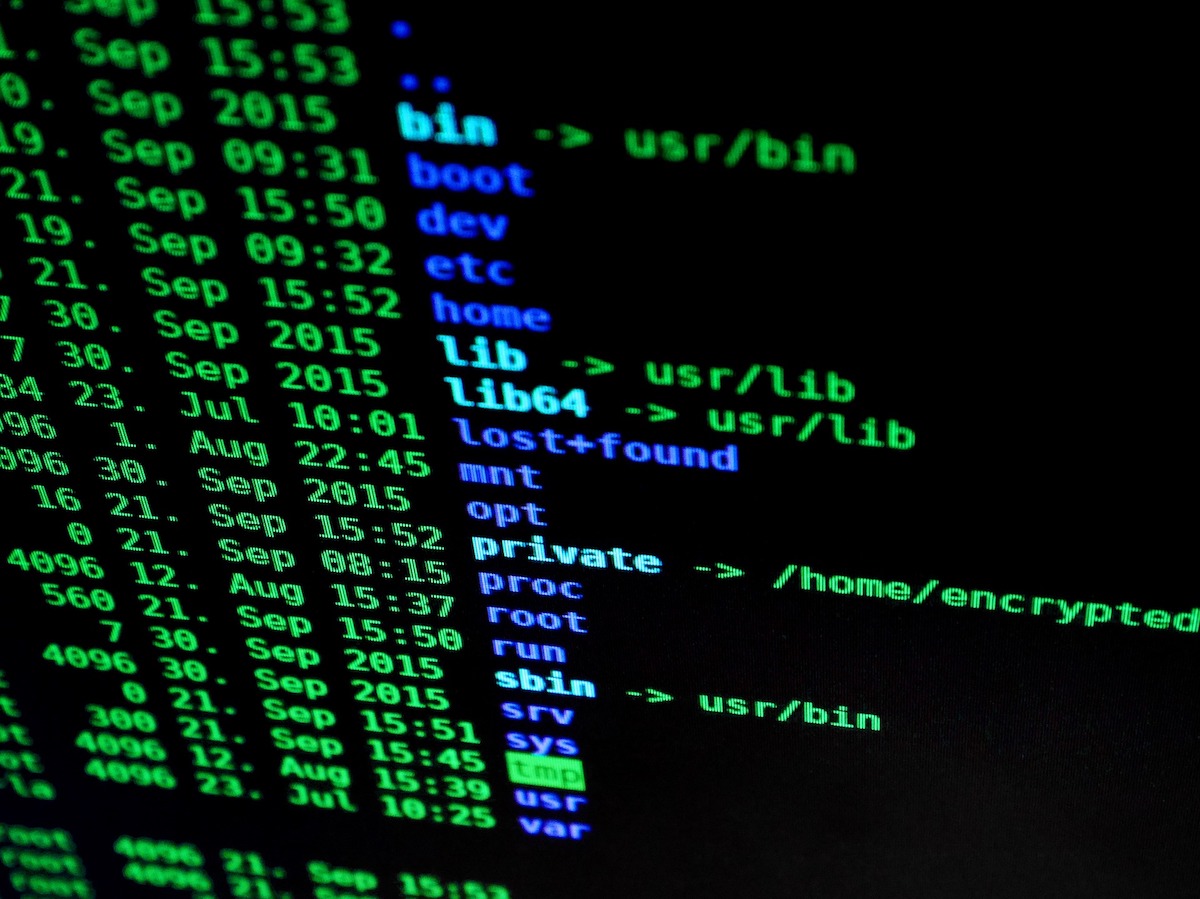
Cryptography that would be impossible for a regular computer to crack, would take a quantum computer just seconds. Image credit – Pixabay/ joffi, licensed under pixabay license

But quantum computers have an advantage. Unlike regular computers, which process information in ‘bits’ of definite ones and zeros, quantum computers process information in ‘qubits’, the states of which remain uncertain until the final calculation.

The result is that a quantum computer can effectively try out many different keys in parallel. Cryptography that would be impenetrable to regular computers could take a quantum computer mere seconds to crack.

Practical quantum computers that can be used to break encryption are expected to be years, if not decades, away. But that should not be of any reassurance: even if a hacker cannot decipher confidential information now, they could save it and simply wait until a quantum computer is available.

‘The problem already exists,’ said Professor Valerio Pruneri of the Institute of Photonic Sciences in Barcelona, Spain, and the coordinator of a quantum security project called CiViQ. ‘A hacker can take what is stored now, and break its key at a later date.’

The answer, says Prof. Pruneri, is another quantum technology. Known as quantum key distribution (QKD), it is a set of rules for encrypting information – known as a cryptography protocol – that is almost impossible to crack, even by quantum computers.

Eavesdrop

QKD involves two parties sharing a random quantum key, according to which some separate information is encoded. Because in quantum theory it is impossible to observe something without corrupting it, the two parties will know whether someone else has eavesdropped on the key – and therefore whether it is safe, or not, to share their coded information.

Until now, QKD has usually involved specialist technology, such as single-photon detectors and emitters, which are difficult for people outside labs to implement. In the CiViQ project, however, Prof. Pruneri and his team are developing a variant of QKD that works with conventional telecommunications technology.

They have already created prototypes, and performed some field demonstrations. Now, the researchers are working with industry telecoms clients including Telefónica in Spain, Orange in France and Deutsche Telekom in Germany to create systems that work to their respective requirements, with the hope that the first systems could be online within three years.

Prof. Pruneri’s hope is to create highly secure communication systems up to 100 km in size suitable for governmental, finance, medical and other high-risk sectors within cities. It could even be used by everyday consumers, although Prof. Pruneri says that QKD currently reaches shorter distances and lower speed than regular communication.

Random

Like normal cryptography, QKD needs random keys – strings of numbers – to be generated in the first place. The more random these keys are, the greater the security of the system, as there is less chance of the keys being guessed. But the problem is that the numbers generated with traditional methods often aren’t totally random.

Here, quantum mechanics can again come to the rescue. The behaviour of atoms, photons and electrons is believed to be truly random and this can be used as a way of generating numbers that cannot be predicted.

Professor Hugo Zbinden of the University of Geneva in Switzerland said: ‘Quantum random-number generators profit from the intrinsic randomness of quantum physics, whereas classical true random number generators are based on chaotic systems, which are deterministic and, in theory, to some extent predictable.’

​’Quantum computers threaten classical cryptography.’
Hugo Zbinden, University of Geneva, Switzerland

Quantum random-number generators already exist, but to​ make them more widely applicable Prof. Zbinden and his colleagues working on a project called QRANGE are improving their speed and reliability, as well as reducing their cost. Currently, they are trying to develop prototypes with a ‘high technology readiness level’ – in other words, prototypes that demonstrate that the technology is ripe for use in the real world.

The work is an important step in ensuring that, while being a threat to the security of our current communications, quantum approaches also provide a path to more secure systems.

​‘Quantum computers threaten classical cryptography,’ says Prof. Zbinden. ‘Quantum cryptography can be a solution, (but) it needs high-quality random numbers.’


The research in this article was funded by the EU. If you liked this article, please consider sharing it on social media.

This post Quantum – a double-edged sword for cryptography was originally published on Horizon: the EU Research & Innovation magazine | European Commission.

Total
0
Shares
Share
Tweet
Share
Share
Related Topics
  • Cryptography
  • Quantum Computers
  • Quantum Cryptography
majulah

Previous Article
  • Lah!

Singapore Grants AI Patent to Alibaba in Record Time, Launches New Initiative to Grow ASEAN’S Industry 4.0

  • August 28, 2019
View Post
Next Article
  • Technology

How Cheap Must Batteries Get For Renewables To Compete With Fossil Fuels?

  • August 28, 2019
View Post
You May Also Like
View Post
  • Artificial Intelligence
  • Technology

Google Opens Singapore Engineering Center to Build and Export Enterprise Cloud and AI to the World

  • Dean Marc
  • September 15, 2026
View Post
  • Research
  • Technology

MIT researchers tackle the economic realities of fusion power

  • dotlah.com
  • August 10, 2026
zedreviews-valerion
View Post
  • Gears
  • Technology

Father’s Day Outdoors – Build Dad the Ultimate Backyard Watch Party

  • Dean Marc
  • June 21, 2026
zedreviews-fathers-day-50830
View Post
  • Gears
  • Technology

Father’s Day Outdoors, Round Two – Gear for the Action, the Tailgate, and Beating the Heat

  • Dean Marc
  • June 21, 2026
zedreviews-fathers-day-21306
View Post
  • Gears
  • Technology

A Father’s Day Gift Guide for Every Dad – Timepieces and Travel Gear

  • Dean Marc
  • June 21, 2026
View Post
  • Gears
  • Technology

Samsung Art Store Brings Art Basel to Homes Worldwide With New Curated Collection

  • Dean Marc
  • June 15, 2026
View Post
  • Artificial Intelligence
  • Technology

The consequences of relying on AI for accurate news

  • dotlah.com
  • June 10, 2026
pope-leo-xiv-cq5dam-1500.844
View Post
  • Artificial Intelligence
  • Technology

Pope Leo XIV to Publish First Encyclical on Artificial Intelligence and Human Dignity on 25 May

  • dotlah.com
  • May 23, 2026


Trending
  • 1
    • Lah!
    Close To 4 Million Beverage Containers Collected From Smart Reverse Vending Machines A Year After Launch
    • December 30, 2020
  • 2
    • Lah!
    CapitaLand Pledges S$1 Million To Support Vulnerable Elderly Affected By COVID-19 In Singapore
    • April 24, 2020
  • 3
    • Lah!
    Reusable, Foldable And Sterilisable ‘Shield’ Developed By NUS-NUH Team Provides Additional Protection For Healthcare Workers Caring For COVID-19 Patients
    • June 27, 2020
  • 4
    • Cities
    • Technology
    What The Booms In Electricity And Internet Show About AI
    • October 10, 2023
  • 5
    • People
    Reasons Why People Are Obsessed With Beauty
    • July 29, 2020
  • 6
    • Lah!
    Satisfaction In Singapore’s Consumer Services Improves Across Most Industries
    • March 26, 2020
  • 7
    • Technology
    Career Certificates For Singapore’s Future Economy
    • January 20, 2022
  • 8
    • Lah!
    2019 Is Singapore’s Joint Warmest Year On Record
    • January 16, 2020
  • 9
    • Lah!
    ICA To Trial Beta Version Of “SG Arrival Card” E-Service And Mobile Application With Selected Transport Operators
    • August 15, 2019
  • 10
    • Software
    • Technology
    Canonical Releases Ubuntu 25.04 Plucky Puffin
    • April 17, 2025
  • 11
    • People
    • World Events
    Coronavirus: Could The World Have Prepared Better For A Pandemic?
    • May 11, 2020
  • Singapore 12
    • Artificial Intelligence
    • Cities
    • Technology
    These 5 cities are making innovative use of generative AI
    • July 29, 2024
Trending
  • 1
    Chinese tech giant Huawei unveils Mate 90 series smartphones with flagship Tau chips adopting logic folding technology
    • October 3, 2026
  • 2
    Google Opens Singapore Engineering Center to Build and Export Enterprise Cloud and AI to the World
    • September 15, 2026
  • 3
    Apple Flagship Hardware Launch for September 2026
    • September 10, 2026
  • 4
    MIT researchers tackle the economic realities of fusion power
    • August 10, 2026
  • 5
    ASEAN, treaty parties push stronger cooperation as Treaty of Amity and Cooperation in Southeast Asia marks 50 years
    • July 26, 2026
  • 6
    The Fastest AI Fried Chicken In The World
    • June 29, 2026
  • 7
    Zed Approves | How to Stay Cool in Extreme Heat
    • June 29, 2026
  • 8
    Was Venezuela struck by an earthquake ‘doublet’? Here’s what we know so far
    • June 27, 2026
  • 9
    Zed Approves | It’s Prime Day 2026! Time to Upgrade Your World Cup Viewing Setup and Beat the Heat
    • June 25, 2026
  • 10
    Zed Approves | The Best Prime Day PC Deals: Top Gaming Rigs, Workstations, and Everyday Laptops
    • June 25, 2026
Social Links
dotlah! dotlah!
  • Cities
  • Technology
  • Business
  • Politics
  • Society
  • Science
  • About
Connecting Dots Across Asia's Tech and Urban Landscape

Input your search keywords and press Enter.