dotlah! dotlah!
  • Cities
  • Technology
  • Business
  • Politics
  • Society
  • Science
  • About
Social Links
  • zedreviews.com
  • citi.io
  • aster.cloud
  • liwaiwai.com
  • guzz.co.uk
  • atinatin.com
0 Likes
0 Followers
0 Subscribers
dotlah!
  • Cities
  • Technology
  • Business
  • Politics
  • Society
  • Science
  • About
  • Cities
  • People
  • World Events

The Simple Reason Why We Are Seeing More New Infectious Diseases Today

  • February 3, 2020
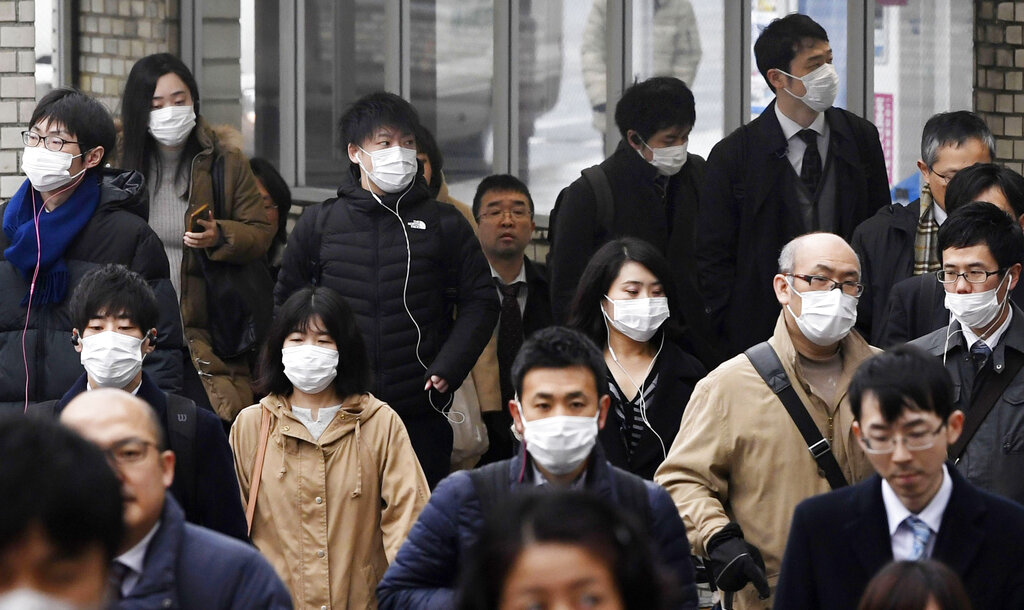
(Nobuki Ito/Kyodo News via AP)
Total
0
Shares
0
0
0

One would think that our world, compared to the past centuries where pandemics have killed millions of people is better equipped when it comes to fending off diseases thanks to medical breakthroughs and innovations. Intuitively, we expect less infectious diseases to pop out and spread today.

Confusing truth

However, we know that this is not true at all. One can recall diseases such as SARS, Ebola, Zika, HIV/AIDS and the current Wuhan Coronavirus seemingly plaguing our world in never before seen frequencies. What is happening?

The frequency of disease outbreaks can be attributed mainly to three factors:

  1. We travel more and we travel further than ever
  2. We live closer together, e.g., in urban areas
  3. Poverty —  a huge weakener of health —  is rampant

All of these factors lead to increased exposure and vulnerability to infectious diseases. This is the main reason why disease outbreaks are more rampant than they were in the past.

Moreover, climate change is also closely linked to the prevalence of infectious diseases, since the warming climate is a perfect environment for some disease carriers like mosquitoes to thrive.

Now we have to ask, where are these emerging infections coming from, to begin with?

Ground zero

According to the Baylor College of Medicine, emerging infections result from:

  1. Previously unknown infectious agents
  2. Known agents that reached new locations
  3. Known agents with previously unrecognized roles in diseases
  4. Re-emergence of diseases which has once died down

Preventing the spread

Knowing this, how then, do we stop these infections from spreading? Let’s boil it down one by one.

For previously unknown infectious agents  & known agents with previously unrecognized roles in diseases 

For previously unknown or unrecognized agents, much research is needed in order to understand the mechanics of transmission. In this case, medical researchers should be given firepower in the manner of funds to empower them.

For known agents that reached new locations

This is applicable for people who travel or plan to settle elsewhere. While people inhabiting a country have gained immunity, this might not be applicable to you. With this, full awareness of the potential risks and getting the appropriate immunizations, if available, is the responsible thing to do.

For the re-emergence of diseases which has once died down

The reemergence of diseases in a location where it has already died down is indicative of a decline in the health measures previously enforced for its suppression. The reinforcement of these measures is therefore imperative.

Another possible reason could be the appearance of new strains which gained resistance to medications used to fend them off. This is due to the overuse of antibiotics which is quite prevalent in our world. Refusal to get vaccination is, of course, another factor to take into account. The public health sector should maintain its aggression when it comes to disseminating accurate information to the public.

Not a lost cause

While the emergence of a disease is practically unpredictable, it doesn’t mean that we’re helpless. Our circumstances might be a huge disfavour in combating these diseases, but we still have our developed medical technology in our favour.

We should empower our citizens to become healthy, to practice basic hygiene daily, and be well-informed by disseminating information and providing them with access to health services. We shouldn’t wait out diseases to reach uncontrollable levels before we begin thinking of preventive measures, we should begin now.

While it is easy to maintain a state of complacency, a careful stance is way more preferable than millions of lives lost.


Total
0
Shares
Share
Tweet
Share
Share
Related Topics
  • Antiobiotic-Resistance
  • Ebola
  • Epidemic
  • Health
  • HIV/AIDS
  • Infectious diseases
  • Medicine
  • Pandemic
  • SARS
  • Vaccination
  • Wuhan Coronavirus
  • Zika
dotlah.com

Previous Article
  • Cities
  • People
  • World Events

Wuhan, The Coronavirus And The World: Thinking Beyond Isolation

  • February 3, 2020
View Post
Next Article
  • Technology

Making The Quantum Leap In Computing

  • February 4, 2020
View Post
You May Also Like
Illustration of data storage
View Post
  • Business
  • Featured
  • Features
  • World Events

The Splinternet Comes for European Supply Chains Why Fragmentation Is Now a Boardroom Problem

  • Ackley Wyndam
  • April 21, 2026
totus-technologies-cover
View Post
  • Business
  • Technology
  • World Events

The Transatlantic Tech Rift and Why Data Sovereignty Is the New Industrial Imperative

  • Ackley Wyndam
  • April 16, 2026
View Post
  • Cities
  • Economy
  • Politics

The global price tag of war in the Middle East

  • dotlah.com
  • March 24, 2026
View Post
  • Cities
  • Food

How the Iran war could create a ‘fertiliser shock’ – an often ignored global risk to food prices and farming

  • dotlah.com
  • March 6, 2026
View Post
  • People
  • Working Life

About 23,000 community care sector employees could get at least 7% pay raise as part of new salary guidelines

  • dotlah.com
  • February 18, 2026
View Post
  • Cities
  • Climate Change
  • Science

New research may help scientists predict when a humid heat wave will break

  • dotlah.com
  • January 6, 2026
View Post
  • People
  • Technology

This is what the new frontier of AI-powered financial inclusion looks like

  • dotlah.com
  • January 2, 2026
View Post
  • Cities

How bus stops and bike lanes can make or break your festive city trip

  • dotlah.com
  • December 29, 2025


Trending
  • 1
    • Artificial Intelligence
    • Technology
    Mitsubishi Motors Canada Launches AI-Powered “Intelligent Companion” to Transform the 2025 Outlander Buying Experience
    • March 10, 2025
  • 2
    • Lah!
    New US$2 Billion Investments Programme to Support Growth of Green Finance in Singapore
    • November 11, 2019
  • 3
    • Lah!
    • Science
    NUS Scientists Find New Mechanism Of Cancer Formation
    • January 15, 2021
  • 4
    • Cities
    • Lah!
    • Technology
    Factsheet: 20 More Electric Buses Deployed For Passenger Service
    • August 27, 2021
  • 5
    • Cities
    • Lah!
    • Technology
    ST Engineering And Strides Collaborate To Pursue Opportunities In International Markets
    • February 23, 2022
  • 6
    • Lah!
    • Technology
    Mapping The Undiscovered
    • August 24, 2021
  • 7
    • Lah!
    NEA Urges Continued Vigilance As Aedes Aegypti Mosquito Population And Number Of Dengue Cases Remain High At The Start Of 2020
    • January 15, 2020
  • 8
    • Lah!
    PUB And Sembcorp Commence Construction Of 60 MWp Floating Solar Photovoltaic System On Tengeh Reservoir
    • August 19, 2020
  • online learning online education 9
    • People
    • Technology
    How Educators Can Help Students Stay Engaged In Class
    • December 9, 2020
  • 10
    • Science
    First In Southeast Asia: Singapore Surgeons Use Robot Assistants During Heart Surgeries
    • August 8, 2019
  • 11
    • Environment
    • People
    • World Events
    The Flu Pandemic Of 1918: Modern Parallels From A Century-Old Pandemic
    • March 23, 2020
  • 12
    • Cities
    • Lah!
    • Society
    The COVID-19 Pandemic Has Made Many Singaporeans Adopt Better Financial Habits
    • November 3, 2021
Trending
  • Red Hat OpenShift 1
    Red Hat Further Drives Digital Sovereignty for the AI Era with Red Hat OpenShift on Google Cloud Dedicated
    • April 21, 2026
  • Illustration of data storage 2
    The Splinternet Comes for European Supply Chains Why Fragmentation Is Now a Boardroom Problem
    • April 21, 2026
  • 3
    Here’s how to get the $7 trillion AI hardware buildout right
    • April 18, 2026
  • totus-technologies-cover 4
    The Transatlantic Tech Rift and Why Data Sovereignty Is the New Industrial Imperative
    • April 16, 2026
  • 5
    What will it take to get ships going through the Strait of Hormuz again?
    • April 13, 2026
  • 6
    Hon Hai Technology Group (Foxconn) Recognized As Top 100 Global Innovators 2026
    • April 9, 2026
  • 7
    3 lessons on the energy transition in an age of crisis
    • April 7, 2026
  • 8
    Samsung Unveils Galaxy A57 5G and Galaxy A37 5G, Packing Pro-Level Features at Awesome Price
    • March 25, 2026
  • 9
    The global price tag of war in the Middle East
    • March 24, 2026
  • 10
    Kioxia Announces New SSD Model Optimized for AI GPU-Initiated Workloads
    • March 17, 2026
Social Links
dotlah! dotlah!
  • Cities
  • Technology
  • Business
  • Politics
  • Society
  • Science
  • About
Connecting Dots Across Asia's Tech and Urban Landscape

Input your search keywords and press Enter.