dotlah! dotlah!
  • Cities
  • Technology
  • Business
  • Politics
  • Society
  • Science
  • About
Social Links
  • zedreviews.com
  • citi.io
  • aster.cloud
  • liwaiwai.com
  • guzz.co.uk
  • atinatin.com
0 Likes
0 Followers
0 Subscribers
dotlah!
  • Cities
  • Technology
  • Business
  • Politics
  • Society
  • Science
  • About
  • Society

What Are Viruses Anyway, And Why Do They Make Us So Sick? 5 Questions Answered

  • February 28, 2020
Total
0
Shares
0
0
0

You may sometimes have felt like you “have come down with a virus,” meaning that you became sick from being exposed to something that could have been a virus. In fact, you have a virus – actually, many – all the time. Some viruses cause the common cold, and some are crucial to human survival. New viruses can also emerge, and they typically create illness in humans when they have very recently jumped from another species to humans. As world health leaders try to determine how to respond to the new coronavirus, virus expert Marilyn J. Roossinck answers a few questions.

Patients infected with COVID-19 rest at a temporary hospital in Wuhan, China, Feb. 17, 2020. Getty Images/Xiao Yijiu

1. What is a virus?

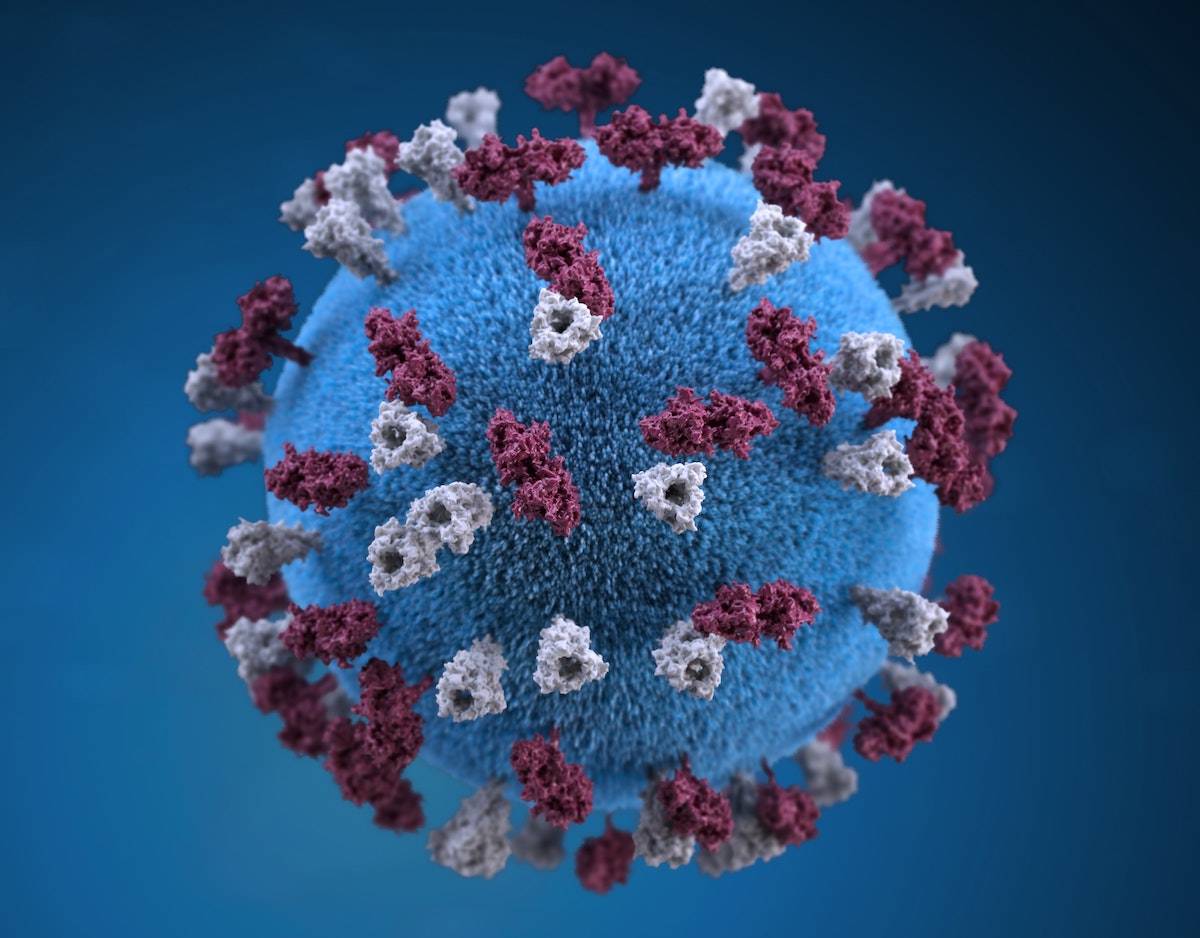
Defining a virus has been a challenge because every time we come up with a good definition someone discovers a virus that breaks the rules. Viruses are entities that infect cellular life. They are very diverse. The simplest just have a couple of genes made of RNA or DNA wrapped up in a protein coat. Others have hundreds of genes, more than some bacteria.

All viruses are ultimately parasites. They require a host for replication. They cannot generate their own energy like cells can.

2. Why does a virus make people sick?

When a new human virus disease appears, it is most often because the virus has jumped from a different species into humans. The worst viruses are often the ones that have very recently jumped into the species.

After jumping species, the virus goes through a process of adjustment to its new host. The real challenge, however, is to the host. As it tries to figure out how to adjust to an invasion from something completely new, the immune system overreacts. This is what makes the host sick. It usually isn’t an advantage for the virus to make people sick; it is an accident of the hosts’ immune system overreacting to something it doesn’t recognize.

Viruses that have been in a host for a long time are less likely to cause disease. For example, HIV jumped into humans from wild primates, in whose bodies it wasn’t causing any disease.

Every virus-host relationship is different. In most cases, viruses do not cause any disease, and many are beneficial. For example, in mice a herpes virus prevents infection from the plague bacteria.

3. Why is it so important to know the original source?

If the virus comes from an animal, knowing what that animal is can help break the chain of infection. Knowing the source also helps scientists understand mutations that might have occurred in the virus’ genome. That’s because host-jumping affects the variation in a virus genome. When a virus has been in its host for a long time, the genome is fine-tuned to that host, and mutations are not tolerated.
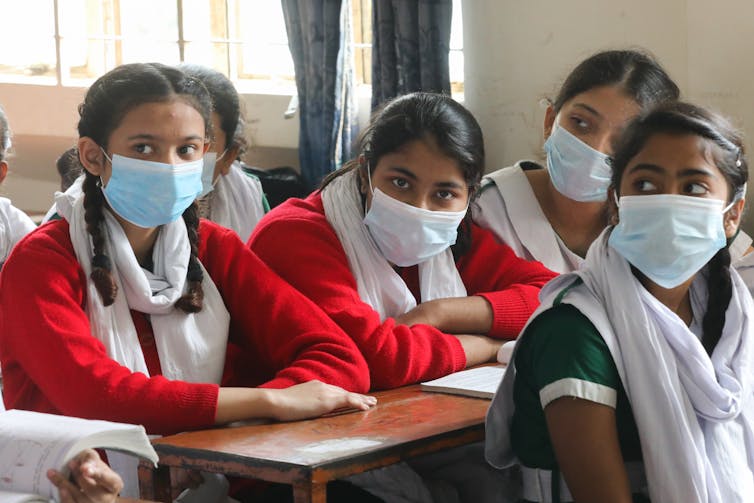
Students in Bangladesh are shown wearing masks Jan. 29, 2020, in an effort to stop the spread of the new coronavirus. Experts are divided on whether wearing masks makes a difference, but most agree that hand-washing is imperative. Getty Images/Mehedi Hasan/NurPhoto

4. SARS was a formidable foe, and then seemed to disappear. Why?

Measures to contain SARS started early, and they were very successful. The key is to stop the chain of transmission by isolating infected individuals. SARS had a short incubation period; people generally showed symptoms in two to seven days. There were no documented cases of anyone being a source of SARS without showing symptoms.

Stopping the chain of transmission is much more difficult when the incubation time is much longer, or when some people don’t get symptoms at all. This may be the case with the virus causing CoVID-19, so stopping it may take more time.

5. What is the best way to treat viruses?

Viruses don’t respond to antibiotics, and in some cases taking antibiotics can make things worse, because the normal bacteria in the gut are an important part of the immune response. Antiviral drugs can work with some viruses, but the mutation rate of most viruses means that they become resistant to antivirals very quickly.

The best treatment is to give the patient the best tools to allow their own body to fight off the infection. This usually means rest and keeping hydrated. Virus infection can suppress the immune system, so patients should be monitored for secondary infections that might require other treatments. Prevention is important. Sick people need to be isolated, and healthy people need to take precautions.

Most respiratory viruses are not transmitted just by breathing them in from sick people, but by getting them on your hands from tiny droplets that sick people distribute by coughing or sneezing, and then touching your face. Good hand-washing is important!

The Conversation

Marilyn J. Roossinck, Professor of Plant Pathology and Environmental Microbiology, Pennsylvania State University

This article is republished from The Conversation under a Creative Commons license. Read the original article.

Total
0
Shares
Share
Tweet
Share
Share
Related Topics
  • Antiviral Drugs
  • Coronavirus
  • COVID-19
  • SARS
  • Virus
majulah

Previous Article
  • Cities

Inversion Solutions — Tackling Utah’s Pollution Problem

  • February 28, 2020
View Post
Next Article
  • Environment
  • People

What Are Viruses Anyway, And Why Do They Make Us So Sick? 5 Questions Answered

  • February 28, 2020
View Post
You May Also Like
View Post
  • Cities
  • Lah!
  • Society

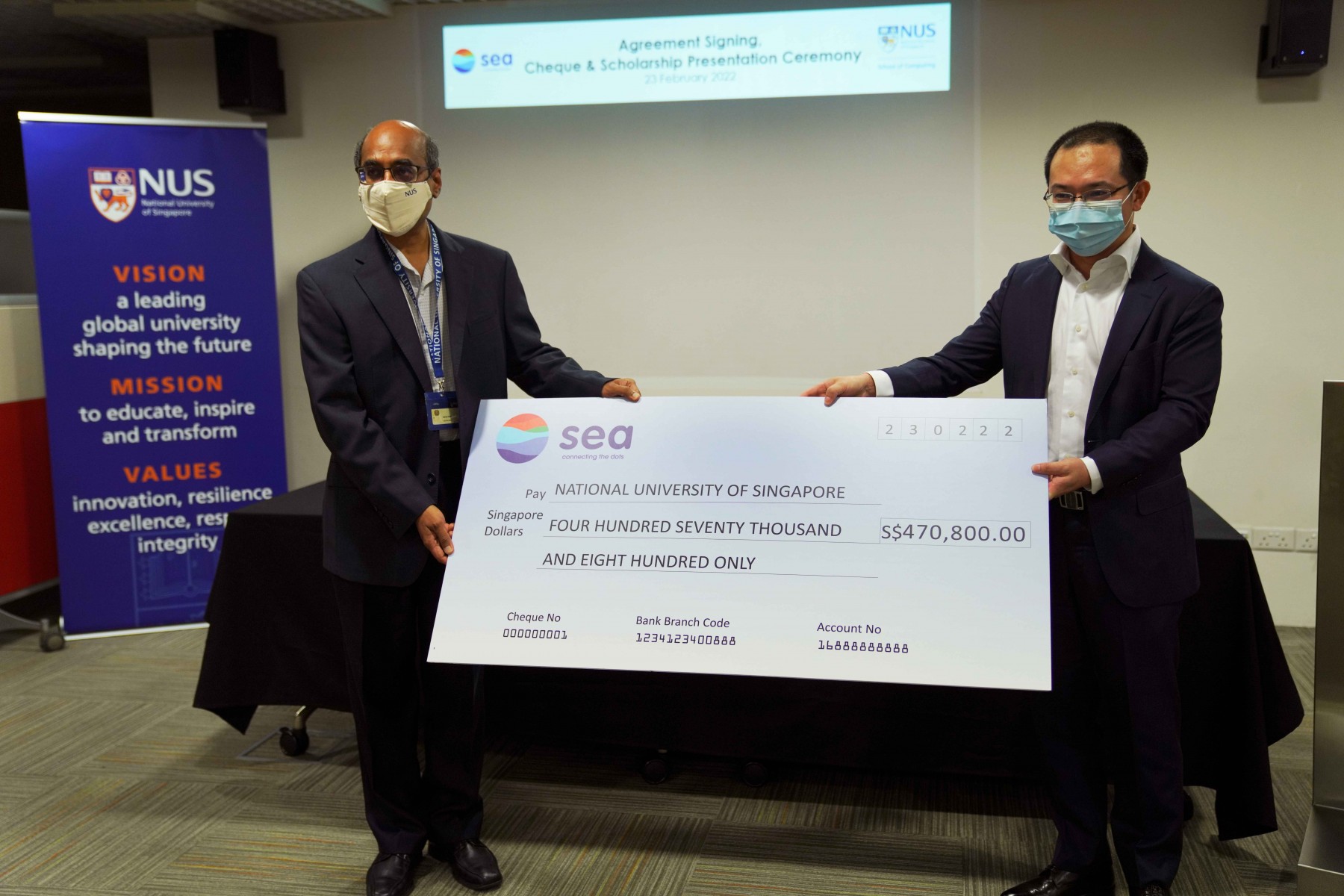
NUS Computing Establishes Sea Olympiad Scholarship To Attract And Nurture Top Talents In Computer Studies

  • dotlah.com
  • February 27, 2022
View Post
  • Cities
  • Lah!
  • Society

Joint Study: Diverse Leadership Brings Better Firm Performance

  • dotlah.com
  • February 23, 2022
View Post
  • Lah!
  • Society

Community And Mentorship Help Women Entrepreneurs Thrive

  • dotlah.com
  • November 23, 2021
View Post
  • Lah!
  • Society

ST Engineering Champions Employee Wellness, Raises Funds For Charity And Launches Women Support Group

  • dotlah.com
  • November 14, 2021
View Post
  • Lah!
  • Society

NUS Honours 40 Alumni For Outstanding Contributions To Alma Mater And Society

  • dotlah.com
  • November 7, 2021
View Post
  • Cities
  • Lah!
  • Society

The COVID-19 Pandemic Has Made Many Singaporeans Adopt Better Financial Habits

  • dotlah.com
  • November 3, 2021
View Post
  • Lah!
  • Society

A Cleaning Revolution: How JCS-Echigo Partnered A*STAR To Clean Faster And Smarter

  • dotlah.com
  • October 16, 2021
View Post
  • Lah!
  • Society

Singapore 100 Women In Tech 2021

  • dotlah.com
  • October 16, 2021


Trending
  • Cloud 1
    • People
    • Technology
    Clean Air Is A Valuable Economic Asset. Here Are 4 Steps To Achieve It
    • January 31, 2024
  • 2
    • Lah!
    ST Engineering Reorganises For Global Growth And Success
    • November 19, 2020
  • 3
    • Technology
    Tips For Doing Data Visualisation
    • March 13, 2018
  • 4
    • Technology
    NTUC Income Launches SNACKFIT, A First-Of-Its-Kind Fitness And Lifestyle Proposition That Offers Bonus Insurance Coverage Based On Biological Age
    • December 23, 2021
  • 5
    • Lah!
    Sembcorp Joins Hands With Becamex And VSIP To Bring Sustainable Smart Energy Solutions To Vietnam
    • September 26, 2019
  • 6
    • Technology
    SMU Launches Doctor Of Engineering Programme To Meet Demand For Industry-oriented Applied Researchers
    • February 8, 2020
  • 7
    • Lah!
    • Technology
    NUS And SUTD To Collaborate On Innovation And Enterprise
    • July 17, 2021
  • 8
    • Technology
    Introducing Surface Go 3 – The Most Portable Surface Built For Windows 11
    • September 28, 2021
  • 9
    • Lah!
    • Technology
    DBS Launches Asia’s First Automated Digital Bond Issuance Platform
    • June 22, 2021
  • 10
    • Lah!
    • Technology
    Singapore Honours Innovation And Digital Readiness Trail Blazers
    • November 7, 2019
  • deanmarc-apple-intelligence-oped-20241203 11
    • Artificial Intelligence
    • dotZero
    • Featured
    • Features
    • Machine Learning
    • Op-Ed
    • Outsights
    • Technology
    Apple Intelligence – Innovation Enabling Mediocrity?
    • December 4, 2024
  • 12
    • Lah!
    Singapore Airlines Launches KrisPay It Forward To Thank 100,000 Frontliners And Unsung Heroes
    • June 10, 2020
Trending
  • Red Hat OpenShift 1
    Red Hat Further Drives Digital Sovereignty for the AI Era with Red Hat OpenShift on Google Cloud Dedicated
    • April 21, 2026
  • Illustration of data storage 2
    The Splinternet Comes for European Supply Chains Why Fragmentation Is Now a Boardroom Problem
    • April 21, 2026
  • 3
    Here’s how to get the $7 trillion AI hardware buildout right
    • April 18, 2026
  • totus-technologies-cover 4
    The Transatlantic Tech Rift and Why Data Sovereignty Is the New Industrial Imperative
    • April 16, 2026
  • 5
    What will it take to get ships going through the Strait of Hormuz again?
    • April 13, 2026
  • 6
    Hon Hai Technology Group (Foxconn) Recognized As Top 100 Global Innovators 2026
    • April 9, 2026
  • 7
    3 lessons on the energy transition in an age of crisis
    • April 7, 2026
  • 8
    Samsung Unveils Galaxy A57 5G and Galaxy A37 5G, Packing Pro-Level Features at Awesome Price
    • March 25, 2026
  • 9
    The global price tag of war in the Middle East
    • March 24, 2026
  • 10
    Kioxia Announces New SSD Model Optimized for AI GPU-Initiated Workloads
    • March 17, 2026
Social Links
dotlah! dotlah!
  • Cities
  • Technology
  • Business
  • Politics
  • Society
  • Science
  • About
Connecting Dots Across Asia's Tech and Urban Landscape

Input your search keywords and press Enter.