dotlah! dotlah!
  • Cities
  • Technology
  • Business
  • Politics
  • Society
  • Science
  • About
Social Links
  • zedreviews.com
  • citi.io
  • aster.cloud
  • liwaiwai.com
  • guzz.co.uk
  • atinatin.com
0 Likes
0 Followers
0 Subscribers
dotlah!
  • Cities
  • Technology
  • Business
  • Politics
  • Society
  • Science
  • About
  • Cities
  • Society

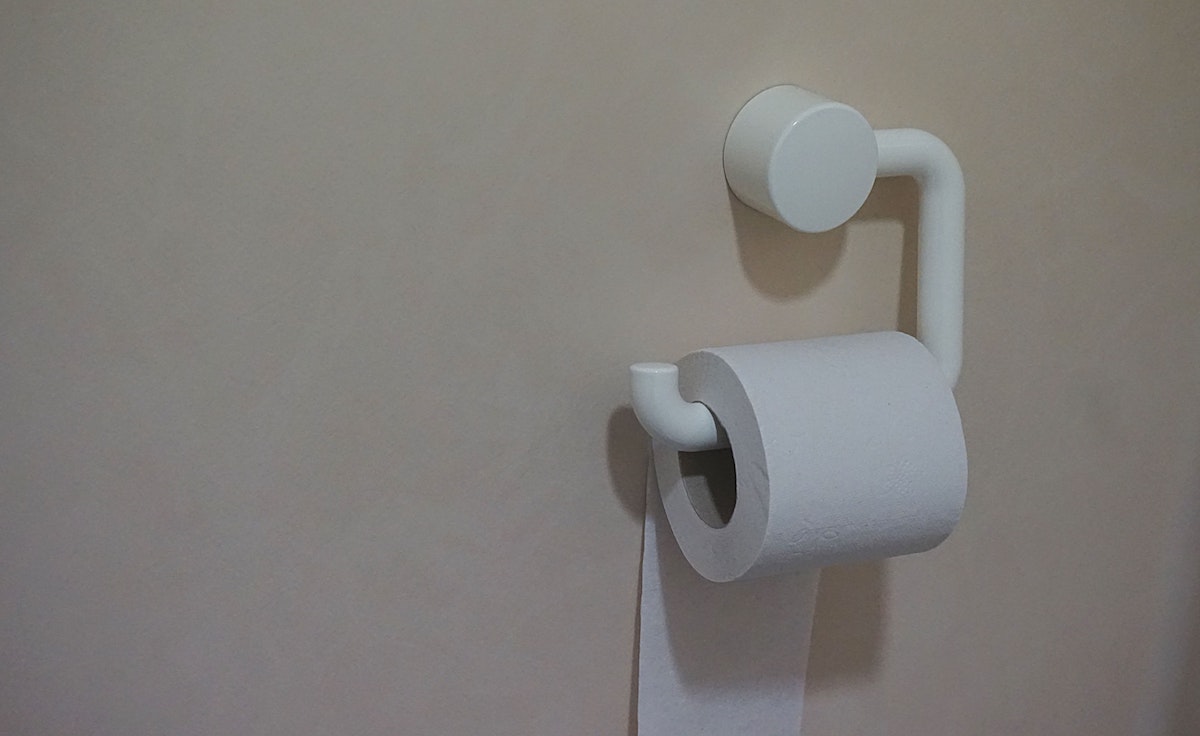
Coronavirus: Why People Are Panic Buying Toilet Paper And How To Stop It

  • March 8, 2020
Total
0
Shares
0
0
0

The UK has found itself in a panic buying frenzy in response to the novel coronavirus outbreak. A very flustered health secretary Matt Hancock urged restraint and attempted to calm fears of shortages on BBC television’s Question Time after being asked about a lack of paracetamol, dry pasta and toilet paper.
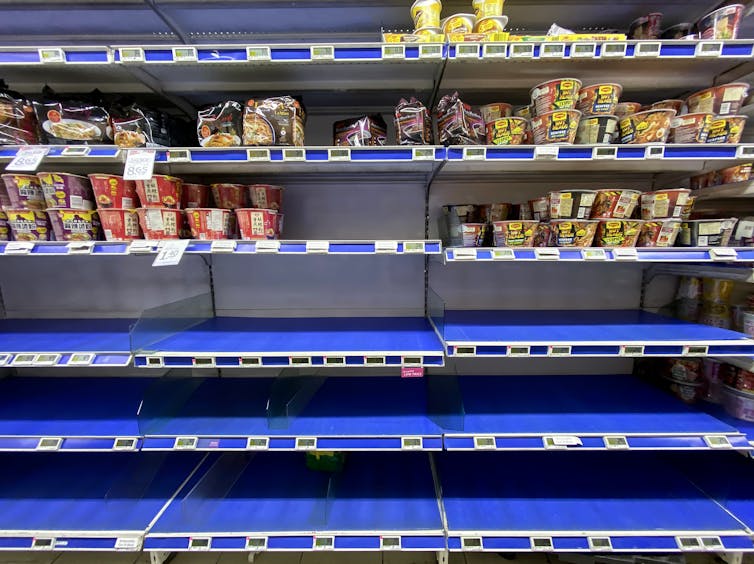
Shelves of ready noodles in Singapore were left empty after fear led people to panic buy. kandl/Shutterstock

The UK is not alone. Social media has been flooded with images from across the world of shopping carts lined up at check outs, empty shelves and crazed shoppers carrying six-months’ worth of toilet paper. Just seeing this footage has fed the panic, escalating the problem far beyond anything that was noted during the SARS epidemic when digital connections were far less prevalent.

These kind of posts are spreading hysteria and false news to the extent that coronavirus hoaxes have, arguably, become dangerous in their own right. If they want panic buying to stop, governments need to demonstrate that they are in control through decisive action and sustained and transparent communication.

Regaining control

In research I conducted with marketing professors Charlene Chen and Leonard Lee, we found that consumers compensate for a perceived loss of control by buying products designed to fill a basic need, solve a problem or accomplish a task. This is what we’re seeing as people rush to buy rice, cleaning products and paper goods in illogically large proportions.

This has led to price gouging and shortages of vital health equipment where it is needed most.

In times of crisis, people don’t want a huge debate, they want action. To assuage people’s anxiety and help them regain a feeling of control, it is up to governments to signal that they have a game plan in mind and are taking timely steps to address the problem.

Singapore – which has had no virus-related deaths, despite 138 cases as of March 07 and a rate of infection that’s been outpaced by recoveries – has emerged as an example of how to contain both the infection and maintain citizen’s trust.

A day after signs that people were panic buying rice and instant noodles, Prime Minister Lee Hsien Loong was on television calling for calm, and assured Singaporeans: “We have ample supplies, there’s no need to stock up.”
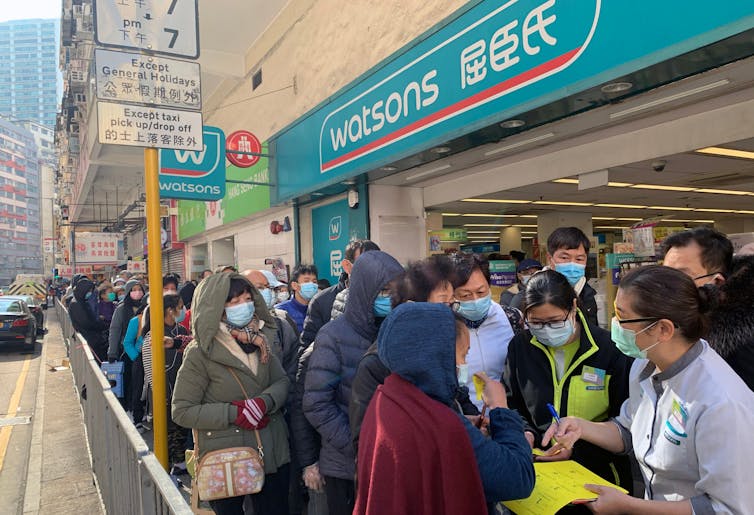
People queue outside a Watsons pharmacy in Hong Kong. Lewis Tse Pui Lung/Shutterstock

Singapore was one of the first countries to impose entry restrictions on anyone with recent travel history to China and parts of South Korea. The country has also introduced temperature screening, systems to identify people who have been in contact with carriers, and strict hospital and home quarantine regimes for potentially infected patients. Firm action, in the form of fines and jail time, is being taken towards those who breach these new rules.

The government has made regular public statements and been very frank with its people about the dangers posed by the coronavirus. A week after the panic buying frenzy, things have calmed down and shoppers have gone back to purchasing items in normal quantities.

Getting it wrong

This contrasts with what is happening in Japan and Iran, where governments are under fire for their lack of transparency. This distrust stems from concerns that governments may be deliberately concealing or may not have access to accurate information.

This has led to people stockpiling goods, which in Japan has resulted in shortages of toilet paper. Longs lines and price surges have followed. Theft is now so common that some establishments have taken to chaining rolls to their dispensers.

While the UK government has published an official coronavirus action plan, setting out advice for how the public should respond during each stage of the outbreak and what to expect if it becomes a pandemic, there have been hiccups in communication that have stoked rather than tempered fears.

The most recent problem was the decision to withhold daily updates about the geographical spread of the virus. The government has since made a u-turn on this, calling it “a communication fumble” and acknowledging that such lack of transparency would only lead to feelings of government secrecy and aid the potential spread of fake news.

How action is communicated, including when and how often, is critical to diffusing panic. The situation of any pandemic is so volatile that government policies may need to evolve rapidly in response. As seen in Singapore, strong communication can be the difference between seeming to understand the dynamic nature of the situation and not knowing how to address it at all.The Conversation

Andy J. Yap, Assistant Professor of Organisational Behaviour, INSEAD

This article is republished from The Conversation under a Creative Commons license. Read the original article.

Total
0
Shares
Share
Tweet
Share
Share
Related Topics
  • Coronavirus
  • COVID-19
  • Hysteria
  • Panic Buying
  • Toilet Paper
majulah

Previous Article
  • Cities

The 100 Most Solar Cities In America

  • March 6, 2020
View Post
Next Article
  • People
  • World Events

Coronavirus: Why People Are Panic Buying Toilet Paper And How To Stop It

  • March 8, 2020
View Post
You May Also Like
View Post
  • Cities
  • Environment
  • People

Was Venezuela struck by an earthquake ‘doublet’? Here’s what we know so far

  • dotlah.com
  • June 27, 2026
View Post
  • Cities
  • Economy
  • Politics

The global price tag of war in the Middle East

  • dotlah.com
  • March 24, 2026
View Post
  • Cities
  • Food

How the Iran war could create a ‘fertiliser shock’ – an often ignored global risk to food prices and farming

  • dotlah.com
  • March 6, 2026
View Post
  • Cities
  • Climate Change
  • Science

New research may help scientists predict when a humid heat wave will break

  • dotlah.com
  • January 6, 2026
View Post
  • Cities

How bus stops and bike lanes can make or break your festive city trip

  • dotlah.com
  • December 29, 2025
View Post
  • Cities
  • People

We must empower local leaders to meet global goals – here’s why

  • dotlah.com
  • November 4, 2025
View Post
  • Cities

Politicians love comparing NZ’s economy to Singapore or Ireland – but it’s simplistic and misleading

  • dotlah.com
  • September 21, 2025
View Post
  • Cities
  • Technology

Meralco PowerGen’s PacificLight starts up 100 MW fast-response plant in Singapore

  • dotlah.com
  • June 20, 2025


Trending
  • 1
    • Cities
    Here’s How Industries Shape Cities And Economies
    • May 18, 2020
  • 2
    • Lah!
    Yishun Integrated Transport Hub To Open On 8 September 2019
    • August 16, 2019
  • status-of-global-vaccination-campaigns-24242 3
    • People
    • World Events
    These Countries Have Yet To Start Covid-19 Vaccinations
    • February 22, 2021
  • 4
    • Lah!
    NTUC FairPrice Launches “FairPrice On Wheels” – A Pilot Community Initiative To Provide Less Privileged Seniors Access To Groceries
    • April 24, 2020
  • Sydney Opera House 5
    • Cities
    Splendid Structures of Sydney
    • February 23, 2024
  • 6
    • Cities
    • Technology
    What The Booms In Electricity And Internet Show About AI
    • October 10, 2023
  • 7
    • Technology
    VIETSTAR And Singapore Management University Join Hands To Build Capabilities Of Corporate Leaders In Digital Transformation And Corporate Governance
    • February 28, 2022
  • elon-musk-es-052418-elon-musk-is-on-twitter-1527189506 8
    • Cities
    What Elon Musk Can Do With $44 Billion Instead Of Buying Twitter
    • November 15, 2022
  • 9
    • Technology
    Six In Ten Consumers In Singapore Have Been Targeted By Tech Support Scams In The Last 12 Months: Microsoft Survey
    • September 19, 2021
  • 10
    • People
    • World Events
    Beyond The Curve: A Visual Journey Into Our Post-Pandemic Future
    • July 16, 2020
  • 11
    • Lah!
    ​Mangroves At Risk If Carbon Emissions Not Reduced By 2050, International Scientists Predict
    • June 7, 2020
  • Cyber Monday Sale and Deals 12
    • Gears
    Cyber Monday. Last Chance for Sales, Deals, Discounts and Favorites.
    • December 2, 2024
Trending
  • 1
    Chinese tech giant Huawei unveils Mate 90 series smartphones with flagship Tau chips adopting logic folding technology
    • October 3, 2026
  • 2
    Google Opens Singapore Engineering Center to Build and Export Enterprise Cloud and AI to the World
    • September 15, 2026
  • 3
    Apple Flagship Hardware Launch for September 2026
    • September 10, 2026
  • 4
    MIT researchers tackle the economic realities of fusion power
    • August 10, 2026
  • 5
    ASEAN, treaty parties push stronger cooperation as Treaty of Amity and Cooperation in Southeast Asia marks 50 years
    • July 26, 2026
  • 6
    The Fastest AI Fried Chicken In The World
    • June 29, 2026
  • 7
    Zed Approves | How to Stay Cool in Extreme Heat
    • June 29, 2026
  • 8
    Was Venezuela struck by an earthquake ‘doublet’? Here’s what we know so far
    • June 27, 2026
  • 9
    Zed Approves | It’s Prime Day 2026! Time to Upgrade Your World Cup Viewing Setup and Beat the Heat
    • June 25, 2026
  • 10
    Zed Approves | The Best Prime Day PC Deals: Top Gaming Rigs, Workstations, and Everyday Laptops
    • June 25, 2026
Social Links
dotlah! dotlah!
  • Cities
  • Technology
  • Business
  • Politics
  • Society
  • Science
  • About
Connecting Dots Across Asia's Tech and Urban Landscape

Input your search keywords and press Enter.