Depending on how it’s built, urban spaces have the power to mobilise or impede protests.
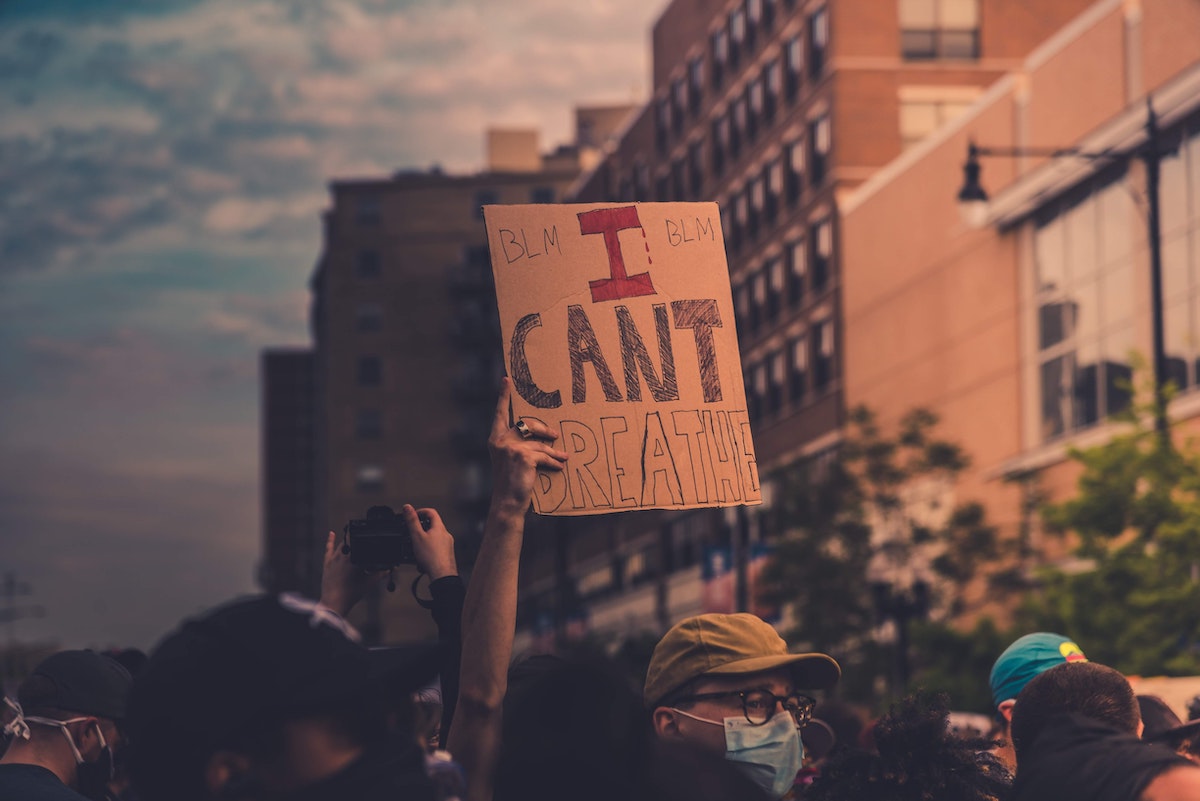
“Global Protest Wave” is the term used by media outlets to refer to the surge in high-profile protests in different parts of the world since 2019.
Protests are public phenomena which intend to negotiate the current social order or political power. Throughout the history of cities, protests have been used as instruments for sweeping changes.
The motivations behind these protests are diverse. In recent years, these mobilisations have called for the removal of people in power, the scrapping of controversial bills, and justice for those who have been oppressed and killed.
More often than not, when we think about protests, we focus on the participants — the people and the state. Yet it is equally important to look at the sites where these demonstrations are occurring: the urban public space.
While this detail is usually overlooked, the built environment has a profound impact on the flow of demonstrations. It is no exaggeration to assert that the choice of the public space where a civil protest will be staged is a vital factor in its success or failure.
However, this inherent link between urban space and dissent is double-edged. The wise choice of space can sway the fate of a demonstration towards success. Conversely, the deliberate choice to distort or destroy these spaces can also decimate the potency of dissent.
Attractors and detractors
In Patrick Rafail’s research article, he examined the evolution of the urban space in New York and its relation with social movement in New York from 1960 to 2006.
In his research, he identified three key components of the built environment which can serve as either attractors or detractors of activism:
- Physical Spaces
- Centres of Power
- College Campuses
The physical space
We first examine physical spaces. It is almost a given that some form of accessible space is necessary to stage a demonstration. Typically, these so-called accessible areas come in the form of public parks and city squares where people can easily assemble.
In Rafail’s analysis, this assumption is supported by the observed disproportionate amount of protest activities in public areas.
However, in modern times, there is a proliferation of what is known as private-public spaces. These are privately-owned spaces which people can freely use — for the most part. Since they are owned by an individual or an entity, restrictions on what can and cannot be done while people are in these spaces can be imposed.
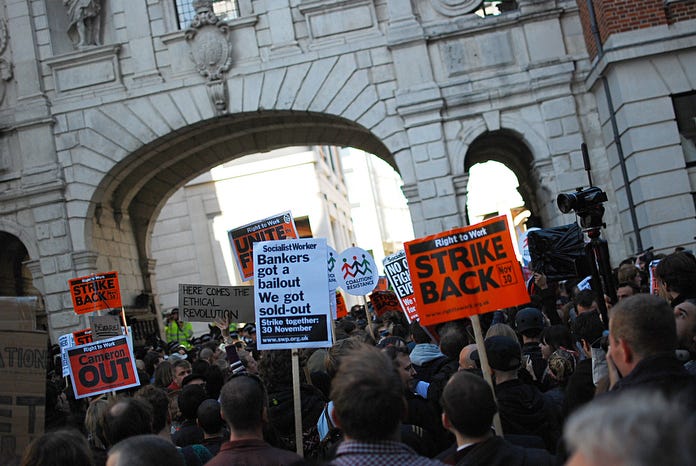
Chants of “Whose street? Our Street.” filled the Paternoster Square where London Stock Exchange is situated during the 2011 Occupy Protests. However, the Square is owned by Mitsubishi Estate. With this, protesters were prohibited from gaining access, with the police closing in the protestors.
Another way that city public spaces can impede dissent is if they were not designed for humans to begin with. Widely spaced roads and long blocks are efficient for vehicles, however, they make it difficult for people to gather.
Apart from its huge population. The combination of public spaces and walkable, dense roads is a huge factor why New York has been a hotspot for protests. This is also a reason why populous cities like Phoenix — designed to be drivable and sprawling — rarely see huge protests.
The centres of power
The physical space is where leaders can display their power. This is why there is a tendency for them to address huge crowds even though we are now in the age of social media. With this, the physical space can also serve as a site to dismantle that power if it runs off course.
The Tiananmen Square is a tragic example of how the public space can be used to eliminate dissent. The 44-hectare public square was deliberately cleared so that it exudes a feeling of massive emptiness. This dwarfs the individual, overwhelming them with the symbolic power of the state reflected by the space.
According to Rafail, modern cities tend to have high concentrations of powerful institutions governing the economy, politics, justice, and culture. These concentrations in a compact space attract protest activity.
The college campuses
Historically, universities and colleges have been areas of concentrated social movement. Research shows that there is a direct relationship between attaining higher education and the likelihood to participate in political activities including protests.
Designing spaces for democracy
In order to foil the pro-democracy protests in Bahrain, the Bahraini government demolished the Pearl roundabout, the centre of the uprising at the time. The destruction of this space is a way to regain control.
However, as we have seen, moulding city spaces to impede dissent doesn’t always come in such an obvious form. The removal of access to spaces and the subtle but deliberate manipulation of space are often overlooked but effective means to impede protests.
Regimes rise and fall, imbalances in power can easily emerge. With this, city planners should carefully think about how their executions can affect the movement of dissent so that this powerful tool remains in the hands of the people when the time comes for them to use it.
As cities expand, the examination of the design and architecture of dissent in the context of the urban space is also becoming more relevant. Knowing this, city designers cannot allow themselves to be outsmarted by entities which can use urban spaces for their corrupted interests.
If one were to think about it, the development of cities for human prosperity does not fall too far from developing cities that are fair, inclusive, and democratic. For both goals, the attainment lies in designing spaces not for the retention and entrenchment of power but for the people, first and foremost.