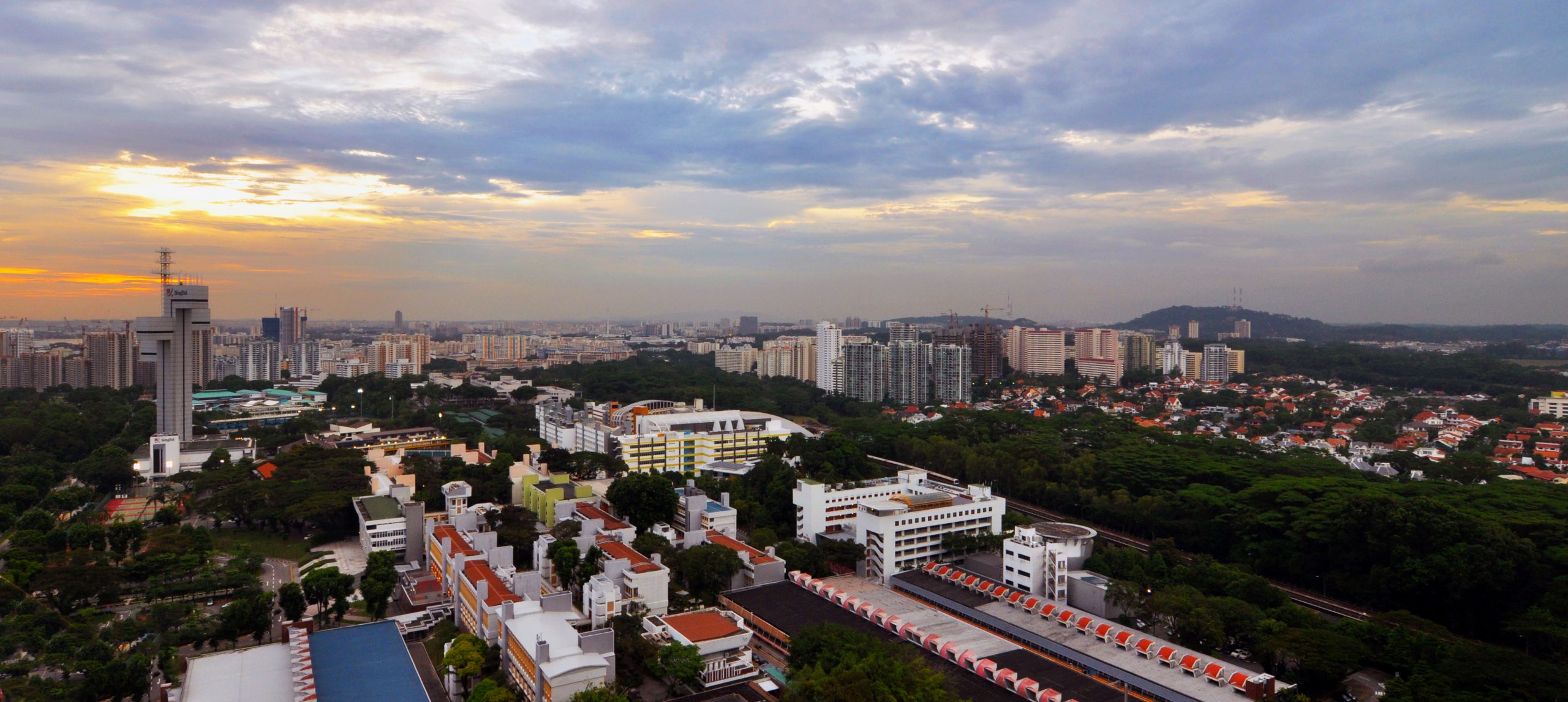
The COVID-19 pandemic has heightened awareness of the significant flaws in our urban infrastructure, and highlighted our lack of attention to how human health, natural systems, and the built environment interact to determine planetary health. It is now clear that our economic system increases food insecurity, our streets prioritize motorized traffic over physical exercise, and our houses increase the risk of disease transmission. We can, and must, do better, by launching a bold new investment program for planetary health.
The near-universal focus on health prompted by the pandemic presents an opportunity to mobilize all sectors of society toward embracing proactive approaches to inclusive wellbeing. Building resilient and sustainable systems for health, particularly in the context of cities and urban development, will be key in this regard.
At best, the failure fully to address the adverse implications of today’s built environments represents a missed opportunity to enable healthy communities. At worst, it actively contributes to disease risk and transmission. In the United Kingdom, for example, the higher COVID-19 mortality in poor people has illustrated the short-sightedness of housing policies that fail to place health and ecological considerations at their center.
One positive feature of the current crisis has been the rapid adoption of innovative measures (including versions of universal income) to mitigate the pandemic’s immediate economic impact. This shows that we can address systemic failures quickly when the will exists.
Likewise, we must radically reimagine our built environments so that they both strengthen the immediate pandemic response and serve as vehicles for improving long-term health. And while cities will be the primary testing ground for reforms to promote health and wellbeing, it will also be necessary to overhaul existing health governance systems.
Although several global philanthropic initiatives have sought to improve urban health and resilience, undoubtedly with positive results, today’s flawed systems need more fundamental disruption. Simply put, the world needs a new Marshall Plan for planetary health – akin to a New Deal for a post-pandemic recovery.
Such a scheme would serve as a global guide, aligning incentives and shifting default behaviors toward the shared goal of sustainable healthy urban development. It will require the agreement and participation of national and local governments, private developers, investors, and multilateral organizations, which will take time. Moreover, the initiative would take multiple institutional forms and pathways, some of which may not exist yet.
Governments and private-sector actors will need to address three issues in particular.
For starters, policymakers should not regard resilience only as an end result. Many of the shocks and stressors that drive acute and protracted health emergencies stem from intentional choices by local and global actors. Beyond adaptation to cope with these shocks and stressors, building resilience must therefore involve confronting the decisions that weaken systems by fostering ecological disruption and disease.
In addition, policymakers must tackle the “problem blindness” that results from the temporal and spatial distance between exposure to health risks and subsequent outcomes, especially for diseases with a long arc. For example, there is a disconnect between current urban development and future hospitalizations due to asthma and heart disease, which may be exacerbated by air pollution, exposure to damp environments, and lack of access to safe areas for physical activity. One consequence of problem blindness is attenuated accountability for long-term health.
Finally, policymakers will need to address the “wrong pocket problem,” whereby the sector benefiting from an intervention may not be the one that bears the cost of implementing it. This poses a challenge to promoting health through urban development, particularly in the context of siloed public-sector budgets, and will necessitate a redesign of health financing.
Alternatives to the current GDP-based approach to economic development already exist. Bhutan has developed a Gross National Happiness index to guide its policymakers, while the Wellbeing Economy Alliance advocates for a wellbeing-based economic system and is being embraced by the governments of New Zealand, Iceland, Scotland, and Wales. But addressing the three issues noted above will require finance and investment in systems for health.

Image: GNH Centre Bhutan
Here, multilateral development finance institutions (MDFIs), such as the African and Asian Development Banks, could help. As non-commercial organizations that provide capital for economic development projects across a wide range of member states, such institutions are uniquely positioned to drive a Marshall Plan-type scheme.
First, MDFIs have the convening power to bring together heads of member states and private-sector leaders to co-develop and ratify such a plan, while taking regional nuances into account. Second, MDFIs could condition urban infrastructure development loans under the scheme on explicit consideration of a project’s health impacts and health-promotion strategies.
Under the plan, lending and borrowing institutions would decide how to mobilize and allocate financial capital on the basis of where the costliest health problems are, and who is best placed to prevent disease. They would also explore creative strategies to encourage intersectoral policies and finance collaborative projects that advance human and planetary health. Such an approach could further catalyze public policy, for example by making the primary performance indicator of urban infrastructure development strategies, policies, and initiatives their contribution to health.
The devastating impact of COVID-19 has highlighted the urgent need for ambitious, all-encompassing reforms rather than incremental, piecemeal measures. A global Marshall Plan for planetary health would constitute a radical new approach, and would be an important step toward health-proofing the future of fast-growing cities. In addition to finance and investment from public and private sectors, it will require a social movement (led by the young) to drive the unremitting demand for a healthy post-COVID recovery, supported by research across the sciences, arts, and humanities. Preventing toxic decisions in urban planning and infrastructure development is essential to reduce vulnerability to disease, lessen the need for health care, and bring about better cities and better health for all.
Tolullah Oni, Public health physician and urban epidemiologist, Clinical Senior Research Associate at the University of Cambridge, Honorary Associate Professor at the University of Cape Town
Republished from the World Economic Forum