Twenty years ago this month, Google opened the doors of its first overseas office — in Tokyo. The office was rudimentary by today’s standards (the music system was a portable cassette deck). But our founders knew the Asia Pacific region would be central to Google’s mission of making information universally accessible. More importantly, Google also had an enormous amount to learn from the region.
Over the past 20 years, Google’s commitment to Asia Pacific has steadily deepened, and we’re proud to have helped support the region’s extraordinary growth. Today, 2.5 billion people are online here, almost all of them on mobile. We’re honored they use Google’s tools to improve their lives: finding jobs, learning new skills, building businesses, and pushing the boundaries of technology. It’s clear there remains huge, untapped potential for the future if we can continue to lay the foundations with the right investments and initiatives.
To mark the occasion, we wanted to reflect on some of the moments and themes that have defined Google’s 20 years in Asia.
1. Silicon Valley to Shibuya
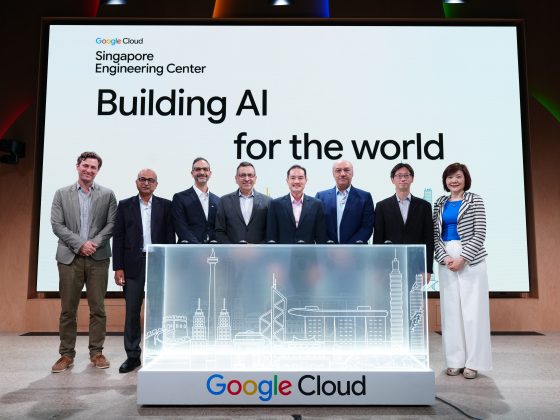
That first nondescript office in Tokyo’s Shibuya neighborhood was a long way — in both scale and decor — from the current Google office down the street. But these humble digs served as our first Asia Pacific headquarters. The Googlers there did pioneering work — including steps to take emoji culture global (?). And the office laid the groundwork for today’s Google Japan team, helping the host nation continue its long tradition of forward-thinking in technology. Fast forward to today and we have offices full of Googlers throughout the region, with Singapore as our current Asia Pacific headquarters.
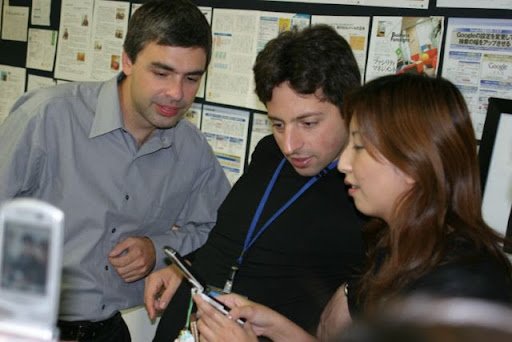
Google’s co-founders, Larry Page and Sergey Brin, at our first overseas office in Shibuya, Tokyo.
2. G’Day, Google Maps
In 2004, two Aussies and two Danes came together in Sydney to develop a new kind of mapping technology for the internet. In February 2005, Google Maps was born — and it’s had quite a run since. As Maps got more sophisticated, Googlers in Asia Pacific went above and beyond to expand its reach, including Street View filming expeditions from Mongolia’s Lake Khövsgöl to Cambodia’s Angkor Wat and Australia’s Uluru.

Filming for Street View at Uluṟu-Kata Tjuṯa National Park in Central Australia in accordance with Tjukurpa law
3. MapMaker and Asia’s influence on Google products
In 2008, two Indian engineers realized that there wasn’t enough commercial mapping data of India for a full national map in Google Maps, so they built a tool called Google MapMaker, where communities could make their own additions to the map. It went on to be useful for everywhere around the world, especially in times of disaster like typhoons in the Philippines. We learned a big lesson here: when we build for the newest users in Asia, we build better for the world.
We’ve seen this now with Google Pay, created in India as Tez, and motorbike navigation mode, launched in India, which have both been expanded globally. YouTube and Maps offline modes were originally built to help people in Asia conserve data, but now help anyone driving through areas with spotty connections. An engineering center in Singapore — working with teams across the region — helps advance our efforts to make the internet more inclusive for the Next Billion Users set to come online for the first time.
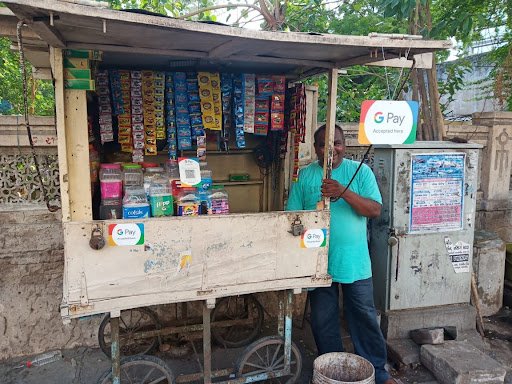
Google Pay has helped merchants across India accept digital payments.
4. Building blocks for Asia’s digital economy
In 2011, we opened our first data centers in Asia. The facilities in Singapore and Taiwan helped provide faster, more reliable access to our tools and services. Since then, we’ve kept increasing our investment in the physical infrastructure that supports the digital economy, adding more data centers and helping build subsea cables like Echo and Apricot. A study found that between 2010 and 2019, Google infrastructure investments like these contributed $430 billion in aggregate GDP and helped create 1.1 million jobs throughout the region. They’re crucial to Google Cloud’s growing presence in the region, helping companies like Japan’s Fast Retailing and Indonesia’s Tokopedia.
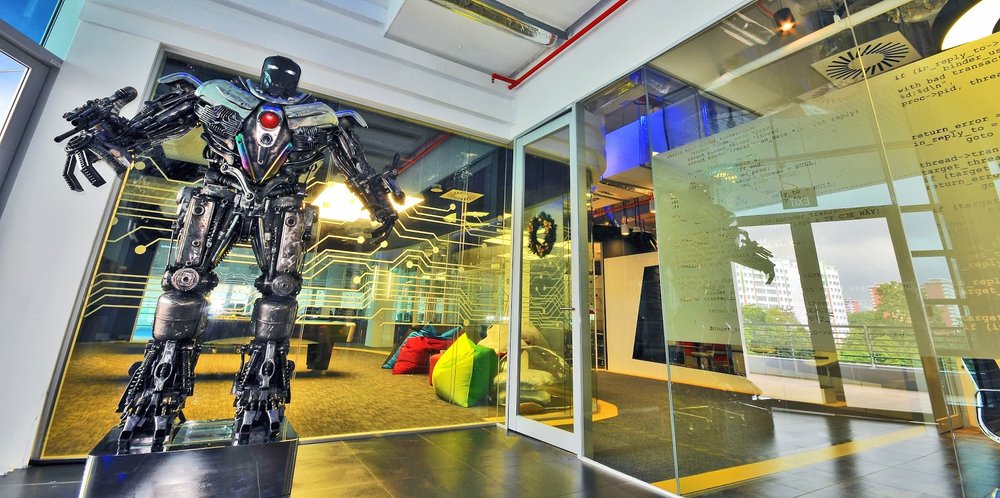
The scene at Google’s data center in Singapore when it opened in 2013
5. Gangnam Style: the rise of YouTube in Asia
In the summer of 2014, Psy’s 2012 video “Gangnam Style” surpassed two billion views on YouTube. That incredible success was a seminal moment in a bigger story: how Korean ‘K-Pop’ artists were some of the first to use YouTube to reach new audiences around the world. As of today, nine of the top 10 24-hour debuts on YouTube are by Korean artists. And beyond Korea, creators across Asia are using YouTube to share their voice, help others learn, and make a living.

6. “Flappy Bird” and Asia’s new mobile entrepreneurs
Flappy Bird” was another big online moment in 2014. Created by Vietnamese developer Dong Nguyen, the game became a huge hit around the world. It summed up the new possibilities for entrepreneurs building and marketing their mobile apps through Google Play. Today, Asia Pacific is the number one region for mobile subscriptions, the app market and the source of half of all online gaming revenue.
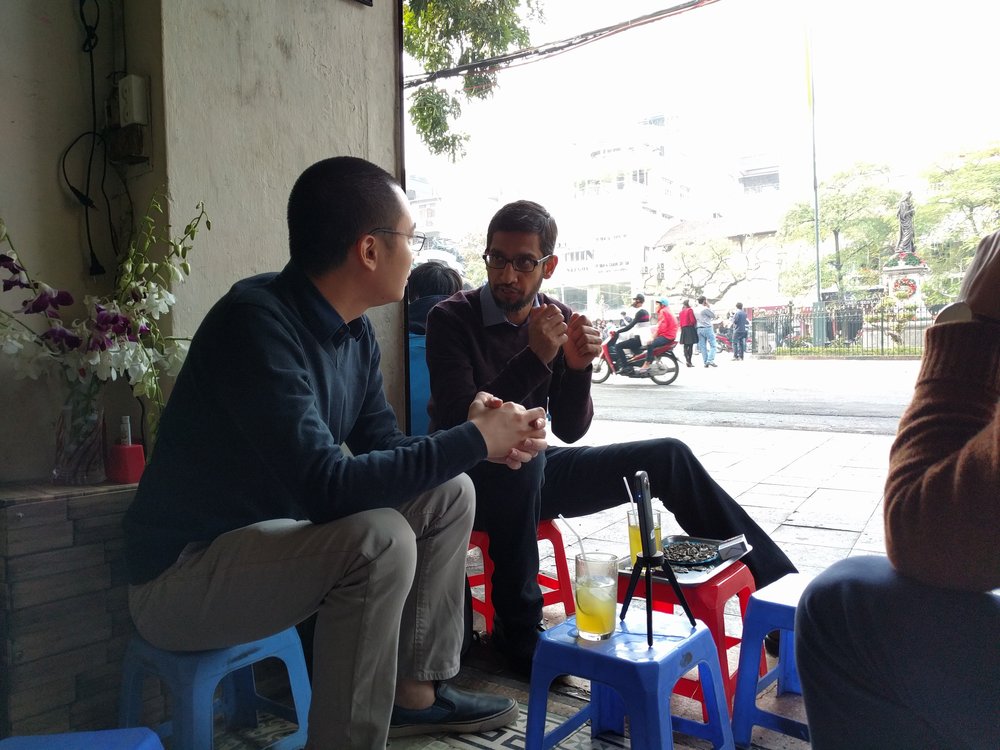
Sundar Pichai meets “Flappy Bird” creator Dong Nguyen in Hanoi in 2015.
7. New approaches to digital skills
One particular challenge we’ve faced is how to bring digital knowledge and skills to people with limited access to the internet or restrictions on data. In parts of India, that initially meant using a rickshaw equipped with internet-enabled devices, information on using the web and an operator to explain how. Over time, we recognized that to really make a difference, we needed training programs to be embedded in communities — leading to the Internet Saathi initiative where female trainers share their knowledge with other women in their village. Between 2015 and 2020, we provided skills training to 50 million people across Asia Pacific. And we continue to tailor our skills and education programs to local needs, whether it’s our Bangkit initiative in Indonesia (working with local tech firms to nurture talented developers) or our Skills Ignition partnership in Singapore (offering training and work placements for thousands of people).

The Internet Saathi initiative helps women in rural India use the internet.
8. AlphaGo demonstrates the promise of AI
DeepMind’s go-playing AI AlphaGo made the cover of Nature in January 2016 for being the first AI to ever beat a master at the 3,000-year-old game. In 2017. AlphaGo beat the former world-champion Lee Sedol 4-1 in Seoul. From there, DeepMind traveled to Wuzhen, China, where AlphaGo Master beat world champion Ke Jie 3-0 at the Future of Go Summit — a thrilling event involving the world’s best players. AlphaGo has since retired, but the role of AI in society is only increasing. Today, we’re working with partners throughout Asia Pacific on ways AI can help with challenges like flood prediction and disease diagnosis.
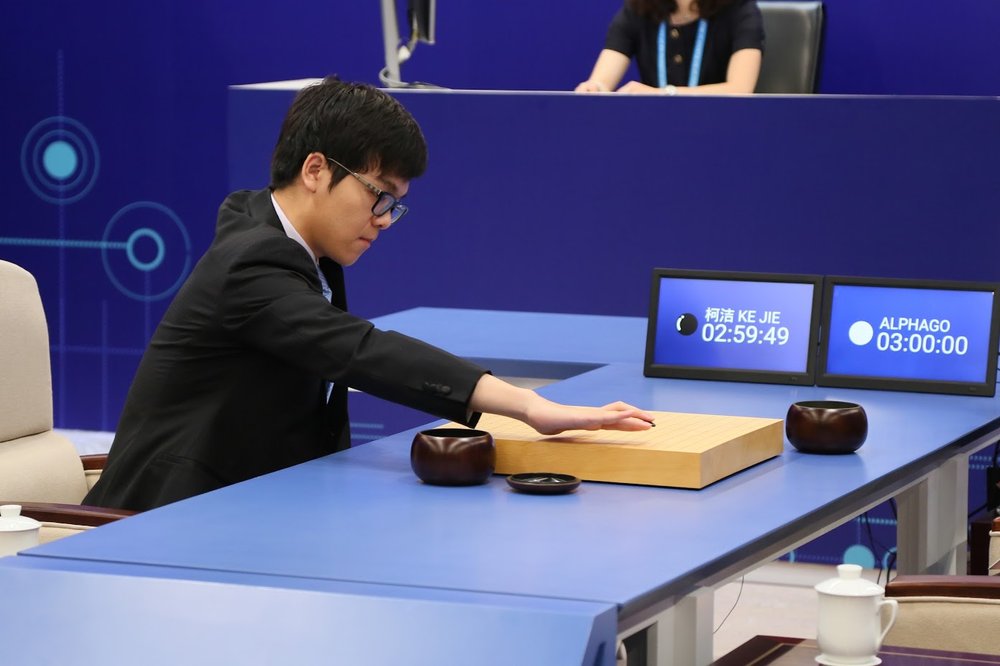
Grandmaster Ke Jie locked in competition with AlphaGo in 2017
9. Investments in the digital future
In September 2017, we brought HTC’s engineering talent into Google — cementing a decade-long partnership with the Taiwanese company, and marking a big step forward in Google’s plans to build devices combining the best of Google software and hardware. Today, our Pixel phones and Nest devices are popular across the region. And we’ve continued to invest in Asian companies bringing the best of technology to hundreds of millions of people, from Indonesia’s Gojek to India’s Reliance Jio. Together with Jio, we’re working on an affordable smartphone that will enable more Indians to get online.
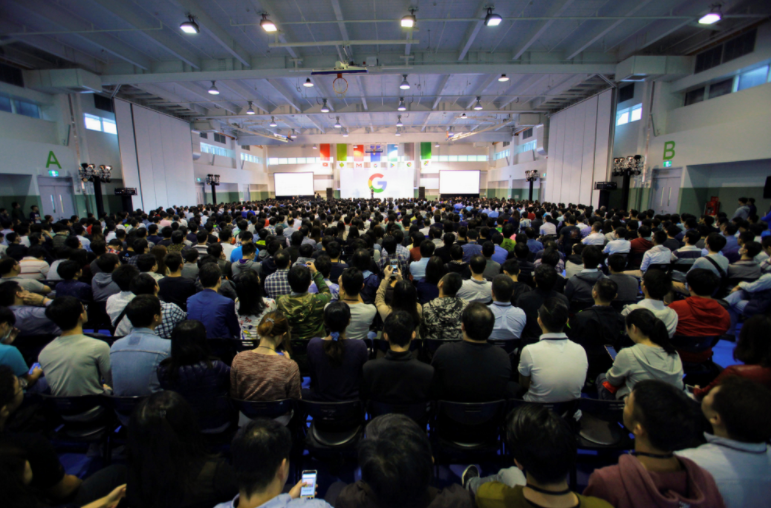
Welcoming new HTC colleagues to Google’s engineering workforce in Taiwan in 2018.
10. Giving voice to polyglot Asia
As of 2020, Google Translate supports more than 30 languages across Asia Pacific. Extending the reach of Google Translate — and improving it with AI — is vital in a region of such vast linguistic diversity. But there are other steps that can make the internet more accessible and helpful: for example, building technology that’s intuitive for people who find it more natural to speak to their device.

A growing number of internet users in Asia prefer to speak to their phone, rather than type.
The rise of ‘voice users’ will be a big theme for Google and the entire tech industry in the decade ahead, and we’ve developed a playbook to guide technology-makers’ efforts.
By Scott Beaumont President, Asia Pacific
Source Google Cloud Blog