dotlah! dotlah!
  • Cities
  • Technology
  • Business
  • Politics
  • Society
  • Science
  • About
Social Links
  • zedreviews.com
  • citi.io
  • aster.cloud
  • liwaiwai.com
  • guzz.co.uk
  • atinatin.com
0 Likes
0 Followers
0 Subscribers
dotlah!
  • Cities
  • Technology
  • Business
  • Politics
  • Society
  • Science
  • About
  • Science

NUS Researchers Identify Novel Pathways Responsible For Liver Cancer

  • January 20, 2022
Total
0
Shares
0
0
0

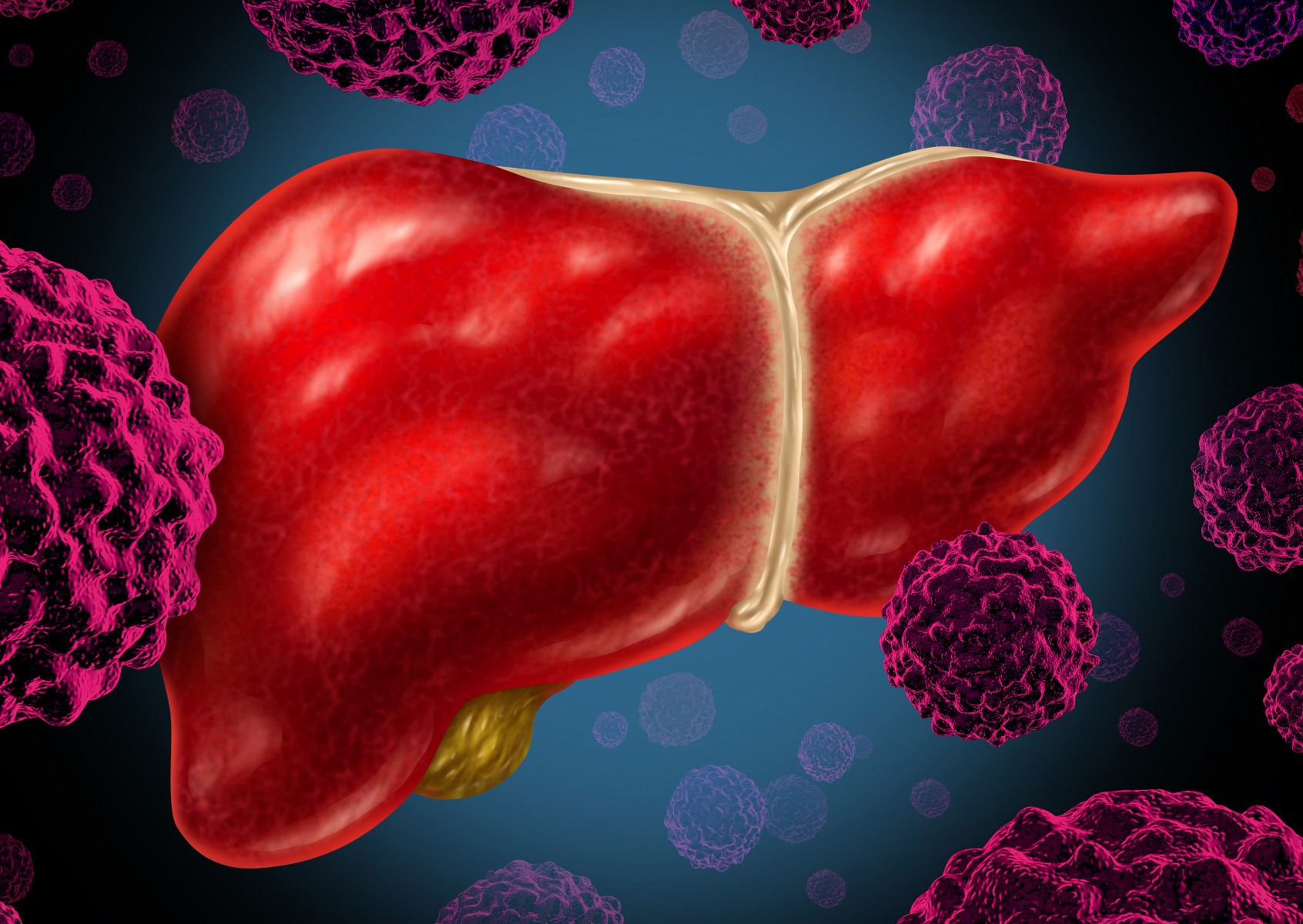
Hepatocellular carcinoma (HCC) is the most common type of primary liver cancer. It is one of leading causes of cancer-related deaths globally, with more than 700,000 new cases and 600,000 estimated HCC deaths each year. HCC occurs most often in people with chronic liver diseases such as hepatitis B, which is one of the main causes of HCC (particularly in Asia). While surgery, liver transplantation, or radiological intervention may be a viable option for early-stage disease, prognosis for advanced stage HCC remains bleak, with most patients eventually dying within 20 months after diagnosis.

A team of researchers at the Cancer Science Institute of Singapore (CSI Singapore), led by Professor Daniel Tenen and Assistant Professor Yvonne Tay, embarked on a novel study which aims to address a yet unmet clinical need. The team identified new pathways that are responsible for HCC.

Their findings were published in the prestigious scientific journal, Science Advances, on 1 October 2021.

What are pseudogenes?

The CSI Singapore team focused on ‘pseudogenes’ – a section of chromosome that is an imperfect copy of a functional gene. A good metaphor of understanding the distinction between DNA, chromosomes, and genes is to think of the genome as a library. Our entire genome consists of many shelves of books, all of which instruct our body to produce different proteins, enzymes and other fundamental cellular materials. A gene is a single book that contains instructions for a specific product – like a single protein – while DNA sequences are the sentences in its pages. A chromosome is a shelf of books since it contains many genes, and all the shelves together combine to create the entire library (i.e. the genome). Humans usually have 23 pairs of chromosomes in each cell.

Every time a cell is created, the entire library of genomic information must be copied over to the new cell. During this process, errors in copying can occur, such as mutations. Pseudogenes describe this class of genes: genomic sequences that are similar to other genes but are defective. Continuing with the book metaphor, these are books that contain misprints or typos. Pseudogenes do not code for any protein, but they resemble genes that do, and hence are referred to as non-coding RNA (ncRNA).

Pseudogenes were once considered non-functional evolutionary relics due to their lack of coding potential, but recently, these ncRNAs have recently been linked to patient prognoses and cancer subtypes. Despite the potential clinical importance of pseudogenes, only a handful of more than 12,000 pseudogenes in humans have been characterised in cancers to date. In this study, Asst Prof Tay and her team established a previously unrecognised role for pseudogenes.

The role of pseudogenes in cancers

The group focused on a known gene that causes cancer, otherwise known as an ‘oncogene’. The oncogene SALL4 is known to cause HCC and it contains eight pseudogenes. Since many pseudogenes are actively copied or ‘transcribed’ into new cells, they postulated that pseudogenes could be involved in DNA methylation – a process where a chemical methyl group (CH3) is added to the DNA strand itself. This can affect how genes are expressed – sometimes DNA methylation can repress gene expression, which is exactly what the CSI Singapore team had found.

Asst Prof Tay explained, “We found that as methylation of SALL4 increased, its expression decreased, suggesting the therapeutic potential of using DNA methylation as a regulatory mechanism to suppress the expression of SALL4 in HCC. With this interesting discovery, we decided to take a step further to investigate the correlation between methylation of a specific region in SALL4 and SALL4 expression.”

The team used CRISPR technology, which allowed them to target and block gene-specific DNA methylation. They found that some SALL4 pseudogenes cause hypomethylation (the absence of CH3 methyl groups) in the CpG region. This hypomethylation – in other words, reduction of the methylation profile in the region – leads to an increased expression of the SALL4 gene with enhanced associated cellular growth. “Hence, blocking the pathways leading to the hypomethylation of the SALL4 locus could have valuable therapeutic effects on HCC patients with elevated SALL4 levels,” said first author Dr Kwon Junsu, who is a Research Fellow at CSI Singapore.

Significance and next steps

These new insights into SALL4 re-expression in HCC potentially open up avenues for the development of novel therapeutic approaches and may alter the treatment paradigm for patients.

“Moving forward, we plan to monitor the activity of pseudogenes that increase the expression of genes known to cause cancer through demethylation (i.e. the reduction of methyl groups). Through this, we hope to predict the activation of these oncogenes as well as cancer progression,” said Prof Tenen.

Total
0
Shares
Share
Tweet
Share
Share
Related Topics
  • Cancer Science Institute of Singapore
  • CSI Singapore
  • HCC
  • National University of Singapore
  • NUS
  • SALL4
dotlah.com

Previous Article
  • Technology

NTUC Income Launches SNACKFIT, A First-Of-Its-Kind Fitness And Lifestyle Proposition That Offers Bonus Insurance Coverage Based On Biological Age

  • December 23, 2021
View Post
Next Article
  • Technology

New SIA-NUS Corporate Laboratory To Spur Digital Innovation In Singapore’s Aviation Sector

  • January 20, 2022
View Post
You May Also Like
View Post
  • Cities
  • Climate Change
  • Science

New research may help scientists predict when a humid heat wave will break

  • dotlah.com
  • January 6, 2026
Semiconductor
View Post
  • Computing
  • Science

Decoding The Digital. Distinguishing Computer Science And Information Technology In Society And Industry.

  • Dean Marc
  • May 2, 2024
View Post
  • Artificial Intelligence
  • Data
  • Research
  • Science

Generative AI Could Offer A Faster Way To Test Theories Of How The Universe Works

  • dotlah.com
  • March 17, 2024
Mercury
View Post
  • Science
  • Technology

Study: Global Deforestation Leads To More Mercury Pollution

  • dotlah.com
  • February 14, 2024
View Post
  • Science
  • Technology

Higher, Faster: What Influences The Aerodynamics Of A Football?

  • dotlah.com
  • February 11, 2024
View Post
  • Artificial Intelligence
  • Science
  • Technology

A Glimpse Of The Next Generation Of AlphaFold

  • dotlah.com
  • November 6, 2023
View Post
  • Artificial Intelligence
  • Machine Learning
  • Science
  • Technology

AI in the Classroom: Amii’s K-12 Pilot Program

  • dotlah.com
  • October 23, 2023
View Post
  • Science
  • Technology

Learning How To Learn

  • John Francis
  • October 23, 2023


Trending
  • 1
    • Technology
    Best Deals On Earphones You Can Get On AliExpress Today
    • November 25, 2019
  • 2
    • Science
    Bill & Melinda Gates Foundation Dedicates Additional Funding To The Novel Coronavirus Response
    • February 10, 2020
  • 3
    • Cities
    • People
    • World Events
    Coronavirus: A Pandemic In The Age Of Inequality
    • March 19, 2020
  • 4
    • Lah!
    • Technology
    Using Indoor Air Sampling Surveillance To Sniff Out COVID-19
    • October 9, 2021
  • 5
    • People
    PM Wong takes Scoot flight, fellow passengers cheer
    • October 16, 2024
  • 6
    • Technology
    SMU Launches Its First SkillsFuture Work-Study Degree To Meet Demand For Software Engineers
    • March 3, 2022
  • 7
    • People
    • Working Life
    Skills development is critical to bridging the global digital talent gap
    • December 22, 2025
  • 8
    • Cities
    • Lah!
    • Technology
    Encouraging EV Charger Installation In Non-Landed Private Residences
    • July 20, 2021
  • 9
    • Cities
    DBS And ComfortDelgro Taxi Announce Strategic Payments Partnership
    • June 27, 2020
  • 10
    • Lah!
    • Technology
    EZ-Link Delivers More Convenience And Benefits To Motorists With The Introduction Of The EZ-Link Motoring Card And Motoring Rewards
    • August 2, 2021
  • 11
    • Technology
    Championing Personal Data Protection For Trust And Loyalty
    • May 24, 2020
  • 12
    • Technology
    Support For Southeast Asian Startups Tackling Big Challenges
    • August 6, 2020
Trending
  • 1
    Chinese tech giant Huawei unveils Mate 90 series smartphones with flagship Tau chips adopting logic folding technology
    • October 3, 2026
  • 2
    Google Opens Singapore Engineering Center to Build and Export Enterprise Cloud and AI to the World
    • September 15, 2026
  • 3
    Apple Flagship Hardware Launch for September 2026
    • September 10, 2026
  • 4
    MIT researchers tackle the economic realities of fusion power
    • August 10, 2026
  • 5
    ASEAN, treaty parties push stronger cooperation as Treaty of Amity and Cooperation in Southeast Asia marks 50 years
    • July 26, 2026
  • 6
    The Fastest AI Fried Chicken In The World
    • June 29, 2026
  • 7
    Zed Approves | How to Stay Cool in Extreme Heat
    • June 29, 2026
  • 8
    Was Venezuela struck by an earthquake ‘doublet’? Here’s what we know so far
    • June 27, 2026
  • 9
    Zed Approves | It’s Prime Day 2026! Time to Upgrade Your World Cup Viewing Setup and Beat the Heat
    • June 25, 2026
  • 10
    Zed Approves | The Best Prime Day PC Deals: Top Gaming Rigs, Workstations, and Everyday Laptops
    • June 25, 2026
Social Links
dotlah! dotlah!
  • Cities
  • Technology
  • Business
  • Politics
  • Society
  • Science
  • About
Connecting Dots Across Asia's Tech and Urban Landscape

Input your search keywords and press Enter.