Will de Freitas, The Conversation
At the start of 2016, in an article noting some exciting changes in British energy, The Conversation published the following paragraph:
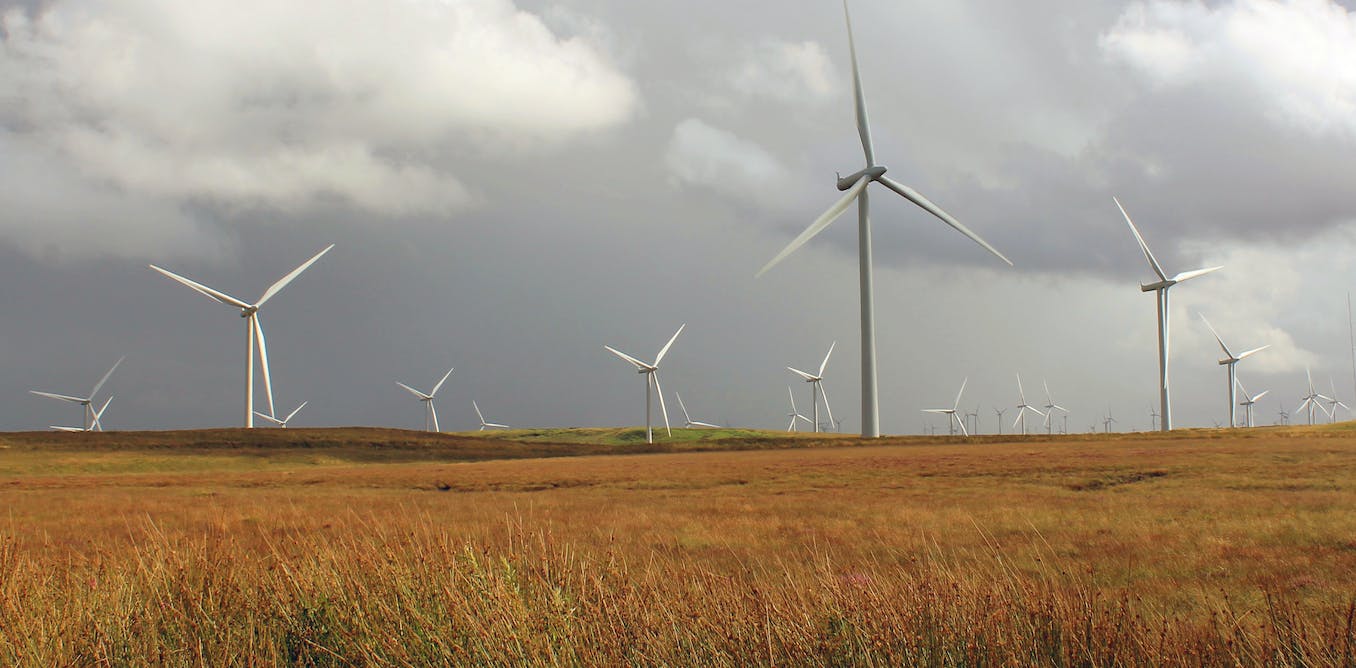
Wind, solar and hydro – the weather-dependent renewables – together generated 14.6% of Great Britain’s electrical energy in 2015, the highest ever annual amount. Wind stormed (literally) past the 2014 record to break through the 10% milestone. Solar more than doubled to 2.5%.
Eight years on, those numbers look tiny. Wind is now up to 29% and solar has doubled again. In 2015, coal still generated a quarter of British electricity, but last year it was down to 1%. Indeed the same author, energy analyst Grant Wilson, recently noted that 2023 was the first ever year when Britain would get more electricity from renewables than fossil fuels.

This roundup of The Conversation’s climate coverage comes from our weekly climate action newsletter. Every Wednesday, The Conversation’s environment editor writes Imagine, a short email that goes a little deeper into just one climate issue. Join the 30,000+ readers who’ve subscribed.
If you include electricity generated by “biomass” plants (which burn wood pellets, often imported from forests in America) then, as Wilson notes along with his University of Birmingham colleagues Joseph Day and Katarina Pegg, renewables actually first overtook fossil fuels in Britain in 2020.
“Trees can of course be regrown, so biomass counts as renewable,” they write. “But the industry has its critics and it’s not globally scalable in the same way as the ‘weather-dependent’ renewables: wind, solar and, to a certain degree, hydro power.”
In other words, if everyone started burning wood pellets for electricity we’d soon run into major problems, whereas one country installing more wind turbines or solar panels doesn’t mean there is less wind or sun left for others. They are effectively infinite resources.
That’s why “weather-dependent” renewables are more appropriate for a global transition, and why 2023 was such a significant milestone year for Britain.
However, this transition may be grinding to a halt. Britain’s electricity decarbonisation is mostly thanks to wind power getting cheaper and cheaper. But what happens if it’s suddenly not cheap anymore?
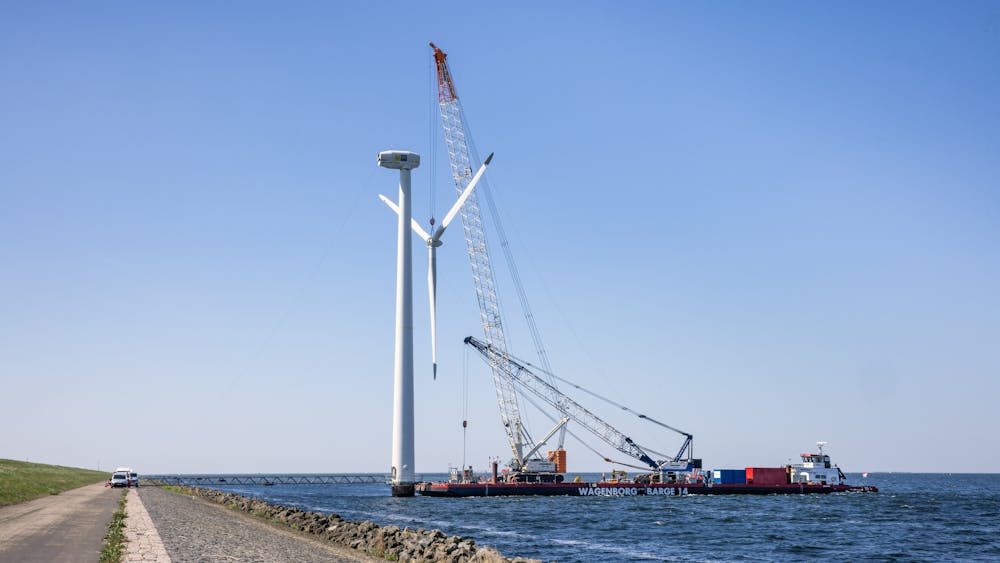
Phil McNally, an electricity markets researcher at UCL, wrote in September last year about the failure of the latest round of “auctions” to bring forward any new offshore wind projects. “Consequently,” he writes, “the government’s own target of achieving 50 gigawatts of offshore wind capacity by 2030 is hanging by a thread, and investor confidence has hit a new low.”
But this isn’t because the technology itself has become more expensive. Indeed, “offshore wind remains one of the cheapest and most suitable technologies available to the UK”. Rather, McNally explains:
The primary factor driving up the cost of delivering a new offshore wind project mirrors a predicament that is currently facing us all – inflation has made things more expensive to buy and money more expensive to borrow. The rate at which prices are rising is starting to fall, but remains significantly above where it was two years ago. For those involved in the construction of an offshore wind farm, this means the cost of both the physical parts (such as the turbines) and the debt (bank loans) has gone up.
This isn’t specific to wind power – prices have gone up for new gas or solar plants too. But given electricity generation is a must, “what truly matters is the relative cost, and offshore wind remains cheap relative to other technologies”.
McNally also notes that the supply chain – the companies that provide everything from turbine blades to installation vessels or trained engineers – has been slow to catch up with demand and can therefore command higher prices.
T.W. van Urk / Shutterstock
Given these economic and supply chain issues, he says the UK government should focus on producing a long-term delivery plan for the offshore wind sector that “includes the amount of offshore wind it wishes to procure in each auction, delivering confidence to industry and allowing the development of a healthy supply chain”. In addition:
It could also include standardisation of technology to maximise further cost reductions and accelerate delivery. And it should […] make auction caps more reflective of current costs, so that consumers do not miss out on the cheapest forms of electricity.
The companies that generate Britain’s electricity are doing well, at least. Michael Grubb and Serguey Maximov Gajardo at UCL estimate the total annual revenue to British electricity generating stations increased by £29 billion as a result of the 2022 energy crisis.
“The indications are that these revenues increased by about twice as much as overall generation costs,” they write. While “getting at the numbers is not easy”, their research backs up the widely believed view that firms generating electricity from gas were able to exploit a global increase in gas prices.
Since these companies’ costs shot up following the start of the Ukraine war, it seems no surprise that their prices did too. We estimate their total annual revenue rose by about £13 billion, roughly trebling from the pre-COVID average of £6.3 billion. But the evidence suggests this increase was, in fact, much bigger than the increase in their costs.
Renewable generators also saw profits increase: “We estimate their revenue doubled from £7.7 billion pre-COVID to £15.5 billion in 2022 – yet there is no reason to think their costs increased.”
What happened? A lack of real competition in a market where gas still sets the overall price of electricity, combined with a decline in imports from mainland Europe (which helped regulate prices) and a continent-wide gas shortage, meant “electricity generators in Britain were able to raise prices further above costs”.
And to go back to where we started, Grubb and Gajardo point out:
The real paradox is that all this happened just as non-fossil sources, with stable costs, started to account for more than half of Britain’s electricity (56% if we include nuclear) … For how long can the declining fossil fuel tail continue to wag the dog of Britain’s renewables-based electricity system?

Will de Freitas, Environment + Energy Editor, The Conversation
This article is republished from The Conversation under a Creative Commons license. Read the original article (https://theconversation.com/renewables-now-generate-more-of-britains-electricity-than-fossil-fuels-but-what-happens-next-220499).