dotlah! dotlah!
  • Cities
  • Technology
  • Business
  • Politics
  • Society
  • Science
  • About
Social Links
  • zedreviews.com
  • citi.io
  • aster.cloud
  • liwaiwai.com
  • guzz.co.uk
  • atinatin.com
0 Likes
0 Followers
0 Subscribers
dotlah!
  • Cities
  • Technology
  • Business
  • Politics
  • Society
  • Science
  • About
  • Cities
  • Society

How Cities Shape Pandemics

  • March 12, 2020
Total
0
Shares
0
0
0

Cities and pandemics are closely linked throughout history. A lot of lives have been claimed by disease outbreaks. Each time, these outbreaks act like some sort of a lesson that drives change in cities.

For the most part, cities have gotten better in eliminating the risks of disease outbreaks, thanks to developments in health and sanitation over the years.

However, in the previous decades, there has been an observed uptick in the frequency of occurrence of pandemics.  One can recall the 2003 SARS pandemic, Influenza H1N1 pandemic in 2009, the Zika virus outbreak, and currently, the COVID-19 outbreak which is now declared a pandemic by the World Health Organization.

While it may seem like the cities are regressing, the reason behind this increase is a different kind of enemy. This time, the cities may be shaping the pandemics themselves.

The mortality transition

The original cities of the United States back in the 1900s were characterized by high mortality rates. Historian Michael R. Haines referred to them as “virtual charnel houses.”

Living in cities back then is almost like a punishment. The crowded areas, poor sanitation, as well as the poor understanding of disease processes are some of the factors that Haines pointed out to have driven the increased mortality.

Eventually, improvements in sanitation, public health, medical science, and infrastructure led to a sustained mortality transition. With all these developments, cities have become typically better places to live in than urban areas as early as the 1940s.

The need for social contact

The coronavirus which leads to COVID-19 is not exactly reliant on the sanitary conditions of a city, though of course, this is still important. The transmission of the virus is dependent on social contact. In an ideal scenario, once the virus carriers have been quarantined, the virus will also stop from spreading.

This virulence of the COVID-19 virus may be its Achilles’ heel if it spread a few decades ago. However, this has become its key strength in modern times.

Cities are heavily reliant on social contact in accelerating growth. It is in social contact where ideas are exchanged and changes are actualized. This is why rapid urbanization has also led to increased connectivity.

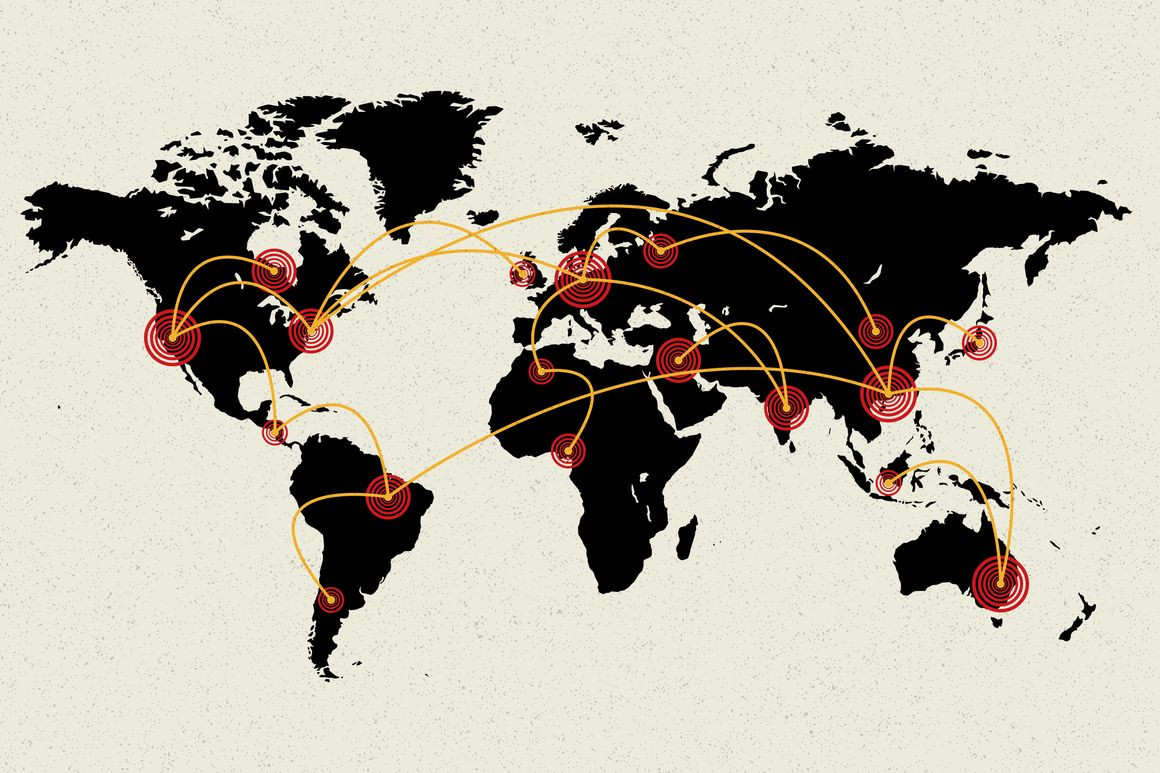
However, because of this mutual reliance on social contact, the cities have made it easier for these kinds of viruses to spread. Due to the highly connected world that we now live in, the virus easily made it through multiple countries in a relatively short span of time.

A second transition

What then must be done to disempower these kinds of viruses in cities? A refocusing may be in order.

Michele Acuto, professor of global urban politics in the School of Design at the University of Melbourne in an interview with CityLab noted that there is a need to refocus on areas outside cities.

“COVID-19 is really a story of peri-urban and rural-to-urban connections, in places that are often not on the global map.” Acuto pointed out.

This entails a decentralization of services from cities, allowing development to spread outside its borders.

Along with the continued strengthening of public health and sanitation, there is also a need for an increase in communication between cities rather than just within a city in order to coordinate their response efforts.

Digital infrastructure must also be further strengthened. In the present COVID-19 outbreak, Johns Hopkins CSSE’s COVID-19 database, which aggregates data from multiple trusted organizations, has been quite reliable. Community-based databases like that of the Slum Dwellers International may also be helpful in creating real-time data sets. As Acuto puts it, “Digital infrastructure might be the sanitation of our time.”

Now that we have faced a roadblock in the pre-existing conditions of the city, it is about time to rethink the design of urban spaces and how we handle disease outbreaks — the beginning of a second transition, so to speak.


References

Fisher, T. (2010, October). Viral Cities. Retrieved March 10, 2020 from https://placesjournal.org/article/viral-cities/?cn-reloaded=1&cn-reloaded=1

Haines, M. (2001, July). The Urban Mortality Transition in the United States, 1800-1940. Retrieved March 10, 2020 from https://www.nber.org/papers/h0134.pdf

Klaus, I. (2020, March 6). Pandemics Are Also an Urban Planning Problem. Retrieved March 10, 2020 from  https://www.citylab.com/design/2020/03/coronavirus-urban-planning-global-cities-infectious-disease/607603/

Madhav, N., Oppenheim, B., Gallivan, M., Mulembakani, P., Rubin, E., Wolfe, N. (2017).  Chapter 17 Pandemics: Risks, Impacts, and Mitigation, Retrieved March 10, 2020 from https://www.ncbi.nlm.nih.gov/books/NBK525302/

Shah, S. (2016, February 25). How Cities Shape Epidemics. Retrieved March 10, 2020 from https://www.theatlantic.com/health/archive/2016/02/urbanization-pandemic-excerpt/470214/

Total
0
Shares
Share
Tweet
Share
Share
Related Topics
  • Coronavirus
  • COVID-19
  • Epidemiology
  • Pandemics
  • Public Health
majulah

Previous Article
  • Cities

NEA Offers Automatic Six-Month Extension Of Cleaning Business Licence And Accreditation To Alleviate Administrative Workload For Cleaning Businesses

  • March 12, 2020
View Post
Next Article
  • Cities
  • Environment
  • People

How Cities Shape Pandemics

  • March 12, 2020
View Post
You May Also Like
View Post
  • Cities
  • Environment
  • People

Was Venezuela struck by an earthquake ‘doublet’? Here’s what we know so far

  • dotlah.com
  • June 27, 2026
View Post
  • Cities
  • Economy
  • Politics

The global price tag of war in the Middle East

  • dotlah.com
  • March 24, 2026
View Post
  • Cities
  • Food

How the Iran war could create a ‘fertiliser shock’ – an often ignored global risk to food prices and farming

  • dotlah.com
  • March 6, 2026
View Post
  • Cities
  • Climate Change
  • Science

New research may help scientists predict when a humid heat wave will break

  • dotlah.com
  • January 6, 2026
View Post
  • Cities

How bus stops and bike lanes can make or break your festive city trip

  • dotlah.com
  • December 29, 2025
View Post
  • Cities
  • People

We must empower local leaders to meet global goals – here’s why

  • dotlah.com
  • November 4, 2025
View Post
  • Cities

Politicians love comparing NZ’s economy to Singapore or Ireland – but it’s simplistic and misleading

  • dotlah.com
  • September 21, 2025
View Post
  • Cities
  • Technology

Meralco PowerGen’s PacificLight starts up 100 MW fast-response plant in Singapore

  • dotlah.com
  • June 20, 2025


Trending
  • 1
    • Cities
    • World Events
    The World’s Best Airports 2020
    • May 13, 2020
  • town-square-people-nico-benedickt-T6y2QE9IIfI-unsplash 2
    • Cities
    How Local Municipalities Can Manage Themselves More Efficiently
    • March 17, 2021
  • 3
    • Gears
    Chinese tech giant Huawei unveils Mate 90 series smartphones with flagship Tau chips adopting logic folding technology
    • October 3, 2026
  • 4
    • Features
    • People
    Staying Healthy In The Age Of Tech
    • September 14, 2020
  • 5
    • Technology
    ST Engineering Receives First-ever Authorisation From CAAS To Perform Aircraft Inspection Using Drones
    • June 17, 2020
  • 6
    • Science
    • Technology
    Futurology: How A Group Of Visionaries Looked Beyond The Possible A Century Ago And Predicted Today’s World
    • September 6, 2019
  • 7
    • People
    • Techton
    • World Events
    Nurses On The Front Lines: A History Of Heroism From Florence Nightingale To Coronavirus
    • May 12, 2020
  • 8
    • Lah!
    Grab Announces Expansion Of Hawker Centre 2.0 To 16 More Locations
    • September 1, 2020
  • 9
    • Cities
    • Lah!
    • Technology
    ST Engineering Launches New High Performance AIR+ Reusable Mask With N95-Grade Filtration And Proven Anti-Microbial Protection
    • March 6, 2021
  • 10
    • People
    US Law Has Long Seen People Of African Descent As Fugitives
    • June 4, 2020
  • 11
    • Lah!
    • Technology
    What Singapore Can Teach About An Effective Coronavirus Response
    • April 9, 2020
  • 12
    • Cities
    The Best U.S. States For Remote Work
    • May 12, 2020
Trending
  • 1
    Chinese tech giant Huawei unveils Mate 90 series smartphones with flagship Tau chips adopting logic folding technology
    • October 3, 2026
  • 2
    Google Opens Singapore Engineering Center to Build and Export Enterprise Cloud and AI to the World
    • September 15, 2026
  • 3
    Apple Flagship Hardware Launch for September 2026
    • September 10, 2026
  • 4
    MIT researchers tackle the economic realities of fusion power
    • August 10, 2026
  • 5
    ASEAN, treaty parties push stronger cooperation as Treaty of Amity and Cooperation in Southeast Asia marks 50 years
    • July 26, 2026
  • 6
    The Fastest AI Fried Chicken In The World
    • June 29, 2026
  • 7
    Zed Approves | How to Stay Cool in Extreme Heat
    • June 29, 2026
  • 8
    Was Venezuela struck by an earthquake ‘doublet’? Here’s what we know so far
    • June 27, 2026
  • 9
    Zed Approves | It’s Prime Day 2026! Time to Upgrade Your World Cup Viewing Setup and Beat the Heat
    • June 25, 2026
  • 10
    Zed Approves | The Best Prime Day PC Deals: Top Gaming Rigs, Workstations, and Everyday Laptops
    • June 25, 2026
Social Links
dotlah! dotlah!
  • Cities
  • Technology
  • Business
  • Politics
  • Society
  • Science
  • About
Connecting Dots Across Asia's Tech and Urban Landscape

Input your search keywords and press Enter.