dotlah! dotlah!
  • Cities
  • Technology
  • Business
  • Politics
  • Society
  • Science
  • About
Social Links
  • zedreviews.com
  • citi.io
  • aster.cloud
  • liwaiwai.com
  • guzz.co.uk
  • atinatin.com
0 Likes
0 Followers
0 Subscribers
dotlah!
  • Cities
  • Technology
  • Business
  • Politics
  • Society
  • Science
  • About
  • Lah!
  • Science
  • Technology

Increasing The Accuracy Of Mosquito Vector Surveillance

  • August 24, 2021
Total
0
Shares
0
0
0

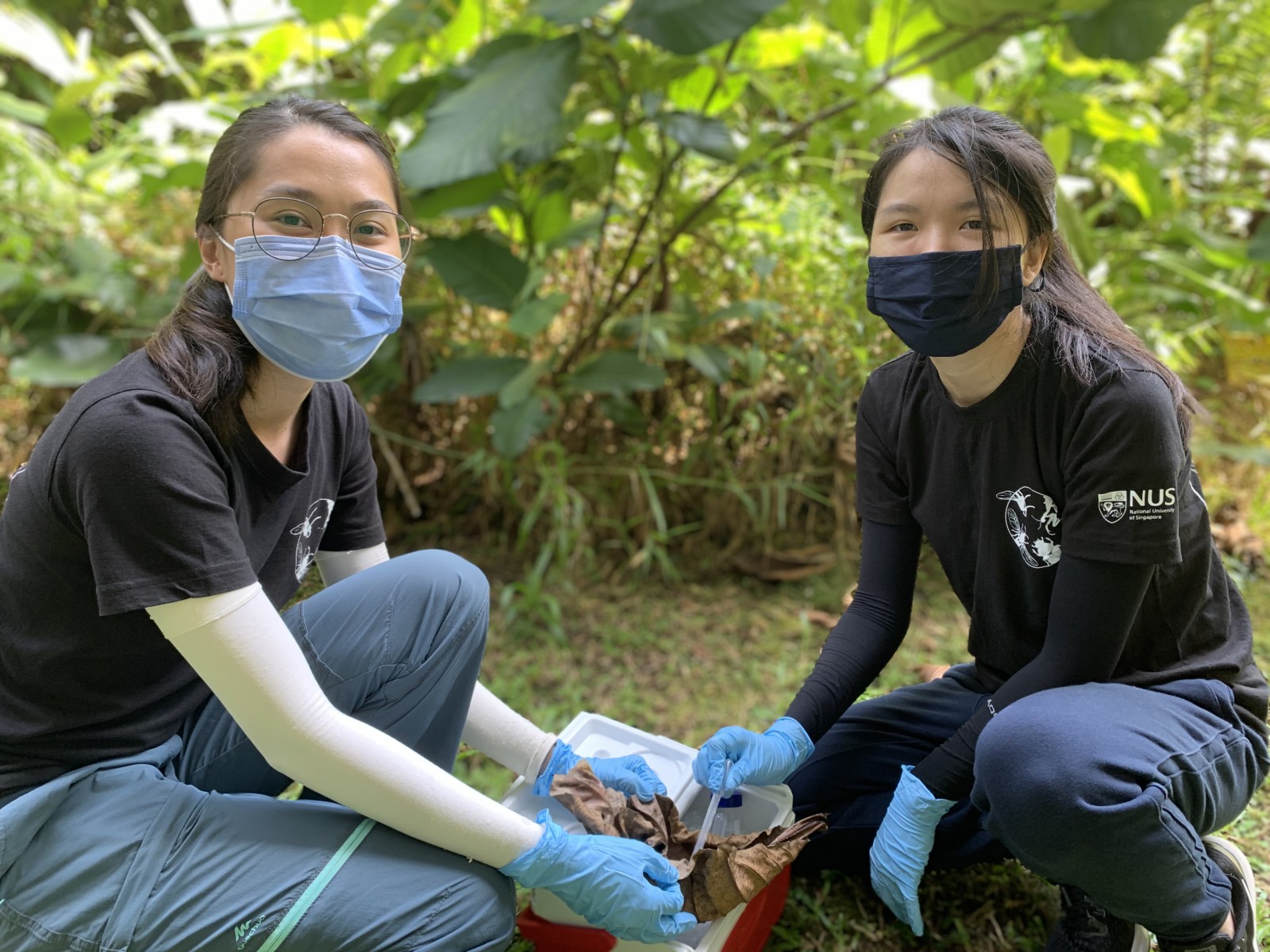
NUS doctoral student Ms Yeo Huiqing (left) and undergraduate student Ms Yeoh Tze Xuan (right), who were part of the research team, sampling mosquito larvae from standing water on dried leaves. (Photo: Nalini Puniamoorthy)

A team of researchers from the National University of Singapore (NUS), led by Assistant Professor Nalini Puniamoorthy from the Department of Biological Sciences, has developed an integrative approach that increases the accuracy of mosquito surveillance and management.

Many vector-borne diseases are transmitted by blood-sucking flies, such as mosquitoes. Understanding the transmission risks of such diseases requires knowledge of potential vectors in the area, including information on vector diversity and abundance. In their study, the researchers demonstrated the limitations of standard mosquito community surveillance methods and identification techniques which lead to inaccurate reflections of mosquito community structures across different habitats.

To address this, the researchers took an integrative approach comprising a two-pronged strategy to boost accuracy in sampling by including mosquito larvae, and species identification using short DNA sequences, known as mini-barcodes, generated from a high technology Next Generation Sequencing (NGS) platform. The enhanced data accuracy can reduce error cascades in downstream analyses for both ecological studies and vector surveillance. The approach can potentially be applied to other blood-sucking flies of medical interest such as biting midges and sandflies as well.

The findings were published in the Journal of Applied Ecology on 5 August 2021.

Reducing error cascades by enhancing data accuracy

Traditional estimates of mosquito diversity are typically based on adult female trapping methods targeting host-seeking species. However, these may represent a biased snapshot of an area’s mosquito community structure as larval stages are overlooked.

Including mosquito larvae sampling in various field sites in Singapore improved overall diversity estimates by 38 per cent compared to a sample comprising adult-only data. The enhanced estimate contributes to baseline knowledge on potential vectors in Singapore as some of these mosquito species have been found to harbour various pathogens in other countries. Sampling larvae also facilitates targeted management of mosquito species at the larval stage.

Identification of mosquitoes using traditional surveillance methods based on external characteristics also poses a challenge due to physical similarities between different species, as well as variations within individual species. The team employed a variety of sampling methods to target both adult and larval mosquitoes, and demonstrated that the use of mini-barcodes can differentiate species such as Aedes (Downsiomyia), Anopheles barbirostris complex and Culex (Lophoceraomyia) that are challenging to identify based on adult appearances alone. The NUS researchers were the first to successfully use the mini-barcodes on mosquitoes, and show its utility to reduce misidentification in species estimation. Their results led to more accurate reports on species diversity and the facilitation of vector control efforts, especially for medically-relevant insect groups. In addition, damaged specimens can be processed and identified using mini-barcodes, unlike standard surveillance methods.

A male mosquito belonging to the Culex (Lophoceraomyia) group from Singapore. (Photo: Yeo Huiqing)

Navigating a fragmented landscape

“Rapid urbanisation and land use changes in Singapore have resulted in a highly fragmented landscape which increases contact zones between forests and densely populated urban spaces. Our approach plays a crucial role to enhance understanding of the diversity and composition of different species, and can help facilitate early-warning detection and design of suitable management strategies,” said Asst Prof Nalini.

The researchers also plan to conduct further studies on scaling up species identification capabilities using DNA barcoding and industry applications for the integrated approach.


Total
0
Shares
Share
Tweet
Share
Share
Related Topics
  • Mosquito Vector Surveillance
  • National University of Singapore
  • NUS
dotlah.com

Previous Article
  • Lah!

Singapore Changi Airport Community Donates Oxygen Concentrators To Indonesia To Support Fight Against COVID-19

  • August 22, 2021
View Post
Next Article
  • Lah!
  • Technology

Mapping The Undiscovered

  • August 24, 2021
View Post
You May Also Like
View Post
  • Artificial Intelligence
  • Technology

Google Opens Singapore Engineering Center to Build and Export Enterprise Cloud and AI to the World

  • Dean Marc
  • September 15, 2026
View Post
  • Research
  • Technology

MIT researchers tackle the economic realities of fusion power

  • dotlah.com
  • August 10, 2026
zedreviews-valerion
View Post
  • Gears
  • Technology

Father’s Day Outdoors – Build Dad the Ultimate Backyard Watch Party

  • Dean Marc
  • June 21, 2026
zedreviews-fathers-day-50830
View Post
  • Gears
  • Technology

Father’s Day Outdoors, Round Two – Gear for the Action, the Tailgate, and Beating the Heat

  • Dean Marc
  • June 21, 2026
zedreviews-fathers-day-21306
View Post
  • Gears
  • Technology

A Father’s Day Gift Guide for Every Dad – Timepieces and Travel Gear

  • Dean Marc
  • June 21, 2026
View Post
  • Gears
  • Technology

Samsung Art Store Brings Art Basel to Homes Worldwide With New Curated Collection

  • Dean Marc
  • June 15, 2026
View Post
  • Artificial Intelligence
  • Technology

The consequences of relying on AI for accurate news

  • dotlah.com
  • June 10, 2026
pope-leo-xiv-cq5dam-1500.844
View Post
  • Artificial Intelligence
  • Technology

Pope Leo XIV to Publish First Encyclical on Artificial Intelligence and Human Dignity on 25 May

  • dotlah.com
  • May 23, 2026


Trending
  • 1
    • Cities
    • Lah!
    Empowering Cloud Sustainability With The Microsoft Emissions Impact Dashboard
    • October 16, 2021
  • 2
    • Society
    7 Dangerous Myths About Coronavirus Busted By The World Health Organization
    • February 11, 2020
  • bikes-fabio-fistarol-Nnl2c0NFKwE-unsplash 3
    • Cities
    Zero Emissions Areas Tackle Multiple City Struggles: Why Aren’t They Everywhere?
    • September 22, 2021
  • 4
    • Technology
    Singtel, AIS And SK Telecom Invest In A New Gaming Joint Venture
    • March 11, 2020
  • 5
    • People
    Who Came To America, And When?
    • June 15, 2020
  • 6
    • Cities
    • Lah!
    Grab Introduces New Financial Literacy Programme As Part Of The GrabAcademy Initiative For Driver- And Delivery- Partners
    • August 7, 2021
  • 7
    • Cities
    • Lah!
    MPA Launches Regular Guided Tours To Raffles Lighthouse
    • January 31, 2022
  • 8
    • Climate Change
    Why climate summits fail – and three ways to save them
    • October 21, 2025
  • 9
    • Gears
    • Technology
    Samsung Galaxy Z Fold7: Raising the Bar for Smartphones
    • July 9, 2025
  • 10
    • Technology
    Grab To Pilot GrabCare Transport Service For Frontline Healthcare Workers
    • February 13, 2020
  • 11
    • Cities
    • Lah!
    Singapore’s Changi Terminal 5: Looking Ahead
    • May 3, 2019
  • 12
    • People
    • Politics
    • World Events
    Coronavirus: Governments Knew A Pandemic Was A Threat – Here’s Why They Weren’t Better Prepared
    • May 20, 2020
Trending
  • 1
    Chinese tech giant Huawei unveils Mate 90 series smartphones with flagship Tau chips adopting logic folding technology
    • October 3, 2026
  • 2
    Google Opens Singapore Engineering Center to Build and Export Enterprise Cloud and AI to the World
    • September 15, 2026
  • 3
    Apple Flagship Hardware Launch for September 2026
    • September 10, 2026
  • 4
    MIT researchers tackle the economic realities of fusion power
    • August 10, 2026
  • 5
    ASEAN, treaty parties push stronger cooperation as Treaty of Amity and Cooperation in Southeast Asia marks 50 years
    • July 26, 2026
  • 6
    The Fastest AI Fried Chicken In The World
    • June 29, 2026
  • 7
    Zed Approves | How to Stay Cool in Extreme Heat
    • June 29, 2026
  • 8
    Was Venezuela struck by an earthquake ‘doublet’? Here’s what we know so far
    • June 27, 2026
  • 9
    Zed Approves | It’s Prime Day 2026! Time to Upgrade Your World Cup Viewing Setup and Beat the Heat
    • June 25, 2026
  • 10
    Zed Approves | The Best Prime Day PC Deals: Top Gaming Rigs, Workstations, and Everyday Laptops
    • June 25, 2026
Social Links
dotlah! dotlah!
  • Cities
  • Technology
  • Business
  • Politics
  • Society
  • Science
  • About
Connecting Dots Across Asia's Tech and Urban Landscape

Input your search keywords and press Enter.