dotlah! dotlah!
  • Cities
  • Technology
  • Business
  • Politics
  • Society
  • Science
  • About
Social Links
  • zedreviews.com
  • citi.io
  • aster.cloud
  • liwaiwai.com
  • guzz.co.uk
  • atinatin.com
0 Likes
0 Followers
0 Subscribers
dotlah!
  • Cities
  • Technology
  • Business
  • Politics
  • Society
  • Science
  • About
  • Society

The Simple Reason Why We Are Seeing More New Infectious Diseases Today

  • February 4, 2020
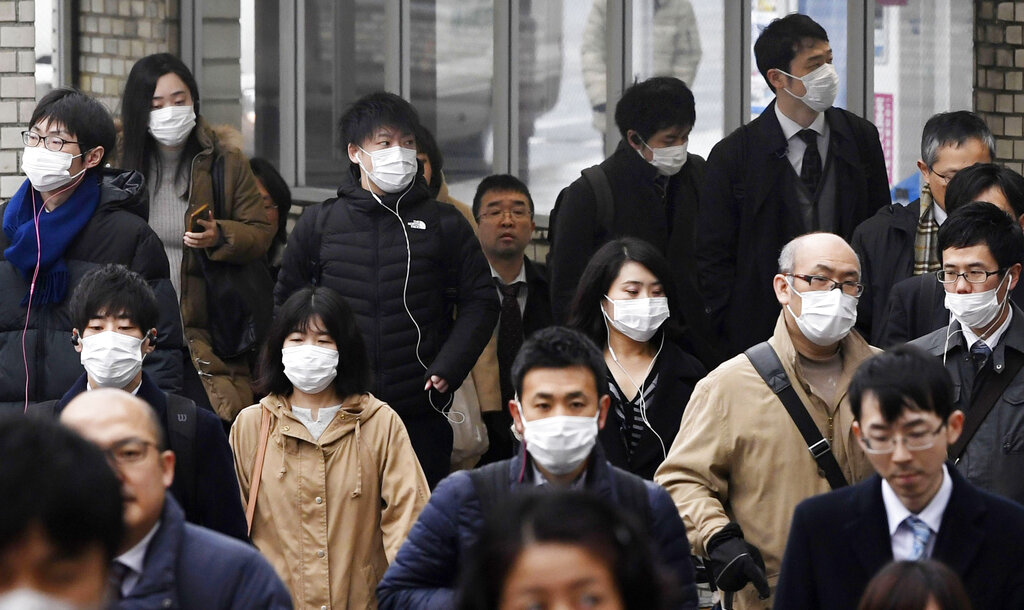
(Nobuki Ito/Kyodo News via AP)
Total
0
Shares
0
0
0

One would think that our world, compared to the past centuries where pandemics have killed millions of people is better equipped when it comes to fending off diseases thanks to medical breakthroughs and innovations. Intuitively, we expect less infectious diseases to pop out and spread today.

Confusing truth

However, we know that this is not true at all. One can recall diseases such as SARS, Ebola, Zika, HIV/AIDS and the current Wuhan Coronavirus seemingly plaguing our world in never before seen frequencies. What is happening?

The frequency of disease outbreaks can be attributed mainly to three factors:

  1. We travel more and we travel further than ever
  2. We live closer together, e.g., in urban areas
  3. Poverty —  a huge weakener of health —  is rampant

All of these factors lead to increased exposure and vulnerability to infectious diseases. This is the main reason why disease outbreaks are more rampant than they were in the past.

Moreover, climate change is also closely linked to the prevalence of infectious diseases, since the warming climate is a perfect environment for some disease carriers like mosquitoes to thrive.

Now we have to ask, where are these emerging infections coming from, to begin with?

Ground zero

According to the Baylor College of Medicine, emerging infections result from:

  1. Previously unknown infectious agents
  2. Known agents that reached new locations
  3. Known agents with previously unrecognized roles in diseases
  4. Re-emergence of diseases which has once died down

Preventing the spread

Knowing this, how then, do we stop these infections from spreading? Let’s boil it down one by one.

For previously unknown infectious agents  & known agents with previously unrecognized roles in diseases 

For previously unknown or unrecognized agents, much research is needed in order to understand the mechanics of transmission. In this case, medical researchers should be given firepower in the manner of funds to empower them.

For known agents that reached new locations

This is applicable for people who travel or plan to settle elsewhere. While people inhabiting a country have gained immunity, this might not be applicable to you. With this, full awareness of the potential risks and getting the appropriate immunizations, if available, is the responsible thing to do.

For the re-emergence of diseases which has once died down

The reemergence of diseases in a location where it has already died down is indicative of a decline in the health measures previously enforced for its suppression. The reinforcement of these measures is therefore imperative.

Another possible reason could be the appearance of new strains which gained resistance to medications used to fend them off. This is due to the overuse of antibiotics which is quite prevalent in our world. Refusal to get vaccination is, of course, another factor to take into account. The public health sector should maintain its aggression when it comes to disseminating accurate information to the public.

Not a lost cause

While the emergence of a disease is practically unpredictable, it doesn’t mean that we’re helpless. Our circumstances might be a huge disfavour in combating these diseases, but we still have our developed medical technology in our favour.

We should empower our citizens to become healthy, to practice basic hygiene daily, and be well-informed by disseminating information and providing them with access to health services. We shouldn’t wait out diseases to reach uncontrollable levels before we begin thinking of preventive measures, we should begin now.

While it is easy to maintain a state of complacency, a careful stance is way more preferable than millions of lives lost.


Total
0
Shares
Share
Tweet
Share
Share
Related Topics
  • 2019-nCoV
  • Antiobiotic-Resistance
  • Ebola
  • Epidemic
  • Health
  • HIV/AIDS
  • Infectious diseases
  • Medicine
  • Pandemic
  • SARS
  • Vaccination
  • Wuhan Coronavirus
  • Zika
majulah

Previous Article
  • Cities
  • Society

Here Are The Cleanest And Most Corrupt Governments Of The World

  • February 4, 2020
View Post
Next Article
  • Society

How Does The Wuhan Coronavirus Cause Severe Illness?

  • February 4, 2020
View Post
You May Also Like
View Post
  • Cities
  • Lah!
  • Society

NUS Computing Establishes Sea Olympiad Scholarship To Attract And Nurture Top Talents In Computer Studies

  • dotlah.com
  • February 27, 2022
View Post
  • Cities
  • Lah!
  • Society

Joint Study: Diverse Leadership Brings Better Firm Performance

  • dotlah.com
  • February 23, 2022
View Post
  • Lah!
  • Society

Community And Mentorship Help Women Entrepreneurs Thrive

  • dotlah.com
  • November 23, 2021
View Post
  • Lah!
  • Society

ST Engineering Champions Employee Wellness, Raises Funds For Charity And Launches Women Support Group

  • dotlah.com
  • November 14, 2021
View Post
  • Lah!
  • Society

NUS Honours 40 Alumni For Outstanding Contributions To Alma Mater And Society

  • dotlah.com
  • November 7, 2021
View Post
  • Cities
  • Lah!
  • Society

The COVID-19 Pandemic Has Made Many Singaporeans Adopt Better Financial Habits

  • dotlah.com
  • November 3, 2021
View Post
  • Lah!
  • Society

A Cleaning Revolution: How JCS-Echigo Partnered A*STAR To Clean Faster And Smarter

  • dotlah.com
  • October 16, 2021
View Post
  • Lah!
  • Society

Singapore 100 Women In Tech 2021

  • dotlah.com
  • October 16, 2021


Trending
  • adhd-pexels-tara-winstead-8378729 1
    • Features
    • People
    Transform Your Child’s Life with ADHD: Proven Strategies for Managing Symptoms and Thriving
    • January 12, 2023
  • 2
    • Cities
    • Lah!
    Singapore Overtakes US, Hong Kong To Be World’s Most Competitive Economy
    • May 29, 2019
  • 3
    • Lah!
    ​Mangroves At Risk If Carbon Emissions Not Reduced By 2050, International Scientists Predict
    • June 7, 2020
  • 4
    • Science
    • Technology
    NUS Researchers Find Potential Solution To Overheating Mobile Phones
    • December 13, 2019
  • Singapore 5
    • Cities
    • Economy
    South Africa’s new pension rules: Australia, Chile and Singapore show how personal savings can grow the economy
    • August 30, 2024
  • 6
    • Technology
    How Manufacturing Firms Stand To Gain From The Next Wave Of Industrial Transformation
    • February 27, 2022
  • 7
    • Society
    FairPrice Group Pledges S$378,000 To Engage The Community To Do Good And Provides Incentives To Appreciate Healthcare Workers
    • March 6, 2020
  • 8
    • Cities
    • Politics
    Japan Has Abandoned Decades Of Pacifism In Response To Ukraine Invasion And Increased Chinese Pressure On Taiwan
    • March 22, 2024
  • 9
    • Cities
    Traffic Congestion Reconsidered
    • November 7, 2019
  • 10
    • Economy
    • People
    • World Events
    How COVID-19 Is Reversing The Progress In The Fight Against Global Poverty
    • May 29, 2020
  • 11
    • Lah!
    Hyundai Motor Group Deepens Partnership With Grab To Accelerate EV Adoption In Southeast Asia
    • June 22, 2021
  • 12
    • Cities
    3 Monthly Expenses You Can Trim To Save Money In The City
    • February 25, 2020
Trending
  • 1
    Chinese tech giant Huawei unveils Mate 90 series smartphones with flagship Tau chips adopting logic folding technology
    • October 3, 2026
  • 2
    Google Opens Singapore Engineering Center to Build and Export Enterprise Cloud and AI to the World
    • September 15, 2026
  • 3
    Apple Flagship Hardware Launch for September 2026
    • September 10, 2026
  • 4
    MIT researchers tackle the economic realities of fusion power
    • August 10, 2026
  • 5
    ASEAN, treaty parties push stronger cooperation as Treaty of Amity and Cooperation in Southeast Asia marks 50 years
    • July 26, 2026
  • 6
    The Fastest AI Fried Chicken In The World
    • June 29, 2026
  • 7
    Zed Approves | How to Stay Cool in Extreme Heat
    • June 29, 2026
  • 8
    Was Venezuela struck by an earthquake ‘doublet’? Here’s what we know so far
    • June 27, 2026
  • 9
    Zed Approves | It’s Prime Day 2026! Time to Upgrade Your World Cup Viewing Setup and Beat the Heat
    • June 25, 2026
  • 10
    Zed Approves | The Best Prime Day PC Deals: Top Gaming Rigs, Workstations, and Everyday Laptops
    • June 25, 2026
Social Links
dotlah! dotlah!
  • Cities
  • Technology
  • Business
  • Politics
  • Society
  • Science
  • About
Connecting Dots Across Asia's Tech and Urban Landscape

Input your search keywords and press Enter.