dotlah! dotlah!
  • Cities
  • Technology
  • Business
  • Politics
  • Society
  • Science
  • About
Social Links
  • zedreviews.com
  • citi.io
  • aster.cloud
  • liwaiwai.com
  • guzz.co.uk
  • atinatin.com
0 Likes
0 Followers
0 Subscribers
dotlah!
  • Cities
  • Technology
  • Business
  • Politics
  • Society
  • Science
  • About
  • Lah!

NUS Researchers Develop New Urban Planning GIS Tool To Improve Urban Climate Resilience

  • January 31, 2021
Total
0
Shares
0
0
0

Singapore has warmed notably since the mid-1970s when rapid urbanisation took place, at a rate of 0.25 degrees Celsius per decade according to the Meteorological Service Singapore. The rate is higher than the global average rate of 0.17 degree Celsius per decade since 1970, based on data from the United Nations Intergovernmental Panel on Climate Change. If the current urban development approach remains unchanged, local warming will lead to a rise in electricity demand for cooling and the risk of residents suffering from heat stress.
2021 0129 New urban planning GIS tool to improve urban climate resilience-1
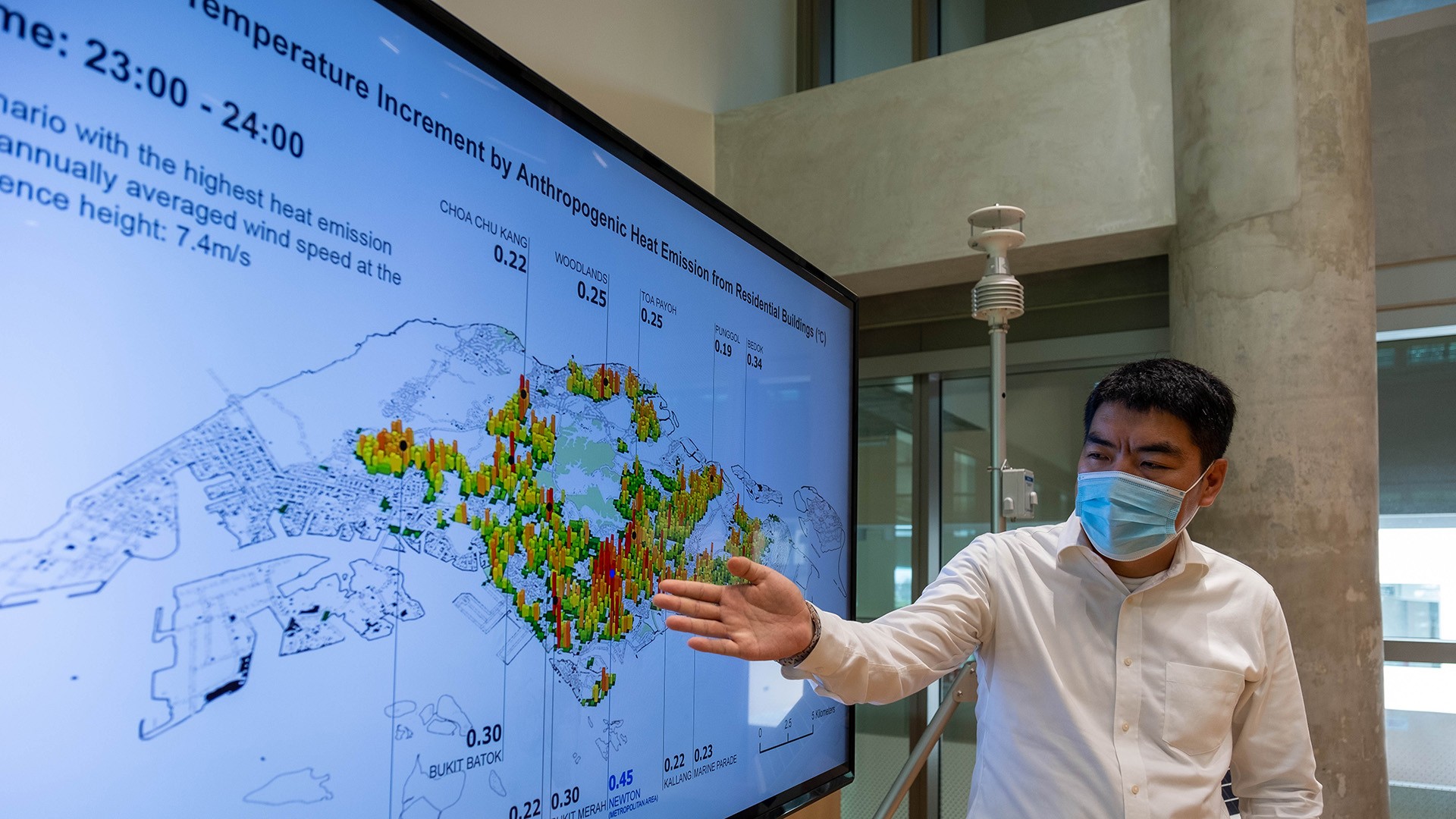
Dr Yuan Chao showing the results of air temperature increase by anthropogenic heat in various regions using the GIS tool developed by his team.

To help Singapore stay cool and improve urban climate resilience, Presidential Young Professor Dr Yuan Chao from the Department of Architecture at the NUS School of Design and Environment led a team to examine the heat balance in the street canyon – where the street is flanked by buildings on both sides – and developed a user-friendly Geographic Information System (GIS) tool to estimate the impact of urban planning on anthropogenic heat dispersion.

“The weak removal of anthropogenic heat is caused by stagnated airflow at urban areas. It is crucial to investigate the effect of urban morphology on anthropogenic heat dispersion to make high-density cities more resilient to future challenges such as an intensive urban heat island effect,” Dr Yuan explained.

In their findings published in the scientific journal Energy and Buildings, Dr Yuan Chao, Dr Mei Shuojun, Dr He Wenhui and Ms Zhang Liqing investigated the transient street air warming procedure and developed a practical GIS-based model to estimate how much and how fast the air temperature will be increased by anthropogenic heat.

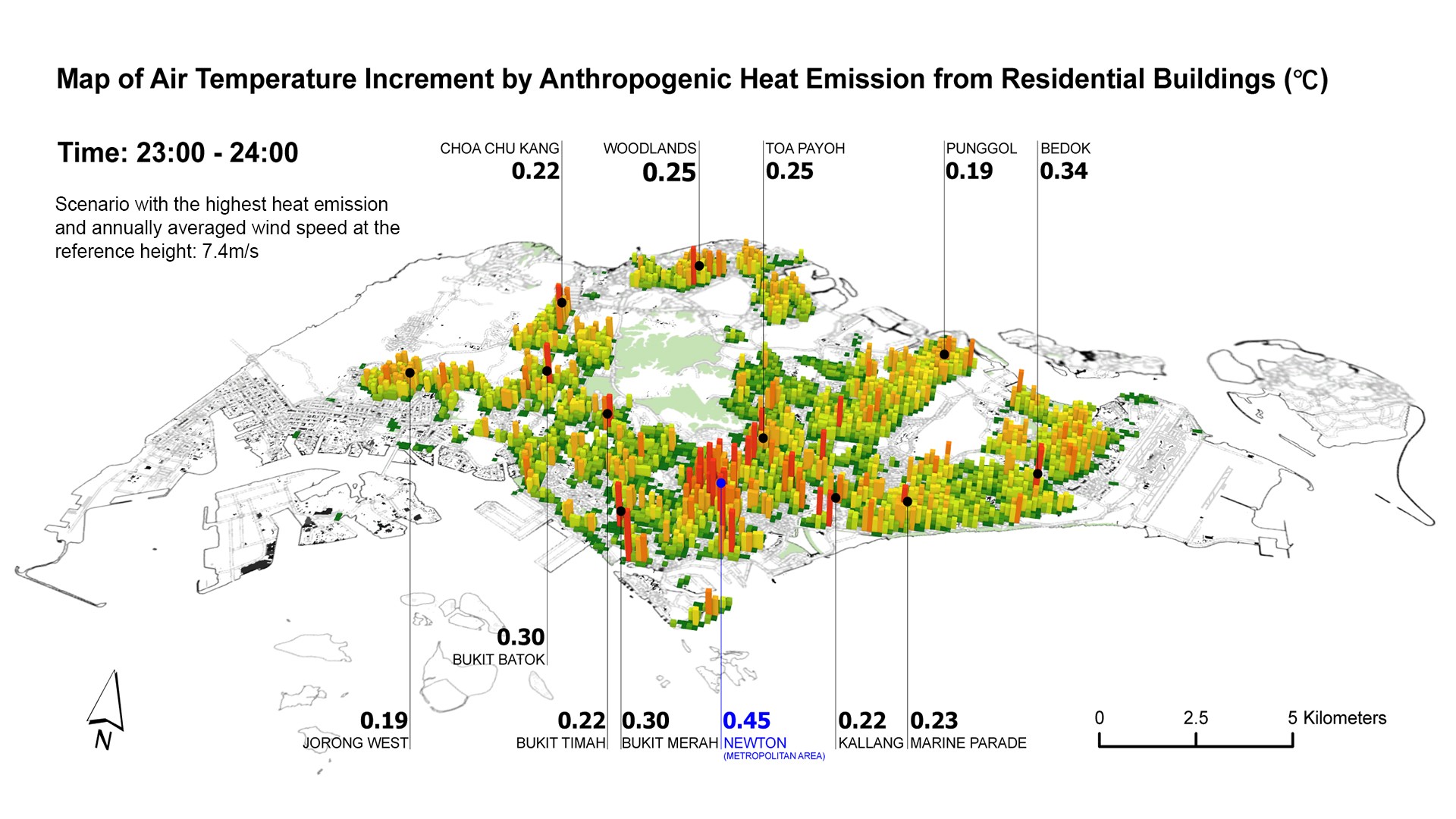
By applying this novel model, the impact of urban morphology on anthropogenic heat dispersion was mapped. The dynamic air temperature increment caused by daily heat emissions was visualised in residential areas of Singapore. The maximum temperature increment with normal wind conditions could be about 0.45 degrees Celsius, which has a significant impact on both thermal comfort and public health.
2021 0129 New urban planning GIS tool to improve urban climate resilience-2
The team produced graphic visualisations of dynamic anthropogenic heat impact on air temperature on residential areas of Singapore using the GIS tool.

Dr Yuan observed, “The air temperature increment in residential areas could be even higher in the future due to rapid global warming and urban development. It could increase the risk of residents in tropical cities suffering from more frequent and intensive long-term heat stress and short-term heatwaves.”
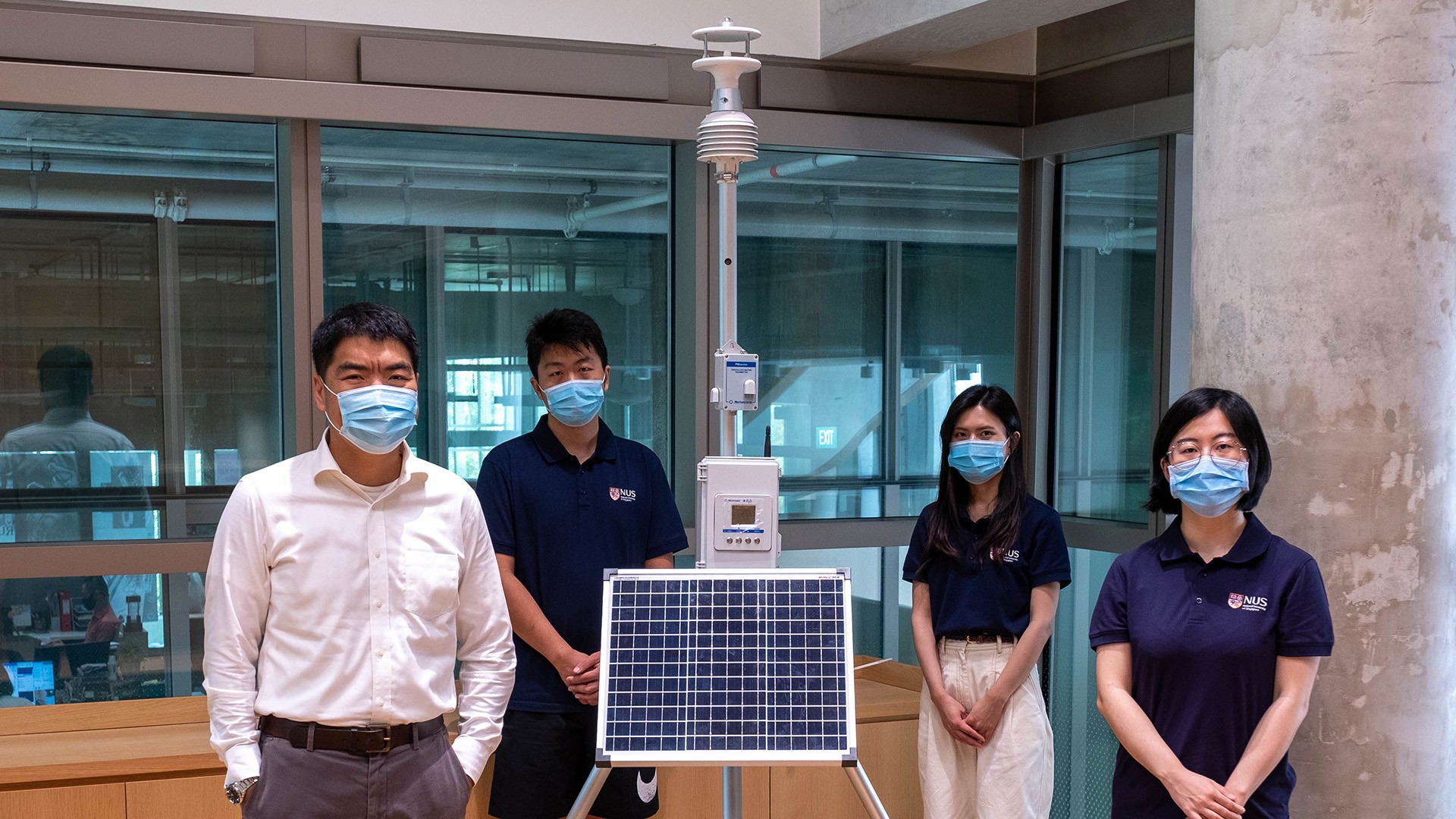
2021 0129 New urban planning GIS tool to improve urban climate resilience-3
The NUS research team (from left to right: Presidential Young Professor Dr Yuan Chao, Dr Mei Shuojun, Ms Zhang Liqing and Dr He Wenhui) with the weather station they are using for the research project.

Feasible planning tool to deal with future uncertainty

The development of the new GIS-based analytical model starts from urban planning indices, and thus avoids the complicated fluid dynamics calculation used in Computational Fluid Dynamics (CFD) simulation and wind tunnel, both of which are time-consuming especially for modelling at the urban scale. This model is a cheaper and faster alternative for urban planners to estimate the impact of urban planning and design on anthropogenic heat dispersion.

“Due to the huge uncertainty caused by urbanisation and global warming, the new GIS-based analytical model is a feasible tool to deal with numerous microclimate scenarios to help Singapore stay cool,” shared Dr Yuan.

Beyond applications in Singapore, this practical model can be easily adopted in cities overseas. By seamlessly connecting this model with global and regional scale models, city-level findings can also be used to tackle anthropogenic heat problems globally. As the next step, the team will explore collaborating with researchers working on global and regional scale models. Air pollution as another important urban climate issue will also be integrated into this GIS tool.

The GIS-based model is developed in collaboration with the Future Resilient Systems project at the Singapore-ETH Centre (SEC) that is supported by the National Research Foundation, Prime Minister’s Office, Singapore under its Campus for Research Excellence and Technological Enterprise (CREATE) programme, as well as the National Supercomputing Centre Singapore.

Total
0
Shares
Share
Tweet
Share
Share
Related Topics
  • Climate
  • Climate Change
  • GIS Tool
  • Global Warming
  • NUS
  • NUS School of Design and Environment
  • Resilience
  • Sustainability
dotlah.com

Previous Article
  • Lah!
  • Technology

EZ-Link Offers Account-Based Ticketing For Public Transport

  • January 30, 2021
View Post
Next Article
  • Lah!
  • Society

Grab Launches GrabAssist Plus, Expanding Its Suite Of Transport Services For Persons With Disabilities In Singapore

  • February 2, 2021
View Post
You May Also Like
View Post
  • Lah!

Tariffs, Trump, and Other Things That Start With T – They’re Not The Problem, It’s How We Use Them

  • John Francis
  • March 25, 2025
View Post
  • Lah!

Canonical announces 12 year Kubernetes LTS

  • John Francis
  • March 4, 2025
dotlah-smartnation-singapore-lawrence-wong
View Post
  • Artificial Intelligence
  • Featured
  • Features
  • Lah!
  • Machine Learning
  • Technology

Growth, community and trust the ‘building blocks’ as Singapore refreshes Smart Nation strategies: PM Wong

  • Dean Marc
  • October 9, 2024
dotlah-singapore-ndp-2024
View Post
  • Lah!

Here’s what to expect for NDP 2024!

  • dotlah.com
  • August 9, 2024
dotlah-singapore-airlines_may_21-1716298816
View Post
  • Lah!

Severe turbulence during Singapore Airlines flight leaves several people badly injured. One man died

  • majulah
  • May 22, 2024
dotlah-pm-lee-lawrence-wong-9656d4cd-1fa4-40ed-905d-e19e639b8476_728802dd
View Post
  • Lah!
  • People
  • Politics

End of Lee Era for Singapore as PM Steps Down

  • dotlah.com
  • May 16, 2024
DPM Lawrence Wong will be Singapore's fourth prime minister on May 15. ST PHOTO: LIM YAOHUI
View Post
  • Lah!
  • People
  • Politics

7 things to know about Singapore’s next prime minister Lawrence Wong

  • dotlah.com
  • May 15, 2024
When asked about his leadership style, DPM Lawrence Wong said he will be open and consultative, but he will not shirk from doing what is necessary for Singapore's future. ST PHOTO: LIM YAOHUI
View Post
  • Features
  • Lah!
  • People
  • Politics

‘We are prepared to relook everything’: Lawrence Wong on a changing society and his hopes for S’pore

  • dotlah.com
  • May 15, 2024


Trending
  • new-york-bernd-dittrich-YzWyaN4OBNA-unsplash 1
    • Cities
    The World’s Most Expensive Cities
    • December 28, 2022
  • 2
    • Lah!
    • Technology
    DBS Advances Asset Digitalisation Strategy With First Security Token Offering On DBS Digital Exchange
    • June 1, 2021
  • 3
    • Society
    The Countries With The Most Students Studying Abroad
    • June 12, 2020
  • 4
    • Technology
    Singtel, AIS And SK Telecom Invest In A New Gaming Joint Venture
    • March 11, 2020
  • 5
    • Cities
    • People
    • Politics
    • World Events
    The Design Of Dissent: How City Public Spaces Can Make Or Break A Civil Protest
    • June 10, 2020
  • 6
    • Technology
    New SIA-NUS Corporate Laboratory To Spur Digital Innovation In Singapore’s Aviation Sector
    • January 20, 2022
  • 7
    • Technology
    6 Major Design Trends Shaping City Life In 2015
    • February 11, 2015
  • 8
    • People
    Injured At Work? Here’s What You Need To Do
    • June 8, 2020
  • 9
    • Gears
    Zed Approves | How to Stay Cool in Extreme Heat
    • June 29, 2026
  • 10
    • Society
    • Technology
    How Coronavirus Is (Unexpectedly) Accelerating The Future Of Work
    • March 9, 2020
  • 11
    • Gears
    Zed Approves | Work From Anywhere, Efficiently – The 2026 Essential Gear Guide
    • January 20, 2026
  • 12
    • Technology
    Virtually Supporting Seniors During This Stay-at-home Period
    • May 26, 2020
Trending
  • 1
    Chinese tech giant Huawei unveils Mate 90 series smartphones with flagship Tau chips adopting logic folding technology
    • October 3, 2026
  • 2
    Google Opens Singapore Engineering Center to Build and Export Enterprise Cloud and AI to the World
    • September 15, 2026
  • 3
    Apple Flagship Hardware Launch for September 2026
    • September 10, 2026
  • 4
    MIT researchers tackle the economic realities of fusion power
    • August 10, 2026
  • 5
    ASEAN, treaty parties push stronger cooperation as Treaty of Amity and Cooperation in Southeast Asia marks 50 years
    • July 26, 2026
  • 6
    The Fastest AI Fried Chicken In The World
    • June 29, 2026
  • 7
    Zed Approves | How to Stay Cool in Extreme Heat
    • June 29, 2026
  • 8
    Was Venezuela struck by an earthquake ‘doublet’? Here’s what we know so far
    • June 27, 2026
  • 9
    Zed Approves | It’s Prime Day 2026! Time to Upgrade Your World Cup Viewing Setup and Beat the Heat
    • June 25, 2026
  • 10
    Zed Approves | The Best Prime Day PC Deals: Top Gaming Rigs, Workstations, and Everyday Laptops
    • June 25, 2026
Social Links
dotlah! dotlah!
  • Cities
  • Technology
  • Business
  • Politics
  • Society
  • Science
  • About
Connecting Dots Across Asia's Tech and Urban Landscape

Input your search keywords and press Enter.