Artificial intelligence (AI) systems today are already transforming industries and becoming an indispensable part of our daily lives. Such systems, which leverage machines to process and analyse large amounts of data, have vastly changed how humans work and play, and are being used today in many sectors, from banking to energy to agriculture. But AI systems can be energy-intensive, and there is a pressing need for those working in the field of AI to address the potentially large environmental impacts. This is especially as demand for data and intelligent devices continues to proliferate. Singapore has committed itself to environmental sustainability, underlined by its ratification of the Paris Agreement and recent plans to reach net-zero by or around mid-century. Environmental criteria have also become a crucial performance measure for companies and industries. Rising interest in sustainable investing is a strong signal that corporations – including AI-dependent ones – will soon be held accountable for their greenhouse gas emissions.
THE ENVIRONMENTAL IMPACT OF AI
The field of AI is progressing by leaps and bounds, driven by advances in hardware and an exponential increase in computing power. But the massive computation required to obtain these impressive technological feats comes at a price. Training AI models can incur substantial financial and environmental costs due to the energy needed to perform such computations. On top of the monetary costs of hardware, electricity and cloud compute time, powering such hardware for weeks and months at a time could also leave a huge carbon footprint.
Studies have found that Google’s AlphaGo Zero – the AI that plays the game of Go against itself to self-learn – generated a massive 96 tonnes of carbon dioxide over 40 days of research training. That is comparable to 1,000 hours of air travel, as well as the carbon footprint of about 10 average Singaporeans over an entire year.
In Singapore – a popular regional hub for data centres – there is growing concern over the increasing power consumption and widening carbon footprint of its data centre industry. A typical 20MW data centre on the island consumes the same amount of electricity a day as around 60,000 households – or about the energy usage size of Yishun town. With an estimated 60 data centres here accounting for about 7 per cent of the country’s total electricity consumption in 2020, the carbon footprint is significant.
In 2019, a “temporary pause” was imposed on the building of new data centres in Singapore to assess the balance between environment sustainability and supporting business needs. New conditions have since been announced for new data centre applications from the second quarter of this year, and the Government will continue to evaluate its policies towards new data centres.
Globally, the carbon footprint for data centres is estimated at more than 2 per cent of global carbon emissions. This number is expected to rise to 3.2 per cent by 2025 and 14 per cent by 2040. This highlights the critical importance of having sustainable AI, which can address the issues of carbon footprint and resource utilisation.
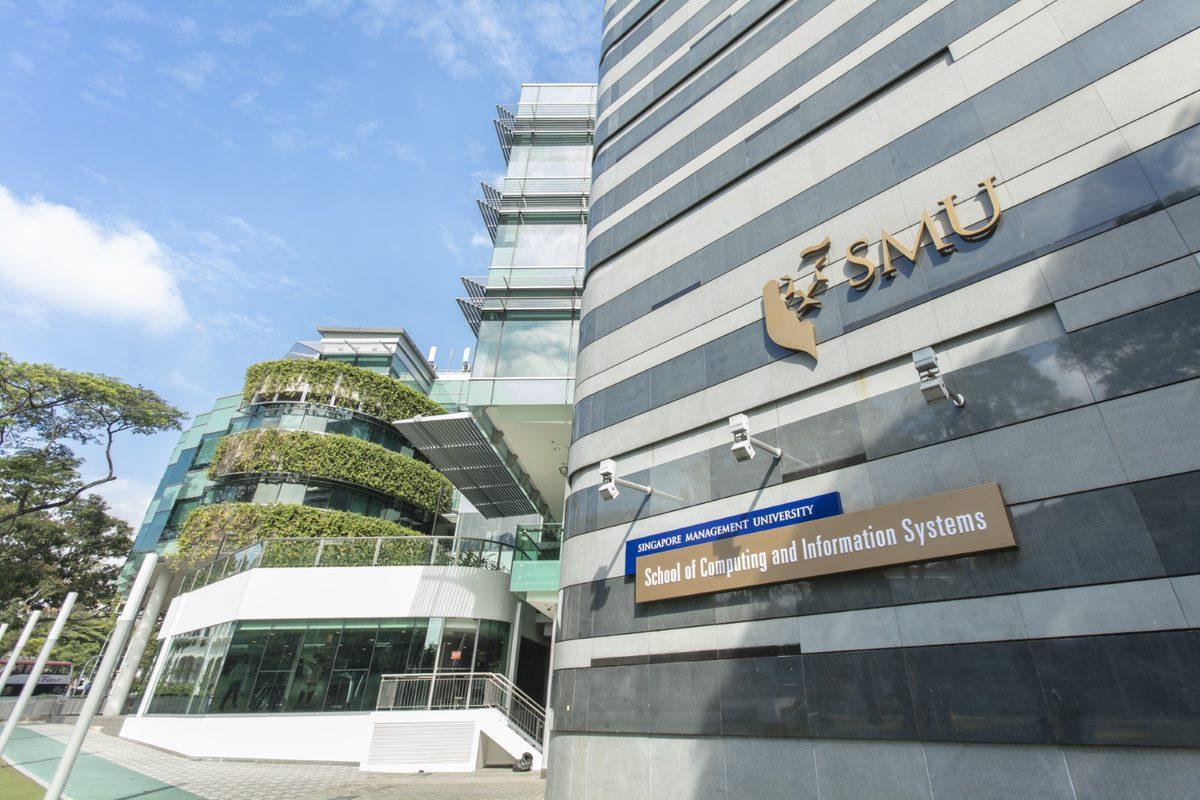
Working towards greater data use efficiency is a three-year research programme led by the Agency for Science, Technology and Research (A*STAR) in partnership with local institutes of higher learning such as the Nanyang Technological University, National University of Singapore, Singapore Management University and the Singapore University of Technology and Design.
MAKING AI MORE SUSTAINABLE
Under the research programme, researchers in Singapore are working on different fronts to make AI more sustainable. For example, as much of the energy usage by AI models occurs during the so-called “training” phase, reducing the need for massive amounts of training data directly translates into energy savings. This is an area that scientists are currently looking into.
One approach involves selecting only the most relevant data for training, or efficiently adapting existing models for a new task, which significantly reduces the cost of training a model. In other words, instead of training the AI system on a massive web of information, researchers may choose to use only select articles relevant to what the system is being used for.
This can help to reduce defects, design time and downtime for advanced manufacturing and engineering environments. Another area that researchers are looking into under the programme relates to edge computing, which refers to computing or data storage that is performed at or near the source of the data.
Combining AI into edge devices – such as lightweight mobile devices or sensors that generate and record data within the infrastructure – reduces the reliance on cloud services for data processing, allowing such devices to deliver better data security, faster computing and insights, with greater efficiency.
Another promising area in AI and computing research is neuromorphic computing, which is inspired by the workings of the brain. The technology uses networks that mimic the workings of the human brain and nervous system.
By replicating the flexibility, resilience and energy efficiency of a human brain, neuromorphic architecture aims to overcome the energy-intensive nature of current models of computing and develop better AI.
USING AI TO AID SUSTAINABILITY EFFORTS
While the use of AI creates an increasingly large carbon footprint, AI itself can and has actually been used as part of sustainability efforts as well.
One area in which AI is projected to play a key role is energy use. AI applications can balance electricity supply and demand needs in real time, while optimising energy use and storage to reduce rates. In a green-energy future, renewable energy will come from a diversity of sources, such as microgrids, wind farms and solar panels. The energy generated by such sources is prone to uncertain fluctuations depending on prevailing weather conditions, unlike the more predictable outputs from gas or coal plants.
With such a decentralised global energy network, AI will play a crucial role in managing the complexity of deploying power to industrial facilities, office buildings, homes and wherever needed. Given the world’s destabilised climate and unpredictable weather conditions, shifting our current energy system to a smart one centred on AI will result in a more resilient and flexible grid when unforeseen meteorological events occur. Grid flexibility and resilience would also be required as the demand for electricity grows in booming digital economies in an increasingly connected world.
Another area where AI is changing the game is agriculture. Modern agribusinesses can use AI to analyse their farms’ data for crop yield predictions or climate control. As agriculture is a labour-intensive industry, in space-starved Singapore, AI allows us to grow more food with fewer resources. Locally, one such step in that direction is A*STAR’s partnership with Archisen, an agri-tech firm based in Singapore that incorporated AI in the operations of its indoor farm.
The collaboration yielded a predictive model that statistically determined the key parameters which had the biggest influence on the yield and quality of the farm’s crops, allowing Archisen to produce up to 100 tonnes of vegetables a year.
By leveraging AI-driven innovations and technological breakthroughs to push the boundaries of resource efficiency, the aim is for AI to consume little power and be powerful in performance at the same time.
Overall, if the environmental impact of AI can be reduced, and more organisations start to use AI in their sustainability initiatives, then the use of AI as a whole may be able to attain a level close to carbon neutrality. To pave the way to a truly green digital revolution, we need to start making conscious choices to promote research of more computationally efficient algorithms as well as hardware that require less energy.
Professor Ong Yew Soon is A*STAR’s chief artificial intelligence scientist and president’s chair professor of computer science at the Nanyang Technological University.
Dr Lim Keng Hui is executive director of A*STAR’s Institute of High Performance Computing. He is also executive director of A*STAR’s AI, Analytics and Informatics Horizontal Technology Programme Office, leading and coordinating the AI and data