We would like to thank our generous sponsors for making this article possible.
Infrastructure investments offer very concrete opportunities to support the UN’s Sustainable Development Goals. With 2030 fast approaching, it is time that private and public players engage more closely to drive change forward.
Buildings, transit systems, power and water grids, schools, hospitals, broadband internet, climate adaptation mechanisms, political systems, urban planning—essentially everything that defines our everyday life—is the result of infrastructure development. Infrastructure is one of the world’s most ancient asset classes, dating back to the first human settlements. Its development is closely linked to our definitions of functioning economies, of developed and developing countries, of risk. Infrastructure is a large source of employment and enables both economic advancement and social inclusion.
It therefore comes as no surprise that SDG 9 on Industry, innovation, and infrastructure is often seen as the most “investable” Goal, with the OECD estimating that approximately USD 95tr of investments in sustainable infrastructure would be needed to meet SDG 9 targets by 2030 globally. The Asian Development Bank zeroes in on USD 26tr for their region alone within the same time frame. This is likewise not surprising, since seven out of the world’s 10 most populous cities are in Asia.1
While urbanization and smart(er) cities are a clear driver behind the need for infrastructure, much more is required for sustainable development. The achievement of SDG 9 is measured by indicators such as access to all-season roads, increasing industrial employment and financing for small and medium-sized enterprises, upgrading technological facilities, and enhancing scientific research, reducing greenhouse gas emissions, to give a few examples—making the definition of sustainable infrastructure quite broad. In this way, we tend to think of SDG 9—and of infrastructure in general—as an essential enabler of sustainable development, rather than an objective of its own.
The new…
“Greenfield” infrastructure—or brand-new infrastructure, built in areas where there was no legacy infrastructure before—is what we mostly link to sustainability.
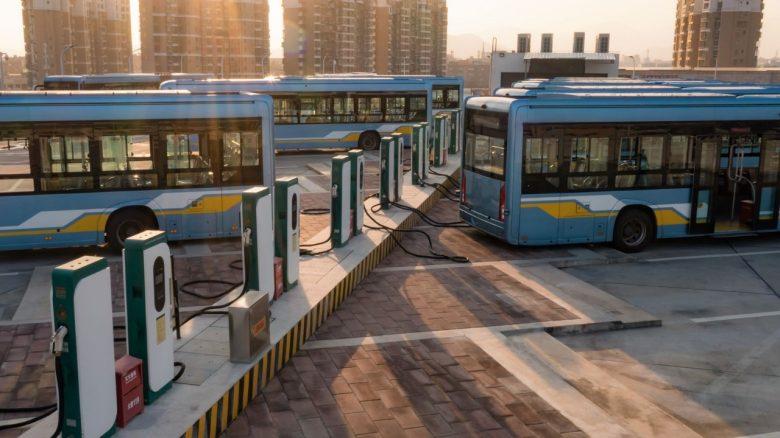
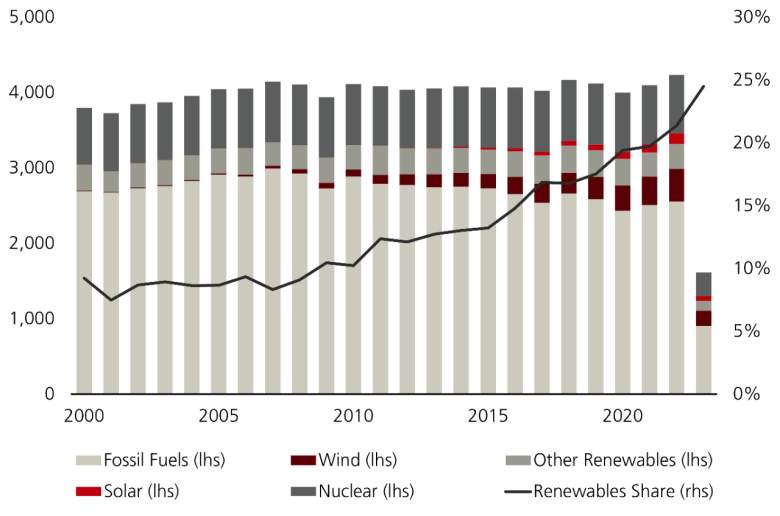
Renewable power generation, such as wind, solar, or hydropower, immediately comes to mind. Adding electricity from renewable sources to the grid is critical to replacing fossil-fuel-based electricity and reducing greenhouse gas emissions (Figure 1). Ultracapacitors, or batteries and energy storage, help conserve this green electricity and deploy it when needed, reducing the effects of seasonality and daylight. Similarly, charging stations for electric or hydrogen-powered vehicles enable scalable smart mobility.
Roads, schools, hospitals, and commercial and residential buildings are critical developments in remote rural areas that would not have access to services or the broader economy otherwise. This also includes bringing carbon fiber installations or other broadband internet infrastructure to off-grid areas. According to the UN, as of 2022, 95% of the world had mobile broadband access, but this number is as low as 82% for Sub-Saharan Africa and 68% for Oceania. In urban settings, we often speak of developing new affordable housing units or rejuvenating town centers with new commercial properties and service facilities, such as banking and childcare. And climate adaptation infrastructure, such as flood protection, new water routes, and urban gardens, aids with survival of vulnerable regions like coastal areas and areas with pronounced desertification and pollution.
Figure 1: The renewables star is rising
US electricity generation and renewables share of total (through April 2023), in TWh (lhs) and % (rhs)
The old…
The term “Brownfield” is often used to describe operating an already existing infrastructure. Bringing old infrastructure in line with latest technological advancements is as critical as new development. It could also be more economical to repair and refurbish rather than develop something new.
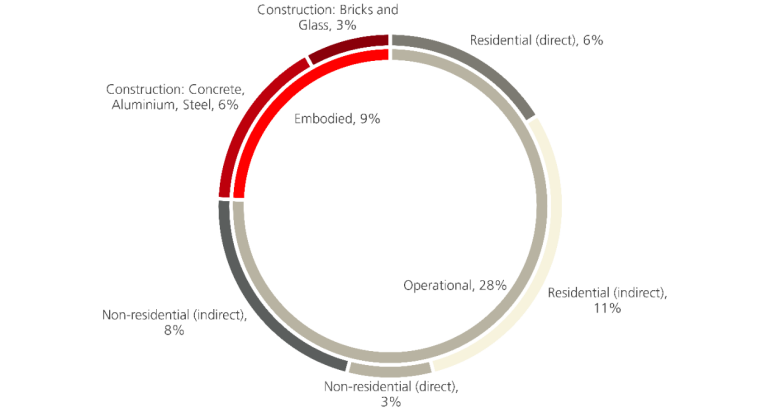
For instance, updating existing assets can build further climate resilience. Asphalt composition can be upgraded to make roads less susceptible to temperature changes, permanent support structures can help prevent landslides, and improving the efficiency of industrial manufacturing can reduce waste and hazardous material deployment. In our daily life we, too, are “operators” of existing infrastructure, demonstrated in the work we do to maintain our housing. Adding thermal insulation to walls and installing heat pumps and water meters are just a few examples of how we increase resource efficiency of buildings. Infrastructure is the world’s largest polluter, responsible for 79% of global greenhouse gas emissions, according to OECD, with our daily use of buildings accounting for almost half of that. Reducing the latter will require the rebuilding of most residential and commercial buildings (Figure 2).
Connectivity is another example. Upgrading broadband internet infrastructure has enabled the deployment of a variety of other technologies. The speed and efficacy of 5G is lightyears away from those original dial-up connections that people accessed in their homes.
Figure 2: Emissions from existing buildings outweigh those from new construction by three to one
Breakdown of the 37% global emissions stemming from buildings in 2021
… and the soft
When thinking of sustainable infrastructure, or infrastructure more generally, we tend to imagine physical assets—bridges, railroads, buildings, wind turbines. However, “soft” infrastructure is critical for sustainable development as well. In this category, we consider structures that enable the advancement of research and innovation, industrial employment, and skills development. We also refer to education and healthcare systems, emergency and general population services, and even political systems that enable sustainable infrastructure development. The role of soft infrastructure is evident in the mechanisms behind SDG 9, including targets such as “Enhance scientific research, upgrade the technological capabilities of industrial sectors in all countries, in particular developing countries, including, by 2030, encouraging innovation and substantially increasing the number of research and development workers per 1 million people and public and private research and development spending.”
The focus on developing countries reflects the relative global inequality when it comes to infrastructure. Solving this challenge requires investments in “soft” infrastructure, including research, education, and policy.
It takes a village
Public spending and policy mechanisms are key drivers behind infrastructure development and operations.
According to the OECD, subnational governments in particular account for 60% of public investment in infrastructure in the G20 countries, which in total represents nearly 2% of these countries’ gross domestic product. Development aid has historically addressed infrastructure funding as well, with overseas development assistance (ODA) reaching USD 204bn in 2022, including large-scale infrastructure investments (OECD). At national levels, governments continue to deploy ambitious spending and incentive programs. Most recently, the US Infrastructure Investment and Jobs Act underwrote USD 1.2tr and USD 550bn in new infrastructure spending over the coming five years. These mechanisms can be quite effective to build the new, the old, and the soft, but much of the scale will depend on the engagement of private capital—investors, developers, and ultimately, consumers. Public-private partnerships have shown good success in leveraging private capital to enable market-based solutions to scale.
Our built environment is a critical part of the discussion on sustainable infrastructure and is therefore an enabler for economic and social inclusion. Scaling it takes a village—a partnership between public and private sector, and the civil society. We will tackle this challenge in our upcoming work around #betterbuildings.
1. World Population Review database, accessed September 2023: https://worldpopulationreview.com/world-cities. The 10 most populous cities are Tokyo, Delhi, Shanghai, Dhaka, Sao Paolo, Mexico City, Cairo, Beijing, Mumbai, Osaka.
For further information, please visit www.ubs.com/institute-disclaimer
By: Antonia Sariyska
Originally published at: UBS